


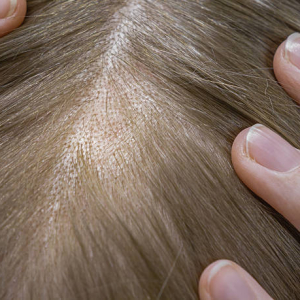
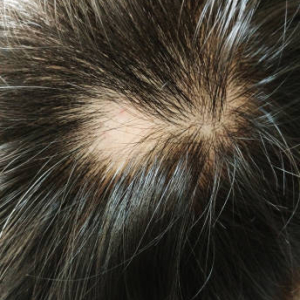
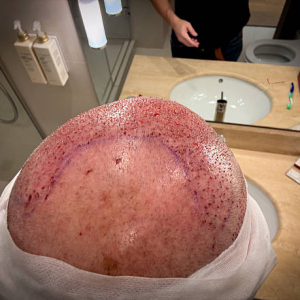
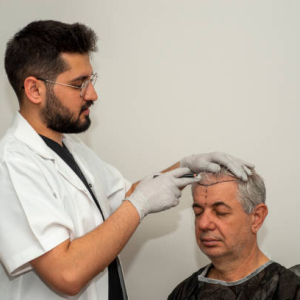
Diffuse thinning is different from a single bald patch because the reduction in density can extend across several scalp regions at once. Scalp Micropigmentation in Dubai can visually reduce the contrast created by widespread scalp visibility by introducing carefully distributed follicle-style pigment among areas of remaining hair, without claiming to regenerate the lost follicles.
Scalp Micropigmentation in Dubai for Diffuse Hair Thinning
Diffuse thinning can be difficult to camouflage because there may still be hair across most of the scalp, yet the overall density has decreased enough for the skin to become noticeable.
SMP works on the visual relationship between hair and scalp. Small pigment impressions can create the appearance of additional follicular points, making areas of reduced density appear more visually consistent with surrounding hair.
The important distinction is that SMP is cosmetic camouflage rather than a biological treatment for the cause of hair loss. Current dermatology guidance emphasizes identifying the cause of thinning before deciding which treatment approach is appropriate.
Why Diffuse Thinning Needs a Different Strategy
A localized bald area has an obvious treatment boundary. Diffuse thinning does not.
The reduction in density may gradually transition from one region to another, meaning there is no single edge where pigmentation should begin. The practitioner has to work with variations in follicular spacing rather than simply filling an empty patch.
Recognizing the Pattern Before Pigmentation
Diffuse thinning may appear as:
- General reduction in hair density
- Increased scalp visibility under strong lighting
- Fine or miniaturized hair across a broad region
- Widening visible spaces between follicles
- Reduced coverage across the frontal, mid-scalp or crown regions
- A gradual change rather than a sharply defined bald area
Because these patterns can have different causes, diagnosis should precede cosmetic camouflage when the cause of hair loss is uncertain. The American Academy of Dermatology notes that dermatologists assess the scalp and hair and may investigate conditions such as nutritional deficiencies, hormonal problems, infection or other disease when indicated.
Scalp Micropigmentation in Dubai and Diffuse Density Mapping
Diffuse thinning requires a map of the scalp rather than a simple outline of the treatment area.
Evaluating Density Across Regions
The frontal scalp may have one level of density while the mid-scalp and vertex have another. Pigment intensity should therefore correspond to the existing distribution instead of applying one uniform pattern everywhere.
A careful assessment can identify where the scalp is most visible and where the remaining hair already provides sufficient coverage.
Following Native Hair Distribution
Existing follicles provide the visual framework for pigmentation. Their spacing, direction and density influence how new pigment points should be distributed.
This becomes particularly important when the patient still has substantial native hair. The pigment needs to disappear visually into that hair pattern rather than compete with it.
Considering Hair Shaft Thickness
Two people can have similar follicle counts but very different visual density because hair shafts vary in thickness.
Fine, miniaturized hair allows more light and scalp visibility between strands. SMP planning should therefore consider the visual contribution of the existing hair, not simply count follicles.
Scalp Micropigmentation in Dubai for Diffuse Thinning Across the Scalp
Diffuse thinning can involve different combinations of the frontal scalp, mid-scalp and crown.
| Pattern | Main visual concern | Planning priority |
|---|---|---|
| Frontal diffuse thinning | Reduced definition at the front | Preserve a natural frontal transition |
| Mid-scalp thinning | Broad scalp visibility | Blend pigment progressively |
| Vertex involvement | Increased visibility from above | Follow the crown's natural architecture |
| Frontal-to-crown thinning | Loss of overall density | Maintain continuity across regions |
| Generalized thinning | Reduced coverage throughout | Avoid excessive pigment saturation |
The Tajmeels treatment page identifies diffuse thinning as one of the areas that can be treated with SMP and states that treatment planning is customized around factors such as hair density and skin tone.
Scalp Micropigmentation in Dubai for Miniaturized Hair
Miniaturization presents a specific challenge because the follicles have not necessarily disappeared. Instead, the resulting hairs can become finer and contribute less visual coverage.
Working With Remaining Fine Hair
The aim is to supplement the visual appearance of density rather than conceal every visible section of scalp.
Pigment can be placed selectively around areas where fine hairs no longer provide enough visual coverage. This approach can preserve the distinction between the natural hair and cosmetic pigmentation.
Avoiding Excessive Darkness
Diffuse thinning can tempt patients to seek maximum pigment density. However, a heavily saturated scalp may look less natural than a carefully graduated pattern.
A lighter, controlled distribution can allow the pigment to function as background support for the existing hair.
Scalp Micropigmentation in Dubai and Progressive Hair Loss
One of the most important considerations in diffuse thinning is whether the underlying hair-loss process is still active.
SMP changes scalp appearance, but it does not stop androgenetic hair loss, autoimmune hair loss, inflammatory scalp disease or other causes of follicular loss. Cleveland Clinic similarly notes that SMP does not grow hair or change natural hair growth.
Why Diagnosis Matters
The American Academy of Dermatology recommends determining the cause of hair loss because different conditions require different approaches. A dermatologist may examine the scalp, ask about the timeline of shedding and perform additional tests when medically indicated.
For a patient with rapidly changing diffuse thinning, treating only the appearance may not address the underlying problem.
Combining Cosmetic and Medical Planning
Some patients may require a hair-loss management plan alongside cosmetic camouflage. Depending on the diagnosis, evidence-based medical treatments may be considered separately from SMP.
For example, the AAD notes that treatments such as minoxidil can help some forms of hair loss, while the appropriate therapy depends on the cause and individual circumstances.
The consultation should therefore establish whether the priority is stabilizing hair loss, improving visible density, or addressing both.
Scalp Micropigmentation in Dubai for Women With Diffuse Thinning
Diffuse thinning can present differently in women, with reduced overall fullness or a widening part being common visual signs. The AAD identifies gradual thinning and a widening part among recognizable signs of hair loss in women.
Part-Line Visibility
A widening part can increase scalp contrast even when surrounding hair remains present.
SMP can potentially reduce this contrast by placing pigment within carefully selected areas, but the treatment should be planned around the patient's natural hairstyle and existing hair distribution.
Preserving Natural Hair Movement
Women who wear longer hairstyles may have different cosmetic requirements from patients who keep their hair very short.
The pigmentation should remain subtle enough to integrate with the movement and parting of the existing hair rather than creating a visibly tattooed scalp surface.
Scalp Micropigmentation in Dubai for Diffuse Thinning in Men
In men, diffuse thinning can affect the frontal scalp, mid-scalp and crown while the hairline remains partially intact.
Frontal Diffuse Loss
The objective may be to support the appearance of existing density without unnecessarily redesigning the hairline.
Mid-Scalp Visibility
When the middle scalp becomes increasingly visible, a gradual pigment pattern can help reduce the difference between areas with stronger and weaker density.
Combined Frontal and Crown Thinning
When thinning extends across multiple regions, the treatment needs continuity. Separate pigment zones can look disconnected if their density and spacing are not coordinated.
Scalp Micropigmentation in Dubai and Lighting Conditions
Diffuse thinning is often more apparent under overhead lighting than in soft, indirect light.
Dubai's commercial interiors, offices, hotels, gyms and residential spaces can expose the scalp to different lighting angles throughout the day. A successful cosmetic plan should therefore be assessed from multiple viewing angles rather than only under treatment-room lighting.
Overhead Lighting
Light directed from above can pass between fine hairs and highlight the scalp beneath them. Reducing the contrast between the scalp and follicular pattern may make diffuse thinning less visually dominant.
Natural Outdoor Light
Strong daylight can reveal scalp visibility differently from indoor lighting. This is another reason pigment density should be conservative and matched to the individual's natural appearance.
Scalp Micropigmentation in Dubai for Different Hair Colors
Pigment planning becomes more nuanced when hair color and scalp tone create substantial or minimal contrast.
Dark Hair
Dark hair can create pronounced visual contrast against lighter scalp skin. A carefully controlled follicular pattern can reduce the appearance of empty spaces without producing a solid dark surface.
Light Hair
When hair is lighter, aggressive pigmentation can become more noticeable. The objective is to maintain visual balance rather than force the scalp to match the darkest hair tone.
Mixed or Graying Hair
Patients with mixed pigmentation or gray hair require individualized planning. The treatment should account for the overall visual pattern rather than matching only one strand color.
Tajmeels states that pigment density is customized to produce an age-appropriate appearance and considers hair density and skin tone during planning.
Scalp Micropigmentation in Dubai for Diffuse Thinning and Hair Transplant Planning
SMP and hair transplantation solve different problems.
A transplant physically moves follicles into areas where additional hair coverage is required. SMP changes the appearance of the scalp by adding follicle-like pigmentation.
For diffuse thinning, donor availability is an important consideration if surgical restoration is being explored. The AAD recognizes hair transplantation as an option for some patients with pattern hair loss, while SMP can provide a non-surgical cosmetic alternative for the appearance of thinning.
The appropriate pathway depends on diagnosis, donor supply, progression of loss, desired appearance and willingness to undergo surgery.
What Happens During Scalp Micropigmentation in Dubai
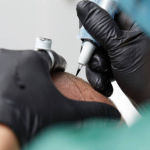
The procedure involves preparing the scalp and using a fine-needling device to place pigment in controlled points. Tajmeels describes medical-grade pigment being introduced into the scalp to reproduce the appearance of natural follicles, with the treatment repeated across the selected area as needed.
A diffuse-thinning assessment may involve:
- Reviewing the pattern and progression of hair loss.
- Examining density across multiple scalp regions.
- Identifying the areas with greatest scalp contrast.
- Evaluating skin tone and existing hair characteristics.
- Designing a graduated pigment distribution.
- Preparing the scalp for treatment.
- Applying controlled follicular pigment points.
- Reviewing the visual balance before further sessions.
Tajmeels reports that individual sessions can take approximately three to six hours depending on the scalp condition and treatment area.
Dubai Climate Considerations for Diffuse-Thinning SMP
Dubai's heat, intense sunlight and frequent transitions between outdoor and air-conditioned environments make scalp aftercare a practical consideration.
During the early healing period, direct sun exposure should be limited and the treated scalp should be protected according to professional instructions. Tajmeels specifically advises avoiding direct sunlight and avoiding rubbing or massaging the scalp after treatment.
Patients who exercise outdoors should also account for sweating and activity restrictions during the initial aftercare period. The clinic's individualized instructions should take priority over generic routines.
Who Should Consider a Consultation Before Scalp Micropigmentation in Dubai
A consultation is particularly important when diffuse thinning is new, accelerating or accompanied by other scalp symptoms.
Medical evaluation can help distinguish cosmetic density concerns from conditions that may require treatment first. The AAD advises people concerned about hair loss to seek dermatological assessment because hair loss has multiple possible causes.
A consultation can assess:
- How long the thinning has been present
- Whether the pattern is stable or progressing
- Distribution across the scalp
- Existing hair thickness
- Scalp condition
- Previous hair-restoration procedures
- Relevant medical history and medications
- Whether cosmetic camouflage is appropriate
Questions About Scalp Micropigmentation in Dubai for Diffuse Thinning
Can SMP make diffuse thinning look fuller?
It can reduce scalp-to-hair contrast and create the visual impression of greater density, but it does not increase the number of hair follicles.
Does SMP treat the cause of diffuse hair loss?
No. The cause of hair loss should be diagnosed separately, and medical treatment may be appropriate depending on the condition.
Can SMP be used when fine hair is still present?
Yes. Existing hair can provide a visual framework for pigment placement, provided density and pigment intensity are carefully matched.
Can diffuse thinning continue after SMP?
Yes. SMP does not stop biological hair-loss processes. If the underlying condition is progressive, the appearance of the scalp can change over time.
Is diffuse thinning suitable for a non-surgical approach?
SMP is a non-surgical cosmetic option for improving the appearance of thinning areas, but suitability should be assessed individually.
The Strategic Role of Diffuse-Thinning Camouflage
Diffuse thinning requires more than filling visible scalp; it requires understanding how density changes across the entire scalp and whether the underlying hair-loss process is stable. Scalp Micropigmentation in Dubai can provide cosmetic camouflage through carefully distributed follicle-style pigmentation while keeping diagnosis and treatment of the underlying hair-loss condition separate.
If diffuse thinning is becoming more noticeable in photographs, under overhead lighting or during everyday styling, a detailed consultation can help determine whether SMP is appropriate for your current scalp pattern. Tajmeels Clinic can assess the distribution of thinning, existing hair characteristics and scalp condition before recommending a personalized pigmentation strategy.
Book a consultation to have your scalp assessed before choosing a cosmetic camouflage plan, particularly if your thinning is recent, changing or accompanied by other scalp symptoms.