

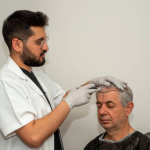

Before recommending a combination of FUE and FUT, a surgeon must determine whether the patient's donor supply, hair-loss pattern, scalp characteristics, and restoration goals can support the procedure. A Hybrid Hair Transplant in Dubai should begin with clinical assessment and graft planning rather than selecting a technique simply because more grafts are desired.
The First Priority Is Understanding the Pattern of Hair Loss
The initial examination usually starts with the distribution and progression of hair loss.
A surgeon needs to distinguish between recession concentrated around the temples, frontal depletion, mid-scalp thinning, crown loss, and more extensive loss involving several zones. The pattern determines where grafts are likely to create the greatest visual improvement.
Frontal Loss Versus Crown Loss
A receding frontal hairline can require a different graft strategy from a large crown deficit.
The frontal region often has a strong effect on facial framing, while the crown can consume a substantial number of grafts because of its circular geometry and changing hair direction.
If both areas require restoration, graft allocation becomes a central part of the consultation.
The Degree of Miniaturization
Visible baldness is not the only finding that matters.
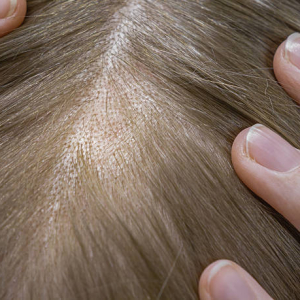
A surgeon may examine existing hairs for miniaturization to determine whether apparently covered areas are actually experiencing progressive thinning. This helps distinguish stable donor hair from native recipient hair that may continue to weaken.
Donor Density Is Reviewed Before Graft Numbers
Patients often ask how many grafts they can receive. The more important starting question is how many usable follicular units the donor area can safely provide.
Donor density is evaluated across the relevant scalp regions rather than assuming every follicle is equally suitable for extraction.
Follicular-Unit Composition
A follicular unit can contain one, two, three, or more hairs.
This matters because 2,000 grafts do not necessarily represent the same number of hairs in every patient. A donor area with a favorable follicular-unit composition may produce more hairs per graft than a donor area dominated by single-hair units.
Hair Caliber Matters Too
Thicker hair can provide greater visual coverage than very fine hair even when graft counts are identical.
A surgeon therefore considers hair shaft diameter alongside follicular-unit density when estimating how much coverage a given number of grafts can realistically produce.
The Permanent Donor Zone Requires Careful Mapping
The donor area is not simply the back and sides of the head.
Its boundaries and long-term stability need to be assessed because follicles outside the stable donor region may themselves become susceptible to future androgenetic hair loss.
Why Donor Boundaries Matter
Using unstable follicles can create an apparently successful result initially but leave transplanted hairs vulnerable to future thinning.
For this reason, donor mapping should consider the patient's current pattern as well as the likely progression of untreated native hair.
Extraction Distribution
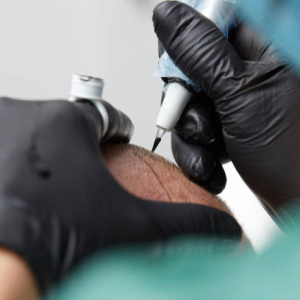
With FUE, the surgeon must determine where individual follicular units can be removed without creating visible depletion.
With FUT, the surgeon must assess whether the scalp has sufficient mobility and whether a strip can be removed and closed appropriately.
When both methods are considered, these decisions become interconnected.
Scalp Laxity Becomes Important for the FUT Component
If FUT is being considered, scalp laxity is one of the physical characteristics that deserves particular attention.
The surgeon needs to determine how readily the donor scalp can be mobilized and closed after strip removal.
Why Closure Tension Matters
Excessive tension can affect the appearance and width of a linear scar.
The objective is therefore not simply to obtain a particular strip size. The surgeon must determine what can be removed while maintaining an appropriate donor-area closure.
Previous Procedures Change the Assessment
Previous FUT surgery can alter donor anatomy and scalp mobility. Existing scars also need to be identified before planning another strip procedure.
A previous FUE procedure creates a different issue: the donor area may already have reduced follicular density from earlier extraction.
Graft Requirements Are Estimated After the Examination
Once the donor and recipient areas have been assessed, the surgeon can begin estimating graft requirements.
This is more meaningful than starting with an arbitrary number such as 3,000, 4,000, or 5,000 grafts.
Recipient Area Size
The surgeon considers how much surface area actually needs treatment.
A patient with frontal recession may need fewer grafts than someone requiring reconstruction of the hairline, mid-scalp, and crown.
Desired Density
Density goals also influence graft allocation.
Creating very high density across every bald region may not be realistic when donor resources are limited. A more strategic approach can prioritize visually important zones and distribute grafts according to the available supply.
Hairline Design Is Evaluated Before Extraction Begins
The hairline should not be treated as an afterthought.
Its position, shape, irregularity, temporal angles, and transition into existing hair all influence the number and type of grafts required.
Single-Hair Grafts at the Front
Fine, single-hair follicular units can be useful for creating a softer transition at the leading edge of the hairline.
Larger follicular units can then contribute to density farther behind that transition.
Temple Geometry
The temples influence the perceived width and shape of the face.
Overly straight or excessively low temple reconstruction can look artificial. The surgeon must therefore consider facial proportions rather than designing the hairline from a generic template.
The Surgeon Looks at Native Hair That Still Exists
A common planning mistake is to focus exclusively on bald areas.
Existing native hair can be just as important because it may continue to thin after transplantation.
Protecting Future Density
If significant native hair remains, the surgeon needs to consider whether the patient's hair loss is stable enough for immediate restoration or whether additional medical management may be appropriate.
The goal is to avoid creating a dense transplanted island surrounded by progressively thinning native hair.
Strategic Graft Placement
In some cases, grafts may be allocated to reinforce areas of weakened native hair rather than filling every currently visible gap.
This requires careful recipient-site planning because transplanted follicles need adequate spacing from existing follicles.
Why FUE and FUT May Be Evaluated Together
The decision to combine FUE and FUT should come from the patient's anatomy and restoration requirements.
FUE offers individual follicular-unit harvesting, while FUT can provide a substantial group of follicular units through strip excision. A hybrid plan uses the characteristics of both approaches when that combination is clinically appropriate.
| Assessment Factor | FUE Consideration | FUT Consideration | Hybrid Planning Question |
|---|---|---|---|
| Donor density | Distributed extraction | Strip harvest | Which areas can provide useful grafts? |
| Scarring | Small extraction marks | Linear donor scar | Which scar pattern suits the patient's priorities? |
| Scalp laxity | Less dependent on strip closure | Important | Is the scalp suitable for the FUT component? |
| Graft requirement | Individual units | Efficient strip harvest | Would combining methods improve the available graft strategy? |
| Hairstyle | Short-hair visibility considered | Linear scar visibility considered | What donor appearance does the patient want long term? |
| Future procedures | Preserve donor distribution | Preserve scalp mobility | How should today's harvesting protect future options? |
The purpose of the comparison is not to declare one method universally better. It is to identify the harvesting strategy that fits the individual donor anatomy and restoration objective.
Scalp and Hair Characteristics Can Change the Plan
The surgeon also considers physical characteristics that affect the expected visual result.
Hair-to-Scalp Contrast
Dark hair against lighter skin can make changes in donor density more noticeable in some patients, while other combinations may visually conceal minor extraction marks more effectively.
This does not determine candidacy by itself, but it can influence donor-area planning.
Curly and Wavy Hair
Hair curvature can affect how follicles are approached during extraction.
The direction of the follicle beneath the skin may not perfectly match the visible direction of the hair shaft. Precise extraction technique is therefore particularly important when the follicle has a pronounced trajectory.
Fine Versus Coarse Hair
Coarser hair can create stronger visual coverage per transplanted follicle, while fine hair may require more strategic distribution to achieve the desired cosmetic effect.
This is why graft counts should not be interpreted without considering hair characteristics.
The Crown Gets a Separate Planning Assessment
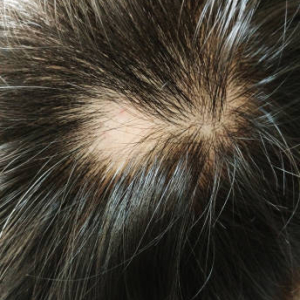
The crown presents a distinctive restoration challenge.
Its hair grows in a whorl pattern, meaning recipient sites need to follow changing angles and directions rather than being placed in a simple parallel arrangement.
Why the Crown Can Consume Grafts
A large crown defect can require considerable graft allocation because the treatment area may expand outward from the central whorl.
A surgeon may therefore decide that frontal restoration deserves priority if donor resources are insufficient to achieve meaningful coverage everywhere simultaneously.
Crown Versus Hairline Prioritization
This is one of the most important consultation discussions for advanced hair loss.
Patients may prefer complete coverage, but a finite donor supply requires prioritization. The surgeon should explain where grafts are likely to create the greatest visible improvement.
Previous Hair Transplants Are Reviewed in Detail
Patients seeking a second procedure require a different assessment from first-time candidates.
The surgeon may review:
- Previous harvesting technique
- Number of grafts already removed
- Existing donor scars
- Remaining donor density
- Previous recipient sites
- Current native-hair density
- Whether the first transplant changed the hairline
- Whether the underlying hair-loss pattern has progressed
This information helps determine whether additional graft harvesting is reasonable and which areas should receive priority.
The Patient's Long-Term Hair-Loss Pattern Matters
A transplant is not performed in isolation from future hair loss.
Someone with advanced loss may have already declared much of their pattern, while a younger patient with rapidly progressing recession may have a less predictable long-term distribution.
Planning Beyond the First Procedure
The surgeon may need to preserve part of the donor reserve for potential future treatment.
This can affect how aggressively the current procedure is planned. Maximizing today's graft count is not always equivalent to maximizing the long-term result.
Medical History and Suitability Are Part of the Consultation
A responsible surgical assessment includes relevant medical and medication history.
The surgeon needs information that could influence anesthesia, bleeding risk, wound healing, medication selection, or postoperative care.
This is also where the patient should disclose previous procedures, allergies, regular medications, and any relevant history of abnormal scarring.
Recovery Expectations Are Discussed Before Surgery
The consultation should cover what happens after graft placement, not only what happens during extraction.
Patients need to understand expected early scalp changes, activity restrictions, washing instructions, sleeping recommendations, and the gradual nature of hair growth.
A typical hair-transplant recovery plan is measured in stages rather than days. Early redness and crusting occur before the transplanted follicles enter their longer growth cycle.
Returning to Normal Activities
The timing of exercise, styling, sun exposure, and other activities should be based on the surgeon's specific postoperative instructions.
This is particularly relevant in Dubai, where strong sunlight and high temperatures can make early scalp protection an important practical consideration.
Questions to Ask During a Hybrid Consultation
A strong consultation should leave the patient understanding why a particular technique is being recommended.
Useful questions include:
- What do you see first when assessing my donor area?
- How many usable grafts do I realistically have?
- Which parts of my scalp should be prioritized?
- Why would FUE and FUT both be appropriate for my case?
- How will you protect my future donor supply?
- What hairline shape fits my facial proportions?
- How will existing native hair affect the graft plan?
- What donor-area changes should I expect after harvesting?
- How will previous procedures affect my options?
- What is a realistic density target for my available donor supply?
The best answer is not necessarily the highest graft number. It is a plan that explains how the available follicles will be used responsibly.
The Strategic Investment
The strongest Hybrid Hair Transplant in Dubai plans begin with assessment rather than assumptions. Donor density, follicular-unit composition, scalp laxity, hair-loss progression, recipient-area priorities, hair characteristics, previous procedures, and long-term donor preservation all contribute to the final surgical strategy.
For patients comparing restoration options, Tajmeels Clinic provides a starting point for evaluating the treatment approach, consultation process, and individualized hair-restoration planning. The objective should always be a natural result that makes responsible use of the donor follicles available today while protecting future options.