


Choosing the right number and spacing of treatments matters as much as choosing the procedure itself. PRP hair treatment in Dubai should be planned around the patient's hair-loss pattern, follicular condition, previous treatment history, and response over time rather than selecting a fixed number of sessions without assessment.
PRP is designed to support existing follicles, so the treatment schedule should reflect the biological condition of those follicles and the reason hair density has declined.
Why PRP Sessions Need Individual Planning
There is no single PRP schedule that suits every patient.
Someone with early diffuse thinning may have a different treatment requirement from a patient managing progressive patterned hair loss. A person returning for maintenance after an earlier course may also require a completely different approach from someone receiving PRP for the first time.
Several factors can influence planning:
- Severity of hair thinning
- Distribution of hair loss
- Duration of the condition
- Degree of follicular miniaturization
- Current shedding activity
- Previous response to treatment
- Existing medical hair-loss management
- Scalp condition
- Long-term restoration goals
The purpose of consultation is therefore not simply to count sessions. It is to determine what the sessions are intended to accomplish.
What a PRP Session Actually Involves
PRP begins with collection of a small blood sample from the patient.
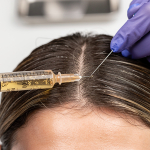
The sample is processed to separate the platelet-containing plasma. The scalp is then prepared, and the selected treatment areas are injected using fine needles according to the clinical treatment map.
Topical numbing may be used where appropriate.
The process commonly takes less than an hour, although the exact duration depends on the treatment plan and clinical protocol.
The number of injection points is not necessarily a measure of treatment quality. Appropriate anatomical targeting is more important than simply increasing the number of injections.
The Difference Between an Initial Course and Maintenance
A useful way to understand PRP planning is to separate treatment into two phases.
The initial phase is intended to establish a structured course of treatment for appropriate candidates. Follow-up then determines how the scalp and hair are responding.
Maintenance is different.
Once a patient has completed an initial course and achieved a satisfactory response, future sessions may be scheduled less frequently to support the longer-term management plan.
This distinction prevents patients from assuming that the same frequency must continue indefinitely.
How Hair-Loss Pattern Influences Session Selection
The location and pattern of thinning can affect how treatment is planned.
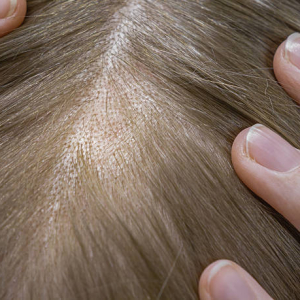
Frontal thinning, crown reduction, diffuse scalp thinning, and generalized loss do not present the same anatomical challenge.
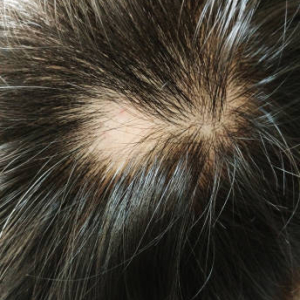
For example, a crown-focused treatment may require careful consideration of the natural whorl and surrounding transition areas. Diffuse thinning may require broader mapping because reduced density can extend across several scalp regions.
A consultation should therefore identify the treatment zones before a session schedule is finalized.
When Early Thinning May Require a Different Approach
Patients with relatively early thinning may still have substantial numbers of functioning follicles.
In this situation, the clinical objective may be to support existing hair before more extensive loss occurs.
However, early treatment does not automatically mean more sessions are required.
The more important questions are:
- Is the thinning progressing?
- Are individual hairs becoming finer?
- Is there a recognizable pattern?
- Is shedding active?
- Are follicles still producing terminal hairs?
- Are other treatments already being used?
These factors can help determine whether PRP should be used alone or as part of a broader treatment strategy.
How Progressive Hair Loss Changes the Planning Conversation
Progressive androgenetic hair loss is different from a temporary shedding episode.
If the underlying miniaturization process continues, repeated PRP sessions without addressing the broader cause may not provide an adequate long-term strategy.
For these patients, PRP may be considered as one component of comprehensive hair management.
The treatment plan may involve discussion of:
- Medical hair-loss therapy
- PRP
- Low-level light-based treatment
- Microneedling
- Other regenerative approaches
- Hair transplantation when appropriate
The goal is to match treatment intensity with the biological problem rather than repeatedly treating symptoms without reassessment.
How Many PRP Sessions May Be Appropriate
The appropriate number of sessions is individualized.
Some patients may be considered for an initial series of treatments followed by evaluation. Others may need a different schedule because of their diagnosis, previous treatment history, or response.
A responsible treatment plan should explain:
- Why PRP is being recommended.
- Which scalp areas will be treated.
- What the initial treatment phase is intended to achieve.
- When progress will be evaluated.
- What would justify continuing treatment.
- What would indicate that another strategy should be considered.
This makes the treatment course measurable instead of open-ended.
Why More Sessions Do Not Automatically Mean Better Results
It can be tempting to assume that additional treatments will always produce greater improvement.
Hair biology does not work that way.
If the underlying diagnosis has not been addressed, simply increasing treatment frequency may not solve the problem. Similarly, if follicles have lost their ability to produce meaningful hair, repeated injections cannot recreate completely absent follicular units.
The value of each additional session should therefore be reassessed against the patient's clinical response.
A treatment plan should evolve when the evidence changes.
Session Spacing and the Hair Growth Cycle
Hair follicles operate through biological cycles, so visible changes do not occur immediately after injections.
The interval between sessions should provide enough time for the clinician to assess the treatment response and determine whether continued treatment is appropriate.
Spacing can depend on:
- Initial treatment objectives
- Degree of hair loss
- Current shedding
- Follicular condition
- Previous response
- Overall treatment plan
The exact interval should therefore be selected by the treating clinician rather than copied from another patient's schedule.
What to Evaluate Between Sessions
Patients should not judge treatment solely by looking at their scalp every morning.
Instead, progress can be documented using standardized observations.
| Monitoring area | What to look for | Why it matters |
|---|---|---|
| Shedding | Changes in frequency or quantity | Tracks hair-cycle activity |
| Hair caliber | Fine versus stronger shafts | Helps assess follicular output |
| Scalp visibility | Coverage under consistent lighting | Provides a visual density reference |
| Hairline | Changes in frontal coverage | Identifies progression |
| Crown | Whorl and surrounding density | Tracks vertex changes |
| Photographs | Consistent angles and lighting | Allows comparison over time |
This information can make follow-up consultations substantially more useful.
When a Follow-Up Assessment Should Change the Plan
A treatment schedule should not be treated as irreversible.
If the patient's condition changes, the plan may need to change with it.
For example, a clinician may reconsider the approach if:
- Hair loss accelerates
- A new pattern becomes apparent
- Shedding remains unusually high
- The scalp develops inflammatory symptoms
- Hair caliber continues to decline
- The expected response does not develop
- Another medical cause becomes suspected
The appropriate response may be further investigation, adjustment of treatment, combination therapy, or consideration of a different restoration option.
PRP Session Planning After a Hair Transplant
Patients who have undergone transplantation may also ask how PRP sessions should be incorporated into their longer-term plan.
The answer depends on whether the treatment objective involves transplanted follicles, native hair, or both.
Native hair can continue to undergo its own biological changes after transplantation. Therefore, a patient may need a long-term strategy for preserving surrounding non-transplanted follicles.
PRP may be discussed in this context, but it should not be assumed that every post-transplant patient requires the same schedule.
The timing and purpose should be established by the treating team.
Maintenance Sessions and Long-Term Planning
Maintenance is not simply an extension of the initial treatment course.
Once the response has been assessed, future treatment may be considered at longer intervals when clinically appropriate. The purpose is to maintain a structured approach rather than committing to unnecessary frequent injections.
The maintenance decision can depend on:
- Durability of the observed response
- Ongoing hair-loss progression
- Underlying diagnosis
- Patient goals
- Other active treatments
- Clinical examination
Some patients may require periodic review before another session is recommended.
What Makes a PRP Treatment Plan Clinically Strong
A well-designed PRP plan should answer five basic questions.
First, what type of hair loss is being treated?
Second, are the follicles still viable?
Third, which areas require treatment?
Fourth, how will the response be measured?
Fifth, what happens if the expected response does not occur?
These questions are more useful than simply asking whether a clinic offers a particular number of sessions.
Patients researching hair restoration options in Dubai should look for a treatment process that includes diagnosis, individualized mapping, follow-up, and discussion of alternatives.
Preparing for Each PRP Session
Preparation can vary according to the clinic's protocol and the patient's medical history.
Patients should disclose relevant medications, supplements, bleeding tendencies, scalp conditions, allergies, previous procedures, and other information requested during consultation.
The clinician may provide specific instructions regarding medications, scalp products, exercise, alcohol, or other activities.
Patients should follow those instructions rather than relying on generalized advice from social media or other patients.
Recovery Between Sessions
PRP is minimally invasive, but temporary local reactions can occur.
Patients may experience mild:
- Redness
- Tenderness
- Swelling
- Sensitivity at injection points
These effects generally settle relatively quickly, although recovery varies.
Treatment scheduling should take the patient's work and social commitments into account. Someone with frequent professional events may prefer appointments that allow sufficient recovery time before important commitments.
Dubai Scheduling Considerations
Dubai patients often have demanding professional, fitness, travel, and social schedules.
This makes treatment consistency particularly important. A theoretically ideal schedule that repeatedly conflicts with travel or work may be less practical than a medically appropriate plan that the patient can realistically maintain.
Climate can also influence post-treatment planning.
High temperatures, strong sunlight, outdoor activities, sweating, and frequent transitions between outdoor heat and air-conditioned environments can affect scalp comfort. Patients should follow their clinician's specific instructions after each procedure.
When PRP May Not Be the Best Next Step
PRP should not be treated as the default solution for every thinning complaint.
A different approach may be more appropriate when there is:
- Sudden unexplained hair loss
- Patchy complete hair loss
- Active scalp inflammation
- Suspected scarring alopecia
- Significant untreated medical disease
- Extensive areas with absent follicles
- A diagnosis better managed with another treatment
In such situations, identifying the underlying cause should take priority over starting a cosmetic treatment schedule.
Questions to Ask Before Committing to a PRP Course
Patients can make consultations more productive by asking specific questions.
Useful questions include:
- What type of hair loss do I have?
- Why do you recommend PRP for my condition?
- Which areas will receive treatment?
- What is the purpose of the initial treatment phase?
- How will my response be measured?
- When will my progress be reassessed?
- What would make you change the treatment plan?
- Will I need maintenance sessions?
- Could another treatment work better for my situation?
- What are the realistic limitations of PRP?
Clear answers to these questions can help patients make a more informed decision.
How to Judge Whether Additional Sessions Are Worthwhile
The decision to continue should be based on evidence rather than expectation.
A clinician may review standardized photographs, clinical examination findings, hair caliber, scalp coverage, and the patient's experience of shedding.
If the treatment appears beneficial and the underlying diagnosis remains appropriate, additional sessions may be discussed.
If there is little meaningful change, the correct response may instead be reassessment.
This is an important part of responsible treatment planning because no regenerative procedure should be considered successful simply because more sessions are available.
Setting Realistic Expectations From a PRP Course
PRP should be viewed as a follicular-support treatment, not a guaranteed method of producing entirely new hair.
Results develop gradually because follicles operate through biological cycles. The visible outcome can also vary according to genetics, severity of hair loss, lifestyle factors, maintenance, and the condition of the follicles before treatment.
Patients should therefore define success realistically.
Potential objectives may include:
- Supporting existing follicles
- Improving the appearance of reduced density
- Supporting hair caliber
- Managing early thinning
- Complementing another hair-restoration treatment
- Building a longer-term maintenance strategy
The correct objective depends on the diagnosis established during consultation.
The Strategic Investment
Choosing PRP sessions should be a clinical planning decision rather than a simple package selection. The most appropriate course depends on the cause of hair loss, follicular viability, treatment area, previous response, and whether another therapy needs to be incorporated into the long-term strategy.
For patients considering PRP hair treatment in Dubai, a structured approach allows every session to have a defined purpose, measurable follow-up, and an opportunity to adjust the plan when the patient's condition changes.
For professional assessment and individualized hair-restoration planning, Tajmeels Clinic can help patients determine whether PRP is appropriate and how a treatment course may fit their specific goals.