


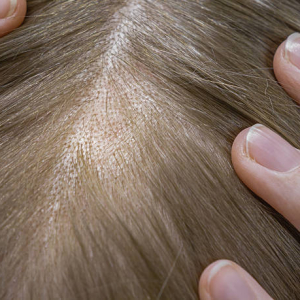
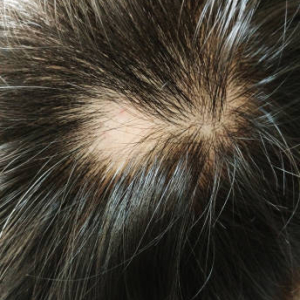
Seeing more scalp through the hair does not always mean that extensive baldness has developed. Early or moderate thinning can create noticeable scalp visibility because individual hairs become finer, follicular density decreases, or the existing hair no longer provides sufficient visual coverage.
For suitable patients, Hair Transplant in Dubai can be considered when permanent thinning has created areas where additional follicular coverage may improve the appearance of density. The planning challenge is different from treating a completely bald area because existing native hairs must be protected while new grafts are integrated around them.
Why Hair Transplant in Dubai Is Different for Diffuse Thinning
Diffuse thinning can affect broad areas without producing a clearly defined bald patch. The hair may still be present but appear increasingly transparent under bright lighting or when viewed from above.
This creates a more complex restoration environment because the surgeon must distinguish between areas that genuinely need additional follicles and areas where existing hair may still provide adequate coverage.
Thin hair versus an empty scalp
A completely bald region offers a relatively clear recipient surface. Diffuse thinning presents a mixture of native hairs, miniaturized follicles, and varying levels of scalp visibility.
Recipient-site planning therefore needs to account for existing follicular positions and growth directions rather than treating the region as empty.
Hair caliber affects visual coverage
Two people with similar follicular density may have different levels of scalp visibility because their hair shafts have different thicknesses.
Thicker shafts can provide greater visual coverage, while finer hair may allow more light to reach the scalp. This is one reason why graft counting alone cannot determine the expected cosmetic improvement.
Hair Transplant in Dubai: Understanding Why the Scalp Becomes Visible
Scalp visibility can result from several overlapping factors. Identifying the dominant factor is important before deciding whether transplantation is appropriate.
| Factor | What may be observed | Planning implication |
|---|---|---|
| Reduced density | Wider spaces between follicles | Additional coverage may be considered |
| Miniaturized hair | Fine, weak-looking strands | Underlying hair-loss pattern requires assessment |
| Fine hair caliber | Scalp remains visible despite existing hair | Density expectations should remain realistic |
| Bright lighting | More scalp becomes noticeable | Lighting can exaggerate apparent thinning |
| Wet or oily hair | Hair separates into smaller groups | Temporary visibility may increase |
| Progressive hair loss | Thinning gradually expands | Long-term planning becomes important |
| Limited donor supply | Insufficient reserve for broad coverage | Treatment areas may need prioritization |
Hair Transplant in Dubai for Diffuse Thinning Patterns
Diffuse thinning requires a different conversation from localized recession. The restoration zone may cover a larger surface area, while the number of available donor follicles remains limited.
A successful strategy therefore may focus on improving the most visually important regions instead of attempting to reproduce the density of a much younger scalp.
Frontal areas often influence appearance strongly
The frontal region contributes significantly to facial framing. Improving coverage here may produce a noticeable cosmetic effect even when other areas remain moderately thin.
The decision should still be based on the patient's pattern and donor capacity rather than applying the same priority to every case.
Mid-scalp coverage requires efficiency
When thinning extends behind the frontal region, graft distribution becomes a resource-allocation decision.
The surgeon may need to balance immediate visual improvement against preserving follicles for potential future treatment.
Hair Transplant in Dubai and Native Hair Protection
One of the defining challenges of diffuse thinning is working between existing follicles.
The recipient sites need to be planned so that new grafts complement the native hair without unnecessarily damaging follicles that are still producing hair.
Why implantation spacing matters
Placing grafts too aggressively into a region with substantial native hair may not provide proportionate additional benefit.
The objective is to create useful visual reinforcement while maintaining an efficient distribution of transplanted follicles.
Existing hair should be part of the design
The remaining native hairs can contribute substantially to the final appearance. Their direction, density, caliber, and likely stability should therefore be considered when planning graft placement.
A restoration strategy that ignores existing hair can waste donor resources and create an inconsistent pattern.
Hair Transplant in Dubai: When More Grafts Are Not Always the Answer
Patients experiencing visible scalp often assume that maximum graft density will automatically solve the problem.
That is not necessarily the case. If thinning is diffuse, the recipient area may be too broad for maximum density everywhere without placing significant demands on the donor supply.
Coverage should be prioritized
A practical strategy may divide the scalp into zones and determine where additional follicles can create the greatest improvement.
Factors can include:
- Facial framing
- Degree of scalp visibility
- Existing native density
- Hair caliber
- Donor availability
- Future hair-loss risk
- Patient expectations
The result is a more targeted plan rather than an attempt to make every region equally dense.
Hair Transplant in Dubai and the Importance of Hair-Loss Stability
Diffuse thinning can continue to progress. Before surgery, it is therefore useful to establish whether the observed pattern appears stable or whether active progression is occurring.
The underlying cause of hair loss should be assessed medically rather than assuming every form of thinning is suitable for transplantation.
Why timing matters
Transplanting too early may result in a patient requiring additional procedures as native hair continues to thin.
Waiting indefinitely is not necessarily the answer either. The appropriate timing depends on the individual's diagnosis, progression, donor characteristics, and treatment objectives.
Hair Transplant in Dubai for Patients Concerned About Lighting
Dubai's strong sunlight can make scalp visibility more noticeable. Bright outdoor conditions can expose areas that may appear adequately covered under softer indoor lighting.
This does not necessarily mean that the underlying hair loss is suddenly worse. Lighting, hair direction, scalp contrast, and hair caliber can all influence perception.
Patients should evaluate thinning under different lighting conditions and discuss persistent changes during clinical assessment.
Indoor air conditioning and scalp comfort
Dubai's extensive use of air conditioning can also influence scalp comfort during the recovery period. Patients should follow postoperative washing and scalp-care instructions rather than introducing additional products simply because the scalp feels dry.
The treating clinician's instructions should take priority throughout healing.
Hair Transplant in Dubai: Questions to Ask About Scalp Visibility
Does visible scalp automatically mean I need a transplant?
No. Scalp visibility can have several causes, and the underlying pattern should be assessed first.
Can transplantation improve diffuse thinning?
Selected patients may benefit, particularly when permanent thinning has created areas where additional follicular coverage is appropriate.
Will existing hair be protected?
Recipient planning should account for native follicles and minimize unnecessary trauma to existing hair.
Why might I not receive maximum density?
Donor follicles are limited, so strategic coverage may provide better long-term value than exhausting the donor supply.
Could my scalp become more visible after future hair loss?
Potentially. Progressive native hair loss should be considered when developing a long-term restoration strategy.
The Strategic Investment
Visible scalp does not have to be approached as a simple question of adding the maximum possible number of grafts. The stronger strategy is to identify why the scalp is visible, determine which areas can benefit from additional follicles, protect existing native hair, and allocate donor resources with future progression in mind.
When appropriately planned, Hair Transplant in Dubai can be part of a broader strategy for improving visual coverage in selected patients with thinning hair. Patients researching individualized restoration can explore Tajmeels Clinic as a starting point for discussing donor assessment, thinning patterns, and personalized treatment planning.