

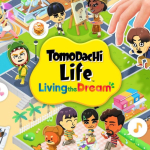



What do you actually do in Tomodachi Life: Living the Dream when a Mii has been stuck in a sadness loop for three days, refuses to eat anything you offer, and the relationship meter with their former crush is still in negative territory? That is not a hypothetical — it is the situation that pulls most new players to a guide for the first time, and the answer involves understanding several interconnected systems that the game introduces without ever fully explaining how they interact.
The Island at a Glance: What Tomodachi Life: Living the Dream Sets in Motion
You are the caretaker of a tropical island populated entirely by Miis — the blocky, expressive characters built from five personality sliders and a selection of physical features. Living the Dream is a social simulation with no win condition and no fail state. The only objective stated in the game is to sustain Mii happiness. Everything else — relationships, confessions, marriages, roommate arrangements, island design, custom items — flows from that single directive.
Unlike traditional life sims that give you a protagonist to guide through a world, Tomodachi Life: Living the Dream positions you outside the action. You are a presence your Miis are aware of, but they make their own choices about who to spend time with, who to fall for, and who to argue with. Your influence arrives through gifts, food, advice at critical moments, and the choices you make when a Mii flashes a yellow bubble asking for input. This distance is deliberate and is the thing that divides player opinion most sharply: some find it liberating, others find it passive to the point of frustration.
The island itself is new to this entry. Previous games placed Miis in a fixed apartment block; here the layout is yours to determine. You decide where residences, shops, and facilities sit. As the population grows, the island gains new buildings automatically, but their placement is yours to adjust. Miis will occasionally suggest layout changes through a "vision" mechanic — a brief animation where they picture how they'd like something moved — and following those suggestions builds happiness. Ignoring them consistently does not appear to create direct penalties, but it does mean missed happiness boosts.
Personality Types and Compatibility in Tomodachi Life: Living the Dream
Every Tomodachi Life: Living the Dream Mii's personality is set at creation using five sliders: Movement, Speech, Energy, Thinking, and Overall. The position of each slider contributes to one of 16 personality types that the game assigns automatically. The community refers to these types by shorthand names borrowed from player-made charts, since the game itself does not display the type label prominently — you have to read the sliders to infer it. Two Miis whose personality types complement each other will form relationships faster, fight less frequently, and recover from arguments more smoothly than Miis whose types clash.
This system matters more than new players typically expect. The instinct when two Miis seem reluctant to get along is to give them more gifts or push them into proximity. But if their personality types are incompatible, those interventions produce only short-term bumps in the relationship meter. Players who spend time learning which personality combinations tend to generate natural friendships versus persistent friction report a measurably different experience of the game — one where relationships feel organic rather than like a meter you are grinding up.
Little Quirks layer on top of personality. These are giftable behaviors — floating while walking, greeting others with exaggerated energy, standing restlessly, enjoying food in a particular dramatic way — that affect how other Miis perceive and react to the recipient. The effects are not documented in the game. The community term "quirk-matching" describes the practice of gifting quirks that complement a Mii's personality type and the relationship dynamic you are trying to build. It is one of the few areas where deliberate optimization meaningfully changes how relationships develop, and it is something most casual players discover only after spending significant time with the game.
Managing Confessions, Fights, and the Sadness Loop
Confessions are the most emotionally loaded mechanic in Tomodachi Life: Living the Dream. A Mii with romantic interest in another will display a "wants to confess" label in their Relationships tab. The confession event does not trigger until both Miis carry that label simultaneously — which requires patient encouragement over multiple sessions. You push them together, you see them interact on the island, and you watch the relationship meter climb. Once both Miis are ready, the event fires on its own.
A successful confession shifts the pair into Sweethearts status and opens the path toward marriage. A failed confession has immediate and lasting consequences. The rejected Mii's happiness meter disappears and is replaced by a sadness meter. They stop participating in island activities. Their relationship progress with other Miis can slip passively if you leave the sadness loop unaddressed for too long. Recovery requires direct intervention: bring the Mii food they love, offer a treasure item, or encourage them to reconcile with whoever rejected them. Some players find that a Mii who was rejected will show renewed interest in confessing again later if their overall happiness has recovered — the game never states this clearly, but it is a pattern the community has documented.
Fights between Miis follow a separate track. Two Miis can be in a fight even while both are technically Friends or Good Friends — the fight status appears alongside the relationship label rather than replacing it. Arguments that go unresolved long enough will erode the relationship meter and can eventually push a pair back to an earlier relationship stage. You can intervene by encouraging either Mii to apologize, by giving both Miis mood-lifting gifts on the same session, or simply by allowing enough time to pass. Veteran players typically intervene immediately in fights between Miis who are close to a relationship milestone, since an argument at the wrong moment can cost several sessions' worth of progress.
Roommates and the Population System
Living the Dream introduces roommates as a formal mechanic. Up to eight Miis can share a single residence. Miis who live together build relationships faster because proximity generates more spontaneous interactions. The tradeoff is that clashing personality types living together also fight more. Setting up roommate arrangements is therefore a strategic decision rather than a cosmetic one — grouping compatible Miis produces a faster-developing social cluster, while mismatched roommates create a higher-maintenance situation that demands more frequent check-ins.
The population system ties into almost everything else. New buildings and facilities appear on the island as the Mii count grows. The Palette House Workshop, one of the most substantial long-term activities in the game, does not unlock until your sixth Mii arrives. The island starts nearly empty, and early sessions can feel sparse — something Miis will even comment on directly. The game is calibrated for gradual growth, which suits players who add Miis slowly and deliberately but can feel slow for players who want the full chaos of a densely populated island from the start.
Married Miis can have children. Unlike the 3DS version, where children aged over several real weeks, Living the Dream accelerates the growth process. A child born on your island will eventually leave and can be registered as a new resident if you want them to stay. This creates a generational layer to the simulation that players who have been running their island for several months describe as one of the most surprising sources of long-term engagement.
The Palette House Workshop as a Long-Term Project
Once the Palette House unlocks at six residents, it opens six creation categories: food, clothing, treasures, house exteriors and interiors, outdoor objects, and landscaping elements. The tool has two modes. Easy mode provides simplified shape tools and color fills. Pro mode is a freehand pixel canvas where you can draw anything the pixel grid supports. Custom food items can be fed to Miis and may become favorites, adding a personal detail to a character you built from scratch. Custom house exteriors change how the island looks from the overhead view you use during regular play.
The creative community around the Palette House grew faster than most observers expected. Within weeks of launch, players were using the copy function in pro mode to build geometrically precise designs, recreating themed islands, and publishing layouts on Reddit and in community Discord servers. The catalog of official decorations in Living the Dream is smaller than in some comparable life sims, which makes the Palette House feel less like a bonus feature and more like a necessary tool for players who care about island aesthetics. As one widely shared community post noted, using custom Palette House items is "basically a must" if you want a fully decorated island with real visual character.
The honest criticism here is that the Palette House is time-intensive in a way that the rest of the game is not. Regular island caretaking operates on 20-minute sessions — check the bubbles, respond to requests, watch a confession or a fight unfold. Creating a detailed custom house exterior in pro mode can take considerably longer. Players who approach both activities with the same casual mindset often find the Palette House either underwhelming or abandoned. It rewards a different investment than the social simulation loop does, and the game does not bridge that gap particularly well.
Where Tomodachi Life: Living the Dream Divides Its Community
The repetition debate is the longest-running thread in any community space discussing this game. The core actions — respond to bubble, give food or gift, nudge a relationship, watch an event — do not change in structure as your island grows. A session on day one looks mechanically identical to a session on day ninety. More Miis means more bubbles and more simultaneous relationship dynamics to track, but the individual interactions remain consistent. Players who treat Living the Dream as a daily ritual find this sustainable and even comforting. Players who expect escalating complexity hit what the community calls "the loop wall" fairly early and often step away.
The island builder mitigates some of this, but it is a separate activity rather than an integrated solution. Whether the combination of social simulation and creative tools adds up to a compelling long-term experience depends heavily on what you want from it. Players who primarily enjoyed the 3DS game's randomness and absurdity also note that the interactive items which sparked silly one-off Mii moments were reduced in Living the Dream — traded for a broader customization palette but fewer spontaneous comedy events per session.
- Can two Miis in a fight still progress their relationship? Yes, but only slowly and only if you actively help them resolve the conflict. A fight does not freeze the relationship meter permanently, but it applies a drag effect on progress. Leaving two Miis in an ongoing argument for several sessions can push their meter backward through relationship stages, which is most costly when they were close to a milestone like Sweethearts or Best Friends.
- Do Little Quirks wear off or need to be regifted? Quirks do not expire. Once gifted, a quirk becomes a permanent part of that Mii's behavior unless another quirk overwrites the same behavioral slot. The community recommends gifting quirks deliberately rather than giving whatever is available, since some quirks affect how other Miis respond to the recipient and can accelerate or slow relationship building depending on the match.
- How do you get Miis to move in together as roommates? Roommate arrangements in Living the Dream are set by the player rather than emerging organically. You assign Miis to residences from the island management interface. The game allows up to eight Miis per residence, but there is no official guidance on optimal grouping — the community generally recommends co-locating Miis with compatible personality types who you want to build a relationship quickly, since shared housing generates more frequent spontaneous interactions than separate apartments do.
Tomodachi Life: Living the Dream rewards the rhythm of brief, regular sessions over extended marathon play. The sadness meter that appears after a failed confession, the way a personality-matched pair of Miis starts generating interactions you never arranged, the first time a custom Palette House food item becomes a Mii's all-time favorite — these are the moments the game is built around. The loop wall is real, and the repetition critique is fair. But for players who click with its particular pace, Living the Dream produces a kind of ongoing narrative investment that is genuinely unlike most things on the Switch.