


An invoice may look like a simple record of a sale, but it carries information that affects payments, accounting, tax reporting and business relationships. When companies handle thousands of invoices across departments, even small data errors can create delays and additional work. This is where E-invoicing becomes relevant. By moving invoice information into structured digital processes, businesses can improve how financial documents are created, exchanged and managed.
However, switching from paper invoices to electronic records is only one part of the process. Businesses also need to consider data quality, software compatibility, approval procedures and the requirements that apply in their country. Understanding these elements helps organisations plan a transition that supports their actual operations.
What Makes E-Invoicing Different From a Digital Invoice?
A digital invoice is not necessarily an electronic invoice in the regulatory sense. A PDF sent by email, for example, is a digital document, but its contents may still need to be entered manually into the recipient's accounting system.
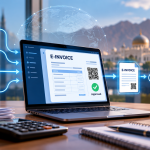
An electronic invoicing system can use structured data that software can read and process. Instead of treating the invoice solely as a document, the system handles individual fields such as invoice number, date, supplier details, quantities, tax amounts and transaction values.
This distinction matters when businesses want to automate financial workflows. Structured information can move between connected systems without requiring employees to re-enter every detail.
The precise requirements vary by jurisdiction. Some countries use electronic invoicing for tax reporting and invoice authentication, while others establish networks for exchanging structured invoices between businesses. Therefore, a company operating internationally should not assume that one country's format or process will satisfy another country's rules.
E-Invoicing: Traditional vs Digital Processes
|
Aspect |
Traditional Invoicing |
E-Invoicing |
|---|---|---|
|
Invoice creation |
Prepared manually or through basic software |
Generated using structured digital data |
|
Data entry |
Often requires repeated manual entry |
Data can flow between connected systems |
|
Error checking |
Relies heavily on manual review |
Automated validation can identify errors |
|
Invoice exchange |
Paper, email or PDF documents |
Electronic exchange of structured invoice data |
|
Processing time |
May involve manual follow-ups |
Routine steps can be automated |
|
Record management |
Paper files or separate digital folders |
Electronic records managed through connected systems |
|
Compliance |
Depends on applicable local requirements |
Must follow the relevant country's e-invoicing rules |
Where Invoice Processing Commonly Breaks Down
Many invoicing problems begin before an invoice is issued. Inaccurate customer records, inconsistent product descriptions and incomplete transaction details can affect the document from the start.
Manual data entry creates another source of errors. When employees copy information from purchase orders into accounting software, a small mistake in a quantity, reference number or tax value can lead to a mismatch between records.
Delays can also occur when invoices move through several approval stages. If employees cannot easily see whether an invoice has been reviewed, approved or sent, they may spend time following up instead of completing other financial tasks.
These issues become more difficult to manage as transaction volumes grow. A business processing a handful of invoices each week may be able to correct mistakes individually. A company handling hundreds of invoices each day needs consistent processes and reliable ways to identify exceptions.
How Structured Invoice Data Improves Daily Operations
The practical value of e invoicing depends on how well it connects with the rest of a company's financial workflow.
Consider a manufacturing business that receives orders from distributors. Once an order is confirmed, the relevant information may pass through sales, inventory, dispatch and accounts. If each department uses separate records, the finance team may have to reconcile information from several sources before issuing the final invoice.
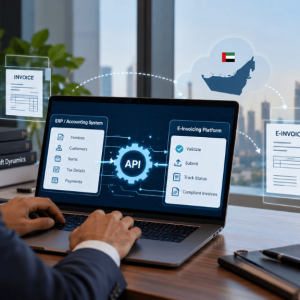
A connected process can reduce repeated data entry by allowing relevant information to flow between systems. The invoice can draw on existing transaction records, while validation checks help identify missing or inconsistent fields.
This does not eliminate the need for human review. Employees still need to handle unusual transactions, resolve discrepancies and approve corrections. The benefit comes from making routine processing more consistent while directing attention towards cases that require judgement.
Choosing Software That Fits Existing Systems
A business evaluating e-invoicing software should begin with its current accounting setup rather than selecting a tool based on features alone.
For organisations using an ERP system, integration is an important consideration. Invoice data may need to move between sales, inventory, finance and compliance applications. If these systems cannot exchange information reliably, employees may continue performing manual tasks even after introducing new software.
Businesses can review an e-invoicing solution for invoice generation and accounting workflows to understand how software can support invoice processing, data validation and integration with existing systems. The technical and regulatory requirements should be assessed separately for each country in which the business operates.
Before selecting a system, consider whether it can:
-
Exchange data with the existing accounting or ERP software.
-
Identify incomplete or inconsistent invoice information.
-
Support the invoice formats and processes required by the relevant authority.
-
Help employees trace invoice status and resolve errors.
-
Maintain records that can be retrieved for reconciliation or review.
A short assessment of these requirements can help businesses distinguish between features they genuinely need and those that add unnecessary complexity.
Why Country-Specific Compliance Matters
Electronic invoicing is developing differently across markets. The underlying idea of exchanging structured invoice data may be similar, but the technical specifications, reporting procedures and implementation schedules can differ.
Oman, for example, is introducing its Fawtara programme through a phased rollout led by the Oman Tax Authority. The programme is designed around structured electronic invoices and a connected exchange model. Businesses operating in Oman need to follow the requirements applicable to their rollout phase and verify the latest technical guidance from the authority.
India has a separate e-invoicing framework under GST. Its procedures, invoice registration requirements and applicable eligibility rules should be assessed independently rather than copied from Oman's system.
For companies working across borders, this distinction is especially important. A central accounting platform may support operations in several countries, but the invoicing process still needs to accommodate each jurisdiction's requirements.
Preparing Employees for the Change
Software implementation is only one part of a successful transition. Employees need to understand how their responsibilities may change when invoice information is handled electronically.
Finance teams should know how to review validation errors, reconcile invoice records and manage corrections. Sales and procurement employees should understand the importance of accurate customer, supplier and transaction information. IT teams need clear procedures for monitoring integrations and resolving technical issues.
Training should focus on actual business scenarios. For example, employees can practise handling an invoice with missing buyer details, correcting a mismatch between an order and an invoice, or tracing a document that has not completed the expected workflow.
Businesses should also establish clear access permissions. The ability to create invoices, amend records and approve adjustments should be assigned according to each employee's role.
Measuring Whether the System Is Working
After implementation, businesses can assess the results by monitoring a few practical indicators.
Invoice rejection rates can reveal recurring data-quality problems. Processing time can show whether routine transactions are moving through the system more efficiently. The number of manual corrections can indicate where additional validation or employee training may be needed.
It is also useful to track unresolved invoice exceptions and the time required to retrieve records. These measures help organisations identify problems that may otherwise remain hidden within daily operations.
The purpose of reviewing these indicators is not simply to measure software performance. It is to understand whether the invoicing process has become more accurate, traceable and manageable for the people who use it.
Conclusion
E invoicing changes how businesses create, exchange and maintain financial information. Its value comes from connecting invoice data with accounting processes, reducing unnecessary manual entry and making errors easier to identify.
The right approach begins with understanding local compliance requirements and reviewing existing workflows. From there, businesses can assess software compatibility, improve their data records and prepare employees for new procedures.
A well-planned transition treats electronic invoicing as part of the wider financial process. This allows businesses to build a system that supports day-to-day operations while remaining adaptable to changing regulatory requirements.