


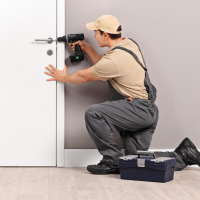

Villa security is not only about perimeter walls, gates, cameras, or alarm systems. The main entrance door is one of the most important access points in any home, and its locking system needs to remain reliable every day. A lock that becomes difficult to operate or a door that no longer closes securely can create inconvenience and may also indicate a deeper maintenance issue.
For homeowners in Dubai, door locks are exposed to constant daily use. Family members may enter and leave several times a day, while visitors, cleaners, maintenance workers, and other authorised people may also use the entrance. Over time, this repeated use can affect keys, cylinders, latches, handles, and other components.
The good news is that many lock problems provide warning signs before they become complete failures. Recognising those signs early can help homeowners decide whether the problem requires a simple adjustment, repair, key replacement, or a completely new locking system.
Why Door Locks Matter in Villa Security
The entrance lock provides a basic layer of physical security between the property and the outside environment. Even when a villa has several other security measures, a properly functioning door lock remains essential for everyday access control.
A lock should operate smoothly without requiring excessive force. If its behaviour changes, the change is worth investigating rather than simply adapting to it.
Some common warning signs include:
- A key becoming difficult to turn
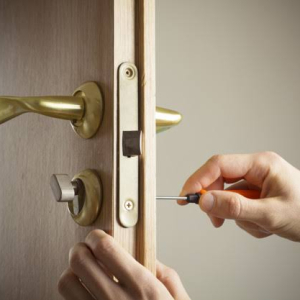
- A loose lock or door handle
- The door requiring pressure before it locks
- A key occasionally becoming stuck
- The latch failing to align correctly
- The lock working inconsistently
- The door not remaining securely locked
These symptoms do not automatically mean that the entire lock needs replacing. The underlying cause should be identified first.
1. The Key Is Becoming Difficult to Turn
One of the earliest signs of a potential door lock problem is a key that no longer turns as smoothly as it used to. Homeowners may initially compensate by applying slightly more pressure or moving the key until the mechanism responds.
Several things can cause this. The key itself may be worn, internal components may have started to deteriorate, or the door may be putting pressure on the locking mechanism because of alignment problems.
Continuing to force the key can make matters worse. Excessive pressure may bend or damage the key and can increase the possibility of it breaking inside the cylinder.
If a spare key is available, try it carefully. If the spare works normally while the original key does not, the key may be the main issue. If both keys behave in the same way, further inspection of the lock and door may be necessary.
2. The Door and Frame Are Misaligned
A door does not necessarily remain in exactly the same position throughout its lifetime. Hinges, frames, hardware, and repeated everyday use can affect alignment.
A misaligned door can place pressure on the latch or locking bolt, making a perfectly serviceable lock difficult to operate.
You may notice that:
- The door needs to be pushed while locking
- The door needs to be pulled toward you
- The door has to be lifted slightly
- The latch does not line up with the strike plate
- The lock works more easily when the door is open
In such cases, changing the lock immediately may not solve the real problem. The alignment of the door and frame should also be considered.
3. The Lock or Handle Feels Loose
A loose door handle or lock component can be easy to overlook, particularly when the door still opens and closes normally. However, movement in the hardware can affect the way the internal mechanism operates.
Regular use can gradually loosen certain fittings. In other cases, excessive movement can indicate wear or damage within the locking assembly.
Homeowners should pay attention when a handle, cylinder, or lock begins to feel noticeably different from normal. Addressing the issue early may prevent further deterioration.
4. The Door Closes but Does Not Lock Properly
A door appearing closed does not necessarily mean that it is properly secured. The latch or locking bolt must engage correctly with the corresponding part of the frame.
A homeowner may notice that the door closes normally but the locking mechanism does not fully engage. Other signs may include a bolt that does not extend completely or a key that cannot complete its normal turning movement.
This can result from alignment problems, worn components, a damaged latch, or an issue inside the lock.
Because this directly affects the ability to secure the property, recurring problems should be investigated rather than ignored.
5. The Key May Be the Actual Problem
When a lock becomes difficult to operate, homeowners often assume that the lock itself has failed. However, the key can sometimes be responsible.
Keys experience friction every time they are inserted and turned. Over a long period, their edges and cuts can become worn. A heavily used key may eventually become less accurate and less reliable.
One useful check is to compare the primary key with a spare. If the spare operates the lock normally, replacing the worn key may solve the problem without replacing the entire locking mechanism.
6. Damaged Keys Should Not Be Ignored
A bent, cracked, or visibly damaged key can become a serious inconvenience if it is allowed to deteriorate further.
A key does not have to be completely broken to create problems. Even a small bend can affect how it enters and operates the cylinder.
Continuing to use a damaged key also increases the possibility of it breaking while inside the lock. Removing a broken key can be more complicated than replacing a damaged key beforehand.
If a key is showing obvious signs of damage, homeowners should consider having it assessed and replaced before it becomes unusable.
7. Older Locks Can Become Unreliable
Door locks experience mechanical wear just like many other components around a property. A lock that has been used for years may eventually develop internal wear even when its external appearance remains acceptable.
The first signs can be relatively minor. The key may occasionally feel stiff, the handle may become loose, or the locking mechanism may require slightly more effort.
If the same lock repeatedly develops problems, continued repairs may not always be the most practical solution. Depending on its condition, replacing it with a suitable modern lock may provide a more dependable long-term option.
8. Smart Locks Have Different Warning Signs
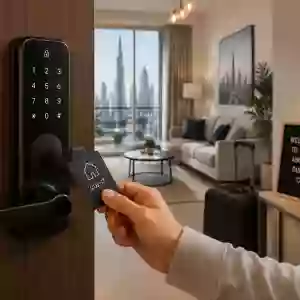
Many modern villas use smart locks and electronic access systems. These can provide convenient access through methods such as codes, cards, fingerprints, mobile applications, or other electronic credentials.
However, smart locks can develop problems that traditional mechanical locks do not.
Potential warning signs include:
- Low battery notifications
- A keypad that stops responding
- Fingerprint recognition problems
- Electronic access failure
- Connectivity issues
Homeowners should follow the manufacturer's instructions when dealing with an electronic lock problem. Attempting to dismantle the system without understanding its components can create additional issues.
9. Moving Into a New Villa
Security should also be considered when moving into a new villa. Previous occupants, contractors, maintenance workers, cleaners, or other authorised individuals may have had access to the property at different times.
Homeowners should understand the existing access arrangements and discuss the condition of the locks where necessary.
Depending on the circumstances, changing or upgrading the locking system may provide greater control over who can access the property. The decision can depend on the condition of the existing locks and the homeowner's security requirements.
What to Do When a Villa Door Lock Stops Working
When a door lock suddenly stops working, the first step is to avoid forcing it. Repeatedly twisting a key, pushing aggressively against the door, or attempting to dismantle the mechanism can turn a manageable problem into a more complicated repair.
Homeowners can start with a few basic checks:
- Inspect the key for visible damage.
- Try a spare key if one is available.
- Check whether the door appears misaligned.
- See whether the problem happens when the door is open or closed.
- Check the battery if the property uses a smart lock.
If the issue continues, professional diagnosis can help determine whether the problem involves the key, cylinder, latch, alignment, or another component.
Should You Repair or Replace the Lock?
Homeowners do not always need to replace a lock simply because it has become difficult to use. In some cases, a repair or adjustment may restore normal operation.
Repair may be appropriate when:
- The lock is generally in good condition
- The problem is caused by door alignment
- A component has become loose
- The mechanism only requires servicing
Replacement may be more appropriate when:
- The lock is heavily worn
- The mechanism has significant physical damage
- The same problem keeps returning
- The existing lock is outdated
- The property requires a different security solution
A professional assessment can help homeowners make this decision based on the actual condition of the locking system.
When Should a Homeowner Call a Locksmith?
Professional assistance becomes particularly useful when a homeowner cannot determine why a lock is malfunctioning or when the door cannot be secured properly.
Situations that may require professional attention include a key stuck inside the lock, a broken key, a complete lockout, repeated locking failures, a damaged mechanism, or an entrance that no longer secures correctly.
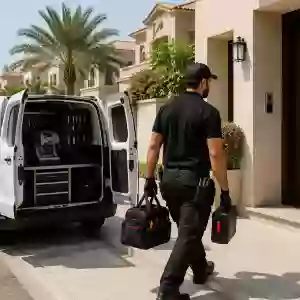
A qualified locksmith in Dubai can assess the complete locking setup rather than focusing only on the visible keyhole. This can help identify whether the problem is related to the lock, key, door, or surrounding hardware.
Choosing the Right Locksmith for a Villa
When professional help is required, homeowners should consider whether the locksmith has experience with the type of locking system installed at the property.
This is particularly important for villas using high-security locks, specialised doors, smart locks, or other modern access systems.
A good service should focus on understanding the problem before recommending work. The objective should be to provide an appropriate solution rather than automatically replacing components that may still be usable.
If you need help with a villa lock problem, you can learn more about Locksmith services available in Dubai.
How to Prevent Door Lock Problems
No mechanical lock lasts forever, but homeowners can reduce the likelihood of unexpected failures by paying attention to early warning signs.
- Do not force keys that suddenly become difficult to turn.
- Replace badly worn or damaged keys.
- Keep suitable spare keys in a secure location.
- Address door alignment problems early.
- Check loose handles and visible hardware.
- Pay attention to recurring locking problems.
- Replace heavily worn locks when necessary.
- Monitor batteries in smart locking systems.
These simple habits can help identify developing problems before they result in an inconvenient lockout.
Frequently Asked Questions
Why does my villa door lock suddenly become difficult to turn?
A difficult lock can be caused by a worn key, internal mechanical wear, door misalignment, loose hardware, or another issue. Testing a spare key can help determine whether the problem is related to the key itself.
Should I force a key that will not turn?
No. Excessive force can bend or break the key and may damage the lock. If the key does not operate normally, it is safer to stop and investigate the cause.
How can I tell if my villa door is misaligned?
If the lock operates easily when the door is open but becomes difficult when the door is closed, alignment may be contributing to the problem. You may also notice that the door needs to be pushed, pulled, or lifted before the lock works.
Does an old door lock always need replacement?
No. Some older locks can be adjusted or repaired if their main components are still in good condition. Replacement may be more appropriate when the mechanism is heavily worn, damaged, or repeatedly failing.
Can a locksmith repair a villa door lock?
Depending on the cause, a locksmith may be able to repair or adjust the existing mechanism. If the lock is beyond practical repair, replacement may be recommended instead.
Should I change my locks after moving into a new villa?
It can be worth reviewing the property's locks and previous access arrangements after moving in. Whether replacement is necessary depends on the condition of the existing locks and who may have had access previously.
Can smart locks develop problems?
Yes. Smart locks can experience low battery power, keypad problems, connectivity issues, or other electronic faults. The manufacturer's recommended emergency procedure should be followed before attempting any physical modification.
How often should villa door locks be replaced?
There is no single replacement schedule that applies to every lock. The condition, usage, type of mechanism, and security requirements of the property should be considered. A lock that remains reliable may not need replacement simply because it has reached a certain age.
Final Thoughts
Door locks are an important part of villa security, but they are often only noticed when something goes wrong. A difficult key, loose handle, poor alignment, damaged latch, or unreliable locking mechanism can all be early indications that a door needs attention.
Homeowners should avoid forcing a lock when it stops working normally. Simple checks can sometimes identify whether the key or door alignment is responsible, while persistent problems may require professional inspection.
The right solution is not always a complete lock replacement. Depending on the situation, adjustment, repair, key replacement, or a new locking system may be more appropriate.
For villa owners in Dubai, keeping entrance locks properly maintained is a straightforward but important part of protecting the property. Paying attention to small warning signs and dealing with problems before they become emergencies can help maintain reliable access and everyday security.