



Introduction
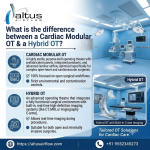
Altus Airflow understands that modern cardiac healthcare facilities require advanced surgical infrastructure to support complex procedures and specialised medical equipment. A Cardiac Modular Operation Theatre is designed to provide a controlled, hygienic, and efficient environment for cardiac surgeries through specialised modular construction, integrated HVAC systems, and medical infrastructure.
A hybrid OT, on the other hand, combines conventional surgical facilities with advanced medical imaging technologies. Although both environments support complex surgical procedures, they differ in their design, equipment integration, clinical applications, and operational requirements.
What Is a Cardiac Modular Operation Theatre?
A Cardiac Modular Operation Theatre is a specially designed surgical environment developed to support cardiac procedures, including open-heart surgeries and other complex cardiovascular interventions. It uses modular construction techniques to create a controlled operating environment that meets the specific requirements of cardiac surgical teams.
These theatres generally incorporate specialised wall and ceiling panels, integrated lighting, medical gas systems, electrical infrastructure, and advanced ventilation arrangements. Their design focuses on maintaining hygiene, controlling airborne contamination, and supporting the efficient movement of surgical personnel and equipment.
Some important features include:
-
Modular wall and ceiling panels: Smooth, non-porous surfaces support cleaning and help maintain hygienic conditions.
-
Advanced HVAC systems: Controlled ventilation, filtration, temperature, and humidity help maintain the required operating environment.
-
Medical gas infrastructure: Integrated gas outlets provide essential connections for anaesthesia and other clinical requirements.
-
Surgical lighting: Specialised lighting systems provide suitable illumination during complex cardiac procedures.
-
Electrical integration: Properly planned electrical services support surgical equipment and monitoring devices.
-
Equipment accessibility: The layout allows medical teams to access essential instruments and equipment efficiently.
The overall objective is to create a reliable surgical environment that supports cardiac procedures while meeting applicable healthcare infrastructure and safety requirements.
What Is a Hybrid OT?
A hybrid operation theatre is an advanced surgical facility that combines the functions of a conventional operating room with sophisticated medical imaging technologies.
Unlike a traditional operating theatre, a hybrid OT allows surgeons to perform surgical procedures while accessing real-time diagnostic imaging within the same environment. It is particularly useful for complex cardiovascular interventions that require both surgical expertise and image-guided treatment.
A hybrid OT may include equipment such as fixed angiography systems, C-arm imaging units, advanced fluoroscopy systems, and other specialised imaging technologies.
Important features of a hybrid OT include:
-
Advanced imaging systems: Real-time imaging helps medical professionals visualise blood vessels and anatomical structures during procedures.
-
Integrated surgical equipment: Imaging technology works alongside conventional surgical instruments and operating room systems.
-
Specialised room planning: The facility requires sufficient space and structural support for large imaging equipment.
-
Radiation protection: Appropriate shielding and radiation safety measures are incorporated into the room design.
-
Advanced monitoring: Integrated monitoring systems support clinical observation during complex procedures.
-
Multidisciplinary workflow: The environment allows surgeons, cardiologists, anaesthesiologists, and imaging specialists to work together.
Hybrid OTs are commonly used for procedures such as endovascular interventions, transcatheter valve procedures, and selected complex cardiovascular treatments.
What Are the Major Differences Between a Cardiac Modular OT and a Hybrid OT?
Although both facilities are designed for advanced surgical care, their primary purposes and infrastructure requirements are different.
1. Primary Purpose and Clinical Applications
The main difference lies in the type of procedures they are designed to support.
A cardiac modular operating theatre primarily provides a controlled surgical environment for cardiac operations. These may include coronary artery bypass grafting, valve replacement, and other open-heart procedures.
A hybrid OT is designed to support procedures that combine conventional surgical techniques with advanced image-guided interventions. It allows medical teams to use imaging technology during treatment without transferring patients to a separate imaging department.
Therefore, the clinical application determines the infrastructure and equipment requirements of each facility.
2. Medical Equipment Requirements
Equipment integration is another important difference.
A cardiac modular OT generally includes surgical lights, anaesthesia workstations, patient monitoring systems, heart-lung machine connections where required, medical gas outlets, and other specialised cardiac surgical equipment.
A hybrid OT requires these essential operating room facilities along with advanced imaging equipment. Fixed angiography systems, imaging monitors, radiation protection components, and specialised equipment supports may also be necessary.
The imaging equipment in hybrid facilities often requires additional structural planning, including suitable ceiling supports and floor loading considerations.
3. Infrastructure and Space Planning
Both environments require careful infrastructure planning, but hybrid OTs generally have additional spatial and structural requirements.
A cardiac modular OT is planned around the surgical workflow, equipment positioning, sterile zones, and efficient movement of medical professionals.
A hybrid OT must accommodate imaging equipment, its movement or positioning requirements, radiation protection systems, and additional technical infrastructure. Adequate space is also necessary to ensure that imaging equipment does not interfere with surgical access or emergency movement.
These differences should be considered during the initial architectural and engineering planning stages.
4. HVAC and Environmental Control
Air quality is an essential consideration in both types of operating theatres.
A cardiac modular OT requires a carefully designed HVAC system to support temperature regulation, humidity management, filtration, and controlled airflow. Depending on the applicable standards and clinical requirements, the system may incorporate suitable pressure relationships and air-change arrangements.
Hybrid OTs also require controlled ventilation and suitable environmental conditions. However, their HVAC design must be coordinated with imaging equipment, radiation-related infrastructure, heat loads, and the operational requirements of the room.
In both environments, the HVAC system should be designed according to applicable healthcare engineering standards rather than relying on a general commercial ventilation arrangement.
5. Radiation Protection Requirements
Radiation protection is a significant consideration when comparing these two facilities.
A conventional cardiac modular OT does not necessarily require the same radiation shielding infrastructure as a hybrid OT, although certain cardiac procedures may use mobile imaging equipment.
Hybrid OTs frequently incorporate fixed imaging systems that use X-rays. Consequently, their design may require lead-lined walls, radiation-protective doors, observation windows, and other shielding arrangements based on a qualified radiation protection assessment.
The shielding requirements should be established according to equipment specifications, room configuration, workload, and applicable radiation safety regulations.
6. Surgical Workflow and Medical Team Coordination
A cardiac modular OT is organised to support conventional cardiac surgical workflows. The operating team requires convenient access to surgical instruments, anaesthesia equipment, monitoring systems, and essential medical services.
Hybrid OTs support a broader multidisciplinary workflow. Cardiac surgeons, interventional cardiologists, radiologists, anaesthesiologists, and specialised imaging professionals may work together during procedures.
The room layout must therefore accommodate multiple professionals and different equipment systems without disrupting patient care.
7. Installation and Maintenance Requirements
The installation process also differs because of the complexity of the equipment and infrastructure involved.
A cardiac modular OT installation generally includes modular panels, HVAC integration, electrical services, medical gas systems, surgical lighting, and equipment coordination.
Hybrid OT installation requires these operating room components along with additional imaging infrastructure, radiation shielding, structural supports, and specialised electrical and technical connections.
Maintenance activities must also be planned according to the installed systems. Regular inspections, equipment servicing, HVAC maintenance, and validation help support reliable operation.
What Are the Important Design Considerations for Both Operating Theatres?
Developing a modern operating theatre requires coordination between architectural planning, engineering systems, clinical requirements, and medical equipment suppliers.
Several factors should be evaluated before beginning construction or installation.
1. Infection Control and Hygiene
Operating theatres require surfaces and infrastructure that support effective cleaning and infection prevention.
Modular wall and ceiling systems are commonly selected because they offer smooth finishes and can accommodate integrated services. Properly sealed joints, suitable flooring, and carefully designed access points help support hygiene management.
2. Electrical and Medical Gas Integration
Both operating theatres require dependable electrical infrastructure and medical gas arrangements.
Electrical planning should account for surgical lights, monitoring equipment, anaesthesia systems, imaging devices where applicable, and emergency power requirements.
Medical gas systems should be designed around the clinical equipment and applicable healthcare engineering standards.
3. Equipment Positioning
The positioning of surgical equipment can influence the efficiency of medical procedures.
Designers should consider equipment dimensions, ceiling-mounted services, operating tables, staff movement, maintenance access, and emergency circulation.
Hybrid OTs require additional coordination because large imaging systems occupy significant space and may have specific structural requirements.
4. Regulatory and Technical Compliance
Operating theatre infrastructure should be developed in accordance with relevant healthcare facility standards, electrical safety requirements, fire safety provisions, and radiation protection regulations where applicable.
Technical specifications should be reviewed before installation to ensure that all components are suitable for their intended clinical applications.
Which Operating Theatre Is More Suitable for a Modern Cardiac Hospital?
The choice between these two facilities depends on the hospital's clinical specialisation, treatment requirements, available infrastructure, and long-term development plans.
A cardiac modular OT may be appropriate for hospitals primarily performing conventional cardiac surgeries that require a highly controlled surgical environment.
A hybrid OT may be more suitable for facilities that regularly perform complex image-guided cardiovascular interventions alongside surgical procedures.
Hospitals with broader cardiovascular programmes may benefit from having both facilities. This allows medical teams to select the most appropriate environment according to the procedure and patient requirements.
The decision should involve cardiac surgeons, interventional cardiologists, hospital administrators, biomedical engineers, architects, and healthcare infrastructure specialists.
How Does Modular Construction Support Modern Operating Theatre Development?
Modular construction provides a structured approach to developing specialised operating room infrastructure. Instead of relying entirely on conventional interior construction, modular systems use prefabricated components designed to integrate with essential engineering services.
Some advantages include:
-
Organised installation: Prefabricated wall and ceiling components support a planned installation process.
-
Integrated services: Electrical outlets, medical gas connections, and other services can be coordinated with the modular layout.
-
Hygienic finishes: Specialised surface materials support routine cleaning and maintenance.
-
Efficient space utilisation: Equipment and service locations can be planned according to clinical workflows.
-
Future adaptability: Certain modular components can be modified or upgraded depending on the original design and system compatibility.
However, modular construction alone does not determine the clinical capabilities of an operating theatre. Equipment selection, engineering design, installation quality, and commissioning remain essential.
Conclusion
A cardiac modular operating theatre and a hybrid OT serve different but complementary purposes in modern cardiovascular healthcare. The former focuses on providing a controlled environment for cardiac surgical procedures, while the latter combines surgical capabilities with advanced medical imaging for complex image-guided interventions. Their differences involve equipment, HVAC requirements, radiation protection, space planning, and clinical workflows.
Altus Airflow supports the development of specialised healthcare infrastructure through coordinated modular planning and engineering integration. With appropriate design considerations and technical execution, Altus Airflow helps healthcare facilities develop operating theatre environments that support their clinical requirements and long-term operational objectives.
Frequently Asked Questions
1. What is a Cardiac Modular Operation Theatre?
A Cardiac Modular Operation Theatre is a specialised surgical environment designed for cardiac procedures, featuring modular construction, controlled ventilation, medical gas systems, and integrated surgical infrastructure.
2. Is a hybrid OT different from a cardiac operating theatre?
Yes. A hybrid OT combines conventional surgical facilities with advanced medical imaging systems, whereas a cardiac operating theatre primarily supports cardiac surgical procedures.
3. Does a hybrid OT require radiation shielding?
Yes, hybrid OTs using fixed X-ray imaging equipment generally require appropriately designed radiation shielding based on regulatory and technical assessments.
4. What equipment is required in a cardiac modular OT?
Common equipment includes surgical lights, anaesthesia workstations, patient monitors, medical gas outlets, and specialised cardiac surgical equipment.
5. Can a hospital have both cardiac and hybrid OTs?
Yes. Hospitals with comprehensive cardiovascular departments may establish both facilities to support different surgical and image-guided treatment requirements.
Read Our Previous Blog ---------------> What are the energy-saving features of a Modular Cardiac Operation Theatre?