



SAP FICO (Financial Accounting and Controlling) is an essential module that supports an organization's financial management and accounting requirements. It helps businesses maintain financial records, manage expenses, track revenue, and analyze operational costs. In an integrated SAP environment, financial activities are connected with various business processes, making it easier to exchange SAP FICO Course in Chennai information between departments. SAP FICO works alongside other modules to automate accounting entries, improve financial accuracy, and provide a complete picture of business performance. Understanding these connections is important for anyone interested in building expertise in SAP financial management.

SAP FICO Integration With SAP Material Management
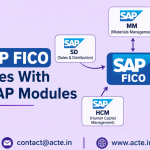
SAP Material Management (MM) handles purchasing, inventory control, goods movement, and supplier transactions. Its integration with SAP FICO ensures that procurement activities are reflected in the organization's financial accounts. When purchased materials are received, the system updates inventory values and creates the necessary accounting documents. Similarly, supplier invoices generate vendor liability entries during invoice verification. This integration helps businesses maintain accurate stock valuation, control purchasing expenses, and manage accounts payable efficiently. It also ensures that procurement and financial records remain consistent.
SAP FICO Integration With SAP Sales and Distribution
SAP Sales and Distribution (SD) manages customer orders, deliveries, billing, and sales operations. Its connection with SAP FICO ensures that sales transactions SAP FICO Course in Bangalore automatically update financial records. When a billing document is created, the system records customer receivables, sales revenue, and applicable taxes. Depending on the configured process, delivery-related transactions also update inventory and cost of goods sold accounts. This integration helps organizations monitor revenue, manage customer balances, and analyze profitability. It also reduces manual accounting activities and improves the accuracy of financial statements.

SAP FICO Integration With SAP Production Planning
SAP Production Planning (PP) supports manufacturing activities, production scheduling, and material requirements planning. Integration with SAP FICO allows organizations to calculate and monitor production-related costs. Expenses associated with raw materials, labor, and manufacturing overheads contribute to product costing. The system also supports comparisons between planned and actual SAP FICO Course in Hyderabad production expenses, helping businesses identify cost variances. This information enables managers to improve cost control, evaluate manufacturing efficiency, and make informed production decisions. It also supports accurate inventory valuation and financial planning.
SAP FICO Integration With SAP Human Capital Management
SAP Human Capital Management (HCM) manages employee information, payroll, and workforce administration. Its integration with SAP FICO connects payroll activities with financial accounting. When payroll is processed, the system generates accounting entries for employee salaries, benefits, deductions, and applicable liabilities. These transactions are transferred to the relevant financial accounts, helping organizations maintain accurate employee expense records. This integration simplifies payroll accounting, supports financial reconciliation, and improves coordination between human resources and finance teams.
Advantages of Connecting SAP FICO With Other Modules
SAP FICO integration provides several advantages by connecting financial information with everyday business activities. It reduces repetitive data entry, improves accounting accuracy, and supports faster reporting. Organizations can monitor procurement expenses, sales performance, production costs, and employee-related expenditures through a centralized system. It also improves departmental SAP FICO Online Course coordination, strengthens financial control, and provides reliable information for budgeting and business planning.
Conclusion
SAP FICO plays a central role in connecting financial management with other business functions through its integration with SAP MM, SD, PP, and HCM. These connections help organizations automate financial transactions, maintain accurate records, and improve operational efficiency. For aspiring SAP FICO consultants, understanding how these modules interact is essential for developing practical ERP knowledge. Learning these integration processes can strengthen professional skills and create opportunities in SAP implementation, configuration, and support roles.