

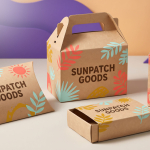

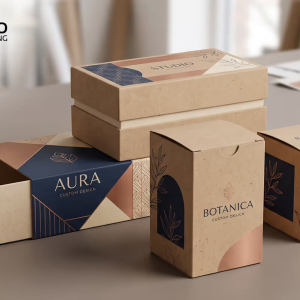
A craft fair stall has about ten seconds to catch a passing customer, and the gift box often does half the selling. Natural brown board suits handmade goods because it feels honest and warm. Choosing Kraft Gift Boxes for a stall means planning for fast wrapping, crowded tables and customers who handle everything. These checks cover what to test, compare and ask before you order.
How a Busy Stall Changes What You Need
At a fair, you wrap gifts quickly, often while talking to the next customer. A box that takes a minute to assemble slows your whole queue.
Count the steps from flat sheet to closed lid and time yourself with a stopwatch. Pre-glued bases and simple tuck lids usually save the most seconds. If you cannot build a box one-handed in a reasonable time, ask your supplier about simpler styles.
Displaying Boxes So They Sell Themselves
Boxes on a table do quiet marketing. Stack a few assembled samples with the lid off and a product inside, so shoppers can picture the finished gift.
Check how the box looks from a metre away. Is your name readable? Does the brown board blend into the wooden table or stand out against it? A cloth or a stand underneath can make a real difference, and testing it at home costs nothing.
Print and Stamps on Natural Brown Board
Brown stock mutes pale inks, so dark, simple artwork usually reads best. Fine lines and tiny text can lose sharpness, particularly on rougher board.
Ask for a printed sample and compare it with a hand-stamped box if you use stamps. View it in daylight and under tent or hall lighting, because both can change how colours look. Rub the print with a dry cloth to see whether it marks.
Protecting Gifts in Tote Bags and Rainy Weather
Fair customers carry purchases in bags, pockets and the occasional wet car park. Corners get squashed and damp air softens board.
Put a filled sample in a tote with other items and carry it around for an hour. Then leave another in a cool, damp room overnight and see whether it keeps its shape. If your gifts are heavy or fragile, say so early so the right board grade is suggested.
Material Claims and Rules to Check
Brown board is often linked with recyclable materials, but avoid making environmental claims you cannot support. Ask your supplier for evidence you can verify. If the boxes will hold food or toiletries, rules differ by region, so check the current requirements for your market. This is general information, not legal advice.
Four Details to Confirm Before You Request a Quote
Send these together and your quote will be quicker and easier to compare:
- The internal length, width and height, measured around your finished gift
- The board strength needed for the weight of the contents
- The print colours, any stamping plans and where the artwork should sit
- Your first order quantity and the reorder volumes you expect
Trying Your Own Gifts in a Real Sample
A flat drawing cannot show how a box copes with a rushed wrap. At Boxo Packaging, the process starts with you sending over your product, so the fit is judged against the real item. You then request samples, test them at your own stall or packing table, and review the fit, print and structure together. Production begins only once you are satisfied, which makes it easier to settle on Kraft Gift Boxes that suit your range.
Good fair boxes come from timing the wrap, testing them in bags and damp air, and checking the print in real light. Boxo Packaging supports that careful, sample-first approach, so every gift leaves your stall looking tidy and arrives in good shape.
Bakery Packaging for Pastries, Rolls and Morning Trade
A bakery’s busiest hour is also its most unforgiving. Queues form, trays empty fast and every box has to open, fill and close without fuss. Planning Bakery Packaging around the morning rush helps croissants stay crisp and staff stay calm. These checks cover what to measure, test and ask before you order.
Why Crisp Pastry and Closed Lids Do Not Mix
Flaky pastry softens quickly when steam is trapped. A tightly sealed box keeps warmth in, and that warmth turns into damp.
Fill a sample with items straight from the oven and close the lid. Wait twenty minutes, then open it and check the texture of the pastry and the feel of the inside walls. If condensation has formed, ask your supplier about vents, a looser fit or a different board.
Matching Box Depth to Tall and Delicate Items
A doughnut, a cream horn and a bread roll all need different depths. Too shallow and the lid squashes icing. Too deep and items slide about.
Measure your tallest product with its topping, glaze or dusting in place. Then check how much room is left above it. Write the internal dimensions in the order length, width, height so nobody reads them back to front when the order is placed.
Handling Grease and Sugar Marks
Butter, glaze and icing sugar all leave marks on plain board. Place a filled sample in a warm room for an hour and look at the base and corners for stains or soft patches.
Where boxes will touch food directly, rules differ by region, so check the current requirements for your market. This is general information, not legal advice. Avoid printing material or safety claims unless your supplier can show you evidence you can verify.
Speed of Assembly for Busy Counters
Staff often build and fill a box in seconds, so every extra fold costs time. Ask a new team member to assemble ten samples with a stopwatch running and note where they hesitate.
Pre-glued bases and simple tuck lids tend to save the most time. Also check that flat stock fits your storage space, because a bulky stack in a small back room is quickly ignored.
Quick Checks to Run on Every Sample
A short routine reveals most weak points:
- Carry a filled box by its base and sides across a room and set it down gently.
- Stack two filled boxes and leave them for an hour to see whether the lower lid sags.
- Wipe the printed surface with a dry cloth, then a barely damp one, to see whether the ink marks.
- Open and close the lid ten times and check that the folds stay crisp.
Write down each weak point and pass it to your supplier before production begins.
Four Details to Confirm Before You Request a Quote
Send these together and your quote will be quicker and easier to compare:
- The internal length, width and height, measured around your tallest item
- The board strength needed for the filled weight and any grease
- The print colours, finishes and where the artwork should sit
- Your first order quantity and the weekly volumes you expect to reorder
Putting Fresh Bakes Through a Real Trial
A flat drawing cannot show how a warm pastry behaves in a closed box. At Boxo Packaging, the process starts with you sending over your product, so the fit is judged against the real item. You then request samples, test them in your own kitchen and at your own counter, and review the fit, print and structure together. Production begins only once you are satisfied, which makes it easier to settle on Bakery Packaging that suits your menu.
Good bakery boxes come from testing with warm bakes, timing the build and checking the print after sticky handling. Boxo Packaging supports that careful, sample-first approach, so every order reaches the customer looking as fresh as it did at the counter.