


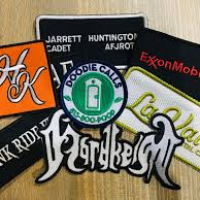
Rush woven labels offer a practical way to add branding, identification, and decorative details to clothing, uniforms, bags, and other textile products. Whether you manage a clothing brand, create personalized accessories, or work on custom uniform projects, woven labels can help give products a consistent and professional appearance.
Woven labels are made by interlacing threads to create text, logos, symbols, and other design elements. They can display brand names, product information, identification details, and decorative artwork.
Military-inspired apparel is another area where textile identification and insignia are important. Understanding the military backwards flag meaning can help explain a recognizable design element used on certain military-style uniforms and tactical clothing.
What Are Rush Woven Labels?
Rush woven labels are textile labels created by weaving threads together to form a design. Unlike printed labels, which place ink on a material's surface, woven labels incorporate the design directly into the fabric structure.
They can display:
-
Brand names and logos
-
Clothing sizes
-
Product identifiers
-
Decorative symbols
-
Short messages
-
Manufacturing details
-
Selected care information
Woven labels are commonly sewn into garments, although some styles can be attached to other textile products using suitable methods.
Why Choose Woven Labels?
Woven labels offer several useful features for apparel and textile projects.
Detailed Branding
Woven construction can reproduce text, logos, and graphic elements with a distinctive textile finish. This makes woven labels suitable for businesses that want consistent branding across their products.
Professional Appearance
A carefully designed label can make a garment look more complete. Its placement, colors, and finishing all contribute to the final appearance.
Flexible Design Options
Woven labels can be created in different shapes, sizes, colors, and fold styles to suit different garments.
Multiple Applications
They can be incorporated into clothing, bags, hats, uniforms, and other textile products, depending on their construction and attachment method.
Common Types of Woven Labels
Different woven label styles are suitable for different purposes.
Damask Woven Labels
Damask labels use fine weaving to create detailed designs. They are often selected for branding that includes smaller lettering or intricate artwork.
Satin Labels
Satin labels have a smoother surface and can provide a softer feel. Their suitability depends on the garment and intended use.
Taffeta Labels
Taffeta labels generally have a lighter construction and may be appropriate for simpler identification or branding requirements.
Folded Woven Labels
Folded labels offer different attachment and presentation options.
Common styles include:
-
Center-fold labels
-
End-fold labels
-
Manhattan-fold labels
-
Straight-cut labels
The best style depends on whether the label will be sewn into a seam, attached along an edge, or displayed on the outside of a product.
Rush Woven Labels for Clothing Brands
For clothing businesses, Rush woven labels can help maintain a consistent brand identity across multiple products.
A label may display a company name, logo, collection name, or another identifying detail. Reusing the same design across suitable products can make a brand easier to recognize.
Woven labels may be used on:
-
T-shirts
-
Hoodies
-
Jackets
-
Jeans
-
Dresses
-
Sportswear
-
Children's clothing
-
Handmade garments
Before finalizing a label, check its dimensions, placement, and texture to make sure it complements the garment.
Understanding Military Backwards Flag Meaning
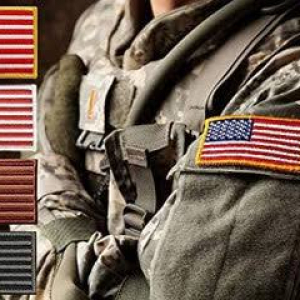
The military backwards flag meaning is associated with the way the United States flag is displayed on certain military uniforms.
On some U.S. military uniforms, the flag appears with the star field facing forward, toward the direction the wearer moves. This can make the flag look reversed compared with the usual presentation on a stationary flag.
The design is commonly called a reversed or reverse-field flag. It is intended to represent the flag moving forward alongside the wearer rather than appearing to trail behind.
Why Is the Flag Reversed?
The placement is connected to military tradition and the visual convention of displaying a flag as if it were moving forward.
When a flag is carried on a pole, the star field is positioned near the pole, while the stripes extend outward. On a moving uniform, the forward-facing star field represents the flag advancing with the wearer.
Where Is the Backwards Flag Patch Used?
The reversed flag design is associated with certain U.S. military uniform configurations. It may also appear on military-inspired clothing and tactical-style accessories.
However, official military uniforms follow specific regulations regarding insignia, placement, and approved designs. Not every uniform or organization uses the same configuration.
Woven Labels vs. Military Flag Patches
Woven labels and flag patches can both use textile construction, but their purposes are different.
Woven Labels
Woven labels are generally used for branding, product identification, and garment information. They commonly display names, logos, sizes, or care details.
Military Flag Patches
Military flag patches display a flag design and may communicate national identification or represent a military-inspired style. Their construction can be embroidered, woven, or produced using another suitable method.
| Feature | Woven Labels | Military Flag Patches |
|---|---|---|
| Main purpose | Branding and identification | Flag representation |
| Common design | Text, logos, and product details | Flag artwork |
| Construction | Woven textile | Embroidered, woven, or other materials |
| Placement | Seams, hems, and garment surfaces | Designated uniform or accessory areas |
| Attachment | Commonly sewn | Sew-on or another suitable method |
The choice depends on the product and intended application.
Designing Military-Inspired Woven Labels and Patches
Military-inspired designs often use simple layouts, clear symbols, and contrasting colors.
When creating a related textile design, consider:
-
The purpose of the item
-
The intended audience
-
The correct orientation of the artwork
-
Readable lettering
-
Suitable dimensions
-
Material and construction
-
Appropriate attachment methods
If the design uses official military insignia, flags, or organizational symbols, check the applicable rules and permissions before producing or using it.
How to Prepare Artwork for Woven Labels
Good artwork preparation helps ensure that the finished label communicates the intended information clearly.
Step 1: Define the Purpose
Decide whether the label will display a brand, size, product identifier, or decorative design.
Step 2: Create the Artwork
Prepare the logo, text, or symbol using suitable design software.
Step 3: Choose the Dimensions
Measure the intended label area and select a size that supports readable text.
Step 4: Select Colors
Choose colors that provide sufficient contrast and complement the garment.
Step 5: Choose the Fold and Finish
Determine how the label will be attached and whether it requires folded edges or another finishing style.
Step 6: Review the Design Proof
Check spelling, proportions, colors, and placement before approving production.
For complex designs, simplifying fine details may improve the final woven result.
Caring for Woven Labels and Patches
Care requirements depend on the material, attachment method, and garment.
To maintain their appearance:
-
Follow the garment's washing instructions.
-
Use cleaning methods suitable for the textile.
-
Avoid excessive heat when the material requires it.
-
Inspect stitching and edges periodically.
-
Repair loose stitching when appropriate.
-
Follow any special care instructions supplied with the product.
For official military uniforms, follow the applicable uniform-care guidance and avoid unauthorized alterations to required markings.
Why Choose Rush Patch?
Rush Patch supports custom patch projects for apparel, accessories, teams, and branding applications. When planning Rush woven labels, consider the artwork, dimensions, fabric, finishing style, and attachment method to determine which design suits your project.
If you are exploring military-inspired designs, the military backwards flag meaning provides additional context about the orientation of the U.S. flag on certain military uniforms.
Confirm current product specifications and available customization options before placing an order.
Final Thoughts
Rush woven labels can help clothing brands and textile businesses present consistent branding through woven logos, text, and identifying details. Choosing the right construction, size, fold, and attachment method helps ensure that a label works with its intended garment.
Understanding the military backwards flag meaning also provides useful background when exploring military-inspired patches and uniform designs. Woven labels and flag patches serve different purposes, but both demonstrate how textile details can communicate identity and information.
Frequently Asked Questions
What are Rush woven labels used for?
Rush woven labels can display brand names, logos, sizes, and other identifying details on clothing, bags, uniforms, and textile accessories.
What does a backwards military flag mean?
On certain U.S. military uniforms, the reversed flag design places the star field toward the front of the wearer. This represents the flag moving forward alongside the wearer.
Are military flag patches embroidered or woven?
Military flag patches can use different construction methods, including embroidery and weaving. The appropriate method depends on the design, intended application, and relevant uniform requirements.