





Transformer-based language models have changed how artificial intelligence understands and generates human language. They power chatbots, writing assistants, coding tools, and many other Generative AI applications. However, these models have limitations that affect their accuracy, reliability, and performance. Understanding these challenges helps beginners use AI tools more effectively and recognize when human judgment is necessary. If you want to build a strong foundation in this field, explore Gen AI Courses in Chennai at FITA Academy to develop your understanding of Generative AI concepts and practical applications.
1. Limited Understanding of Context
Transformers use attention mechanisms to identify relationships between words and understand context. However, they do not understand language in the same way humans do. They learn patterns from training data and use those patterns to generate responses.
For example, a model may misunderstand a sentence with sarcasm, hidden meaning, or cultural references. Although it can produce a convincing answer, it may miss the speaker's actual intention. This limitation becomes more noticeable when a conversation involves complex ideas or depends on information shared much earlier.
2. Hallucinations and Incorrect Information
One major limitation of transformer-based language models is their tendency to produce incorrect information confidently. This problem is known as AI hallucination. It happens because models generate likely sequences of words rather than independently verifying every fact.
For instance, a language model might provide an incorrect statistic, invent a research paper, or describe an event inaccurately. These mistakes can create problems in education, business, and research. Users should verify important information through reliable sources, especially when decisions depend on factual accuracy.
3. Context Window Limitations
A context window determines how much text a model can process during a single interaction. Although modern transformer models can handle large amounts of text, they still have limits.
When a conversation or document becomes too long, the model may lose track of important details or overlook information from earlier sections. This can affect document summarization, long conversations, and complex question-answering tasks. Breaking large documents into smaller sections and providing relevant context can help improve results.
4. Dependence on Training Data
Transformer-based language models learn from large datasets containing text and other information. Their performance depends heavily on the quality, diversity, and relevance of this data.
If the training data contains outdated information, factual errors, or social biases, the model may reproduce those problems in its responses. Models may also struggle with specialized topics that are poorly represented in their training data. If you want to understand these technical challenges and strengthen your practical knowledge, consider joining a Gen AI Course in Bangalore to explore model training, data quality, and real-world AI applications.
5. Limited Reasoning and Mathematical Accuracy
Transformer models can solve many problems, but they do not always perform consistently on tasks requiring multiple logical steps. They may make arithmetic mistakes, overlook important conditions, or produce explanations that sound correct but contain errors.
Their performance can also change depending on how a question is phrased. Using clear instructions, breaking complex problems into smaller steps, and checking important calculations can reduce some of these errors. However, these methods cannot guarantee completely accurate results.
6. High Computational Costs
Training and operating large transformer models requires substantial computing resources. Powerful processors, large amounts of memory, electricity, and specialized infrastructure can increase development and deployment costs.
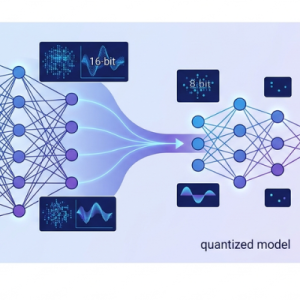
These requirements may make it difficult for smaller organizations to build and maintain their own models. Even using an existing model can become expensive when an application processes large numbers of requests. Techniques such as quantization, model compression, and efficient inference can help reduce these costs.
7. Privacy, Bias, and Security Concerns
Transformer models can reflect biases found in their training data. They may also generate harmful content or respond to misleading instructions. In addition, sharing confidential information with an AI service can create privacy risks if the service does not handle that information appropriately.
Organizations should establish clear data protection policies, evaluate model outputs, and implement suitable security controls. Human oversight is particularly important when AI supports sensitive decisions.
Transformer-based language models are powerful tools, but they are not perfect. Their limitations include contextual misunderstandings, hallucinations, restricted context windows, training data bias, reasoning errors, computational costs, and security risks. Understanding these challenges helps users make better decisions about when and how to use Generative AI.
As the technology evolves, improvements in model design, retrieval systems, evaluation methods, and responsible AI practices can address some of these challenges. If you want to expand your knowledge and explore the practical applications of modern AI systems, take the Generative AI Course in Delhi to build your understanding of this rapidly developing technology.
Know more: Strategic Implementation of Generative AI in Modern Enterprises