




How Does a 3200mm Automatic Tile Cutting Machine Ensure Straight Cutting Edges?
Straight cutting edges are essential when ceramic tiles and porcelain slabs must fit neatly around walls, countertops, doorways, and decorative features. Even a small deviation can create visible gaps, uneven joints, or additional work during installation. For professionals handling large panels, the cutting process depends on stable guidance, accurate positioning, suitable blade selection, and controlled movement throughout each pass. A 3200mm Automatic Tile Cutting Machine provides an extended working range for large-format materials, while shijingtools offers professional cutting equipment designed for practical tiling applications. What mechanical features help maintain a straight cutting line from the beginning of a panel to its opposite edge?
The Importance of a Stable Guide Rail System
A straight cut begins with a stable guiding structure. When the cutting assembly moves along its intended path, the guide rails help maintain the direction of travel and reduce unwanted lateral movement. If the rails are poorly aligned, loosely connected, or inadequately supported, even a sharp blade may produce an inconsistent edge.
Large-format tiles require particular attention because the cutting distance is longer than that of conventional small panels. A slight deviation near the starting point can become increasingly noticeable as the cutting assembly travels across the material. A rigid rail structure, secure connections, and a level supporting surface help keep the cutting path consistent throughout the operation.
The SHIJING 9510 model features a dual-rail arrangement with connected and separable sections, allowing the working structure to be configured for the intended task. Before cutting, operators should check that the rails are properly aligned and that all connections remain secure. The tile should also rest evenly on the support surface, since movement beneath the blade can affect the final result.
How Automatic Movement Supports Cutting Consistency
Manual cutting requires the operator to maintain a steady movement while controlling the tool's direction and pressure. Over an extended cutting distance, variations in hand movement can affect the finished edge, particularly when the material is dense or difficult to handle.
Automatic feed movement helps establish a controlled cutting process by guiding the cutting assembly along a defined route. On equipment designed for this operation, adjustable travel speed allows the operator to select a suitable pace according to the material and working conditions. A steady movement pattern helps prevent abrupt changes that may disturb the cutting line.
The appropriate speed depends on several factors, including tile thickness, material hardness, blade condition, and the intended cutting depth. Moving too quickly can place unnecessary demands on the blade and may affect edge quality, while an unsuitable slow setting can extend processing time without improving the result. Operators should follow the manufacturer's instructions and assess the initial cuts before proceeding with a full batch.
Automatic movement does not eliminate the need for careful preparation. The tile must be positioned correctly, the cutting path must be checked, and the equipment must be configured for the intended material. When these conditions are managed together, the cutting process becomes easier to monitor and repeat.
Blade Selection and Controlled Cutting Depth
The blade has direct contact with the tile surface, so its condition and suitability influence the finished edge. Different materials respond differently during cutting. Ceramic products, dense porcelain, and certain stone surfaces can place different demands on the cutting assembly, making appropriate blade selection essential.
A blade intended for the wrong material may produce rough edges, excessive chipping, or an irregular cutting path. Wear can also affect performance over time, even when the machine continues to operate normally. Operators should inspect the cutting component regularly and replace it according to the manufacturer's maintenance recommendations.
Cutting depth is another consideration. The required setting depends on the tile thickness, the selected cutting method, and the equipment's permitted operating range. Excessive depth may create unnecessary resistance, while an unsuitable setting can prevent the intended cut from being completed properly. The SHIJING 9510 specification lists a cutting depth range intended for its designated applications, so users should consult the official product details before processing a particular material.
For tasks involving angled edges, the machine's cutting configuration must also match the required finish. Straight cutting, beveling, and other specialised operations have different setup requirements. Correct adjustment helps the cutting assembly follow the intended line without introducing avoidable stress to the tile.
Securing the Tile Before Cutting
Even a well-designed cutting system cannot maintain a straight edge if the tile shifts during operation. Secure positioning is therefore an important part of preparation, especially when working with large porcelain panels that are difficult to hold manually.
The support surface should be clean and level, with the panel positioned according to the cutting marks. Suitable clamps or suction attachments can help keep the tile stable when the equipment is designed to accommodate them. Contact points must be compatible with the surface finish, and the operator should confirm that the panel remains firmly positioned before starting the cutting cycle.
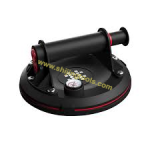
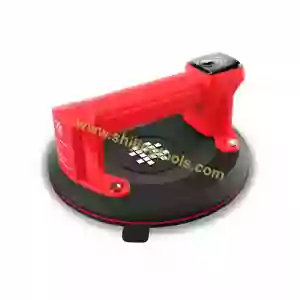
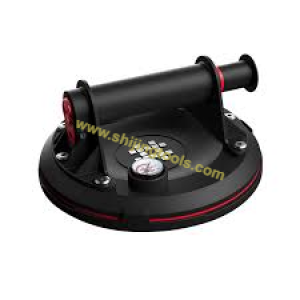
The SHIJING 9510 model includes suction components with a ratcheting F-clamp arrangement to support stable positioning. Correct use of these features can help limit unwanted movement during cutting. However, attachment performance depends on the condition of the contact surfaces and compliance with the operating instructions. Dust, moisture, surface texture, and improper placement can influence how securely a panel is held.
Operators should also leave adequate space around the machine for loading, movement, and material removal. A clear work area reduces the chance of accidental contact or interference while the cutting assembly is travelling along the rails.
Managing Water, Inspection, and Routine Maintenance
Water management can play an important role when using compatible wet-cutting equipment. Depending on the machine configuration and blade requirements, suitable cooling arrangements can help manage heat and cutting residue. The water supply should follow the manufacturer's instructions, while the working area must remain organised to prevent slurry buildup from interfering with support surfaces or moving components.
Routine inspection is equally important for maintaining straight cutting results. Check the rails, fasteners, sliding components, blade condition, and positioning accessories before use. If the cutting path begins to drift or the edges show unexpected chips, stop the operation and investigate the setup rather than continuing to process additional tiles.
Common causes of inconsistent results include loose connections, an uneven support surface, worn cutting components, unsuitable speed settings, and movement of the material. Recording adjustments and observing sample cuts can help operators identify changes in performance across different tile types.
Maintenance should follow the manufacturer's recommendations rather than an assumed universal schedule. Keeping components clean, storing accessories correctly, and addressing wear promptly can support dependable operation over the equipment's service life.
Explore Professional Cutting Solutions From SHIJING
Contractors, tile installers, and workshops need cutting equipment that matches their material dimensions, working conditions, and preferred finishing methods. Reviewing the guide system, automatic movement, blade compatibility, support arrangements, and maintenance requirements helps clarify whether a machine fits a particular project. SHIJING provides professional tiling tools and product information for users seeking practical equipment for tile processing and installation.
For further technical information about large-format cutting applications, visit https://www.shijingtools.com/, where shijingtools discusses the role of this equipment in tile processing. If your next project involves long panels, straight edges, or specialised cutting requirements, contact SHIJING to discuss the 3200mm Automatic Tile Cutting Machine and identify a configuration suited to your materials and intended work.