

Arriving in the United States without a Social Security Number or an Individual Taxpayer Identification Number can make everyday finance confusing. Rent, phone plans, and online shopping all seem easier with a card, yet most applications ask for a nine-digit tax number right away. The good news is that a few paths still exist. At Moneyminnd, we built this walkthrough to show how Credit Cards Without SSN and ITIN can fit into your first months in the country, and what to do at each stage.
Quick Answer: Is It Really Possible?
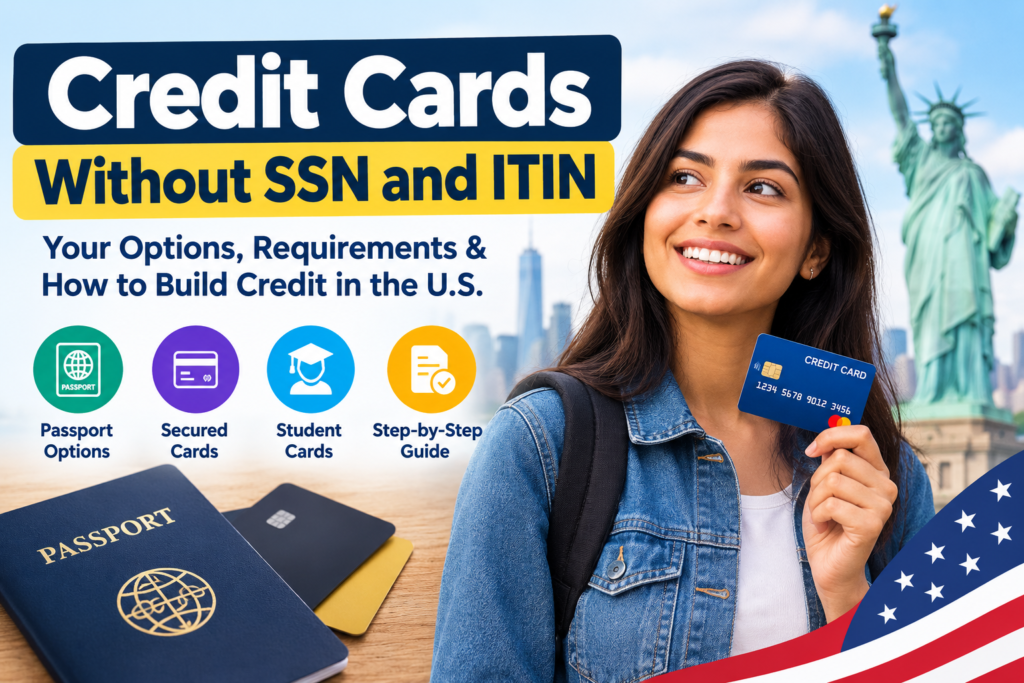
Yes, credit cards without SSN and ITIN do exist, but expect fewer choices and stricter checks. Most mainstream issuers require a tax number, so your options come from specialized products, smaller lenders, and programs designed for newcomers. Approval is never guaranteed, and terms change often, so treat any example in this guide as a starting point rather than a promise.
Step 1: Check the Identification You Already Have
Lenders must verify who you are. For non-U.S. persons, federal rules allow a passport number, an alien identification card number, or another government-issued document number in place of a tax number. List what you hold: passport, visa, I-20 or DS-2019, and any proof of a U.S. address. The more complete your paperwork, the easier it is to apply for credit cards without SSN and ITIN.
Step 2: Open a Bank Account First
Many lenders prefer applicants who already have a banking relationship. Some large banks and many credit unions will open a checking or savings account using a passport and visa. Ask branch staff directly, since online forms often push you toward an SSN field. A few months of deposits also gives you bank statements to support later applications.
Step 3: Choose the Right Product
Not every card type suits every newcomer. Consider these categories:
- Student cards: Some issuers serve international students on F-1 or J-1 visas. The Deserve EDU Mastercard has been a well-known example, though you should confirm its current rules.
- Secured cards: You pay a refundable deposit that becomes your limit. Certain credit unions and community banks accept passport-based applications.
- Foreign credit history programs: Services like Nova Credit let some issuers see your credit record from countries such as Canada, the United Kingdom, or India.
- Prepaid or debit cards: These help you pay online but do not build a credit score.
Use this list to narrow down credit cards without SSN and ITIN that match your visa type and budget.
Step 4: Compare Costs Before You Apply
Fees can erase the benefit of any card. Check the annual fee, interest rate, required deposit, monthly maintenance charges, and foreign transaction fees. Most important, ask whether the issuer reports to Equifax, Experian, and TransUnion. When you compare credit cards without SSN and ITIN, a card that reports payments is usually worth more than one with a slightly lower fee, because reported history is what lets you move to better products later.
Step 5: Submit a Clean Application
Enter your name exactly as it appears on your passport. Use your U.S. address and a working phone number and email. Report income honestly, including scholarships, stipends, or a job offer if the issuer allows it. Apply for one card at a time, because each hard inquiry can lower a young credit profile. Then wait for the decision before trying another lender.
Step 6: Use the Card to Build Credit
Once approved, keep purchases small and predictable, such as a phone bill or groceries. Pay the statement in full and on time every month, and keep your balance under 30 percent of your limit. Set up autopay so a missed date never hurts your record. After six months or so of reported activity, you may qualify for a higher limit or a better card.
Common Mistakes to Avoid
The biggest mistake is trusting "guaranteed approval" offers that demand an upfront fee. Legitimate lenders do not charge you just to apply. Another is applying to five issuers in a week, which leads to repeated denials. Finally, many people forget to confirm credit reporting. Before you commit to any of the credit cards without SSN and ITIN you find online, read the fee schedule and confirm the issuer is a real, licensed lender. Sites like Moneyminnd can help you compare before you apply.
What Changes When You Get an SSN or ITIN
If you are authorized to work in the U.S., you can apply for an SSN through the Social Security Administration. If you are not eligible for an SSN but must file U.S. taxes, the IRS issues ITINs through Form W-7. Either number opens the door to mainstream products, so credit cards without SSN and ITIN become a stepping stone instead of a long-term solution. Review your options again once the number arrives.
Frequently Asked Questions About Credit Cards Without SSN and ITIN
Do these cards report to the credit bureaus?
Some do and some do not. Always confirm before applying.
Can I get a high credit limit?
Rarely at first. Limits usually start low and grow with responsible use.
Is a secured card a good choice?
For many newcomers, yes. The deposit lowers the lender's risk and can make approval easier.
Will my foreign credit score transfer automatically?
No. Only certain programs and issuers use foreign records, and even then approval is not automatic.
Conclusion
Finding a card without a tax number takes research, patience, and organized paperwork, but it is achievable. Start with your documents, open a bank account, compare fees, and choose a product that reports to the bureaus. Treat credit cards without SSN and ITIN as your first step toward a full U.S. credit profile, then upgrade once your SSN or ITIN arrives. For more practical guides on cards, credit, and everyday money choices, keep exploring Moneyminnd.