

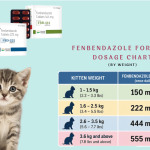

Fenbendazole is an antiparasitic medication used in veterinary medicine to treat certain intestinal parasites and other susceptible worms. Cat owners searching for information about fenbendazole for cats dosage chart by weight should understand that the appropriate dose depends on the cat, the parasite being treated, the product formulation, and the treatment plan recommended by a veterinarian.
Fenbendazole products are available in different concentrations and formulations, so calculating a dose simply from a cat's weight can lead to errors. A veterinarian should confirm the diagnosis and the correct product and dose before treatment.
What Is Fenbendazole?
Fenbendazole belongs to the benzimidazole class of antiparasitic medicines. It works against susceptible parasites by interfering with processes that the parasites need to survive.
The medication is primarily used in veterinary medicine. FDA information indicates that approved fenbendazole products may be used in cats in labeled or extralabel situations when considered appropriate by a veterinarian.
Importantly, not every fenbendazole product has the same concentration or directions. A product intended for one animal species should not automatically be substituted for another formulation.
Fenbendazole for Cats Dosage Chart by Weight
A published FDA veterinary record for fenbendazole granules lists a dose of 10 mg/kg of body weight once daily for 3 consecutive days for certain listed felids and their specified parasite indications.
This information should not be treated as a universal household-cat prescription because the record concerns specific Felidae species and approved indications. For educational purposes, the weight calculation at 10 mg/kg would be:
| Cat weight | 10 mg/kg calculated amount |
|---|---|
| 2 kg (4.4 lb) | 20 mg |
| 3 kg (6.6 lb) | 30 mg |
| 4 kg (8.8 lb) | 40 mg |
| 5 kg (11 lb) | 50 mg |
| 6 kg (13.2 lb) | 60 mg |
| 7 kg (15.4 lb) | 70 mg |
| 8 kg (17.6 lb) | 80 mg |
These are weight-based calculations, not a recommendation to self-treat a cat. The actual amount of a commercial product depends on its concentration, and the appropriate treatment may differ according to the parasite and clinical situation.
Why Cat Weight Matters
Veterinary medicines are commonly dosed according to body weight because the amount needed can change substantially between animals.
For example, a 3-kg cat and an 8-kg cat would not normally receive the same weight-based amount of a medication. Accurate weighing is therefore important.
A household scale can sometimes be used for small pets by weighing yourself while holding the cat and then subtracting your own weight. However, a veterinary clinic can provide a more accurate measurement, particularly when a cat is very small, overweight, ill, or difficult to handle.
The Product Concentration Also Matters
One of the most important points about fenbendazole dosing is that milligrams of active ingredient are not the same as milliliters of liquid or grams of powder.
For example, a veterinary product may contain a specified amount of fenbendazole per gram or per milliliter. The volume or mass needed therefore depends on the concentration printed on that particular product.
Merck's product information, for example, identifies one fenbendazole granule formulation as containing 222 mg of fenbendazole per gram.
This is why copying a volume from an online dosing chart without checking the product concentration can result in underdosing or overdosing.
What Parasites Can Fenbendazole Treat?
Fenbendazole is effective against certain susceptible parasites, but its use depends on the parasite species and the product's approved indications.
Not every cause of diarrhea, vomiting, weight loss, or other gastrointestinal symptoms is a worm infection. Cats can develop problems from viruses, bacteria, protozoa, dietary issues, inflammatory diseases, and other conditions.
A fecal examination or other veterinary testing may be recommended when a parasite is suspected. Treatment based only on symptoms may miss the actual cause of illness.
What About Fenbendazole and Ivermectin Products?
Some websites advertise products described as fenbendazole ivermectin pills or fenbendazole ivermectin capsules. Cat owners should be cautious when considering combination products.
Ivermectin and fenbendazole are different antiparasitic medicines with different properties, indications, and dosing considerations. A combination should not be given to a cat simply because both ingredients are antiparasitic drugs.
FDA records do contain approved veterinary products combining fenbendazole, ivermectin, and praziquantel, but the cited product is specifically identified for dogs, not as a general cat treatment.
Therefore, an online listing for fenbendazole ivermectin capsules does not establish that the product is appropriate for cats.
Should Humans Take Ivermectin and Fenbendazole Pills?
Searches for ivermectin and fenbendazole pills for humans are also common online. These products should not be confused with veterinary treatments.
Fenbendazole is a veterinary antiparasitic drug, and the fact that it is used in animals does not establish that it is safe or effective for treating people. Similarly, human ivermectin and veterinary ivermectin products are not interchangeable.
FDA has specifically warned consumers not to use animal ivermectin products in humans because animal formulations may contain different ingredients or concentrations and have not been evaluated for human use in the same way.
Possible Side Effects and Precautions
As with any medication, fenbendazole can cause adverse effects. A cat receiving treatment should be monitored for vomiting, diarrhea, reduced appetite, unusual lethargy, or other changes.
Owners should contact a veterinarian if symptoms are severe, persistent, or worsening.
Extra caution is appropriate when treating kittens, pregnant cats, elderly cats, cats with liver or kidney problems, or animals taking other medications. These factors can influence whether a particular treatment is appropriate.
When Should You Contact a Veterinarian?
A veterinary examination is particularly important if a cat has repeated vomiting, bloody diarrhea, severe diarrhea, significant weight loss, dehydration, weakness, breathing difficulties, or loss of appetite.
A veterinarian can determine whether parasites are actually present and select an appropriate treatment. They can also determine whether fenbendazole is suitable and calculate the correct dose based on the specific product.
What About Fenbendazole and Ivermectin Tablets Price?
Cat owners may also search for fenbendazole and ivermectin tablets price when comparing antiparasitic products online.
Price should not be the primary factor when choosing a veterinary medicine. More important considerations include the animal species listed on the label, active ingredients, concentration, manufacturer, regulatory status, expiration date, and whether the product has been recommended by a veterinarian.
A lower-priced product is not necessarily an appropriate substitute for a veterinary medicine selected for a particular parasite.
Final Thoughts
Fenbendazole may be used in veterinary medicine for certain parasitic infections, but there is no single dosage that applies to every cat or every parasite.
The commonly cited 10 mg/kg for 3 days appears in an FDA veterinary record for specified felids and indications, but it should not be presented as a universal self-treatment schedule for household cats.
If you are researching a fenbendazole for cats dosage chart by weight, use the chart only to understand how weight-based calculations work. The final dose, formulation, treatment duration, and suitability of fenbendazole should be confirmed by a veterinarian.