

Canals are an important part of irrigation and water-distribution infrastructure, transporting water from reservoirs, dams and other sources to agricultural and industrial areas. However, water can be lost through seepage when canals are constructed over permeable soils or when cracks and defects develop in conventional lining systems. Geomembrane for Canal Lining can provide an engineered low-permeability barrier that helps control seepage and improve water-retention performance in suitable canal projects.
Modern geomembrane systems can be incorporated into canal designs alongside soil preparation, concrete lining, drainage and protective layers. Depending on the project requirements, a PVC geomembrane can provide a flexible waterproofing layer beneath or within a canal lining system.
For irrigation departments, government agencies, EPC contractors, consultants and infrastructure developers, selecting the correct geomembrane requires consideration of canal geometry, soil conditions, hydraulic loading, protection requirements and installation methods.
What Is Geomembrane for Canal Lining?
A geomembrane is a flexible, low-permeability polymeric sheet designed to restrict the movement of liquids through soil or other construction materials.
Geomembrane for Canal Lining refers to the use of these membranes as part of an engineered canal waterproofing and seepage-control system. The membrane can be installed over a prepared canal bed and side slopes and may be protected by other materials depending on the design.
The primary objective is to reduce uncontrolled seepage from the canal into surrounding soil. The membrane can therefore help retain more of the water within the intended hydraulic channel.
The final system should always be designed according to the canal's soil conditions, water flow, slope stability, construction methodology and applicable project specifications.
Why Canal Seepage Is a Major Concern
Water loss through canal seepage can reduce the efficiency of water-distribution systems. The amount of seepage depends on factors such as soil permeability, canal geometry, water depth and the condition of the existing lining.
In areas with highly permeable soil, an engineered waterproofing barrier can provide a more controlled interface between the water and surrounding ground.
A Waterproofing geomembrane can act as this barrier where specified by the project design. It does not replace proper hydraulic engineering, drainage or structural design but can form an important part of the overall canal lining system.
PVC Geomembrane for Canal Applications
PVC geomembrane is a flexible membrane material that can be used in suitable canal lining and water-retention applications.
Its flexibility allows it to conform to appropriately prepared canal profiles, including beds and side slopes. Membrane panels can also be joined through suitable welding techniques to create a continuous waterproofing layer.
Dr. Millars states that its PVC geomembranes are normally available in 1.5 mm and 2.00 mm thicknesses and that tailor-made specifications can be developed for large infrastructure projects.
The appropriate membrane thickness and specification should be established according to the actual canal design and site conditions.
How Geomembrane Helps Control Canal Seepage
A properly installed geomembrane provides a low-permeability barrier between canal water and the surrounding soil. This can reduce the amount of water migrating through the canal bed and side slopes.
For irrigation infrastructure, controlling seepage can be an important part of improving water-management efficiency.
However, membrane performance depends on more than the material itself. The canal subgrade, protection layer, seam quality, anchoring and construction practices all influence the integrity of the final system.
Canal Bed and Side-Slope Preparation
Before installing a Pvc geomembrane sheet, the canal surface needs to be properly prepared. The substrate should generally be stable, reasonably smooth and free of sharp rocks, roots, debris and other objects that could damage the membrane.
Uneven or unstable areas may require grading, filling or compaction according to the project design.
Side slopes should also be prepared to provide suitable stability. The geomembrane installation sequence needs to account for slope geometry, access, weather and construction equipment.
Proper preparation can reduce the risk of punctures, excessive wrinkles and localized stresses after installation.
The Role of Geotextile in Canal Lining
A Geotextile can be incorporated into a canal geomembrane system to provide separation and protection.
If the canal subgrade contains coarse particles or other materials that could damage the membrane, a protective geotextile may be placed between the substrate and geomembrane.
Depending on the design, protection may also be required above the membrane before a concrete or other protective lining is installed.
The geotextile specification should be selected based on the expected loading, membrane properties, substrate conditions and construction methodology.
Geomembrane and Concrete Canal Lining
Geomembranes do not necessarily have to replace concrete lining. In some engineered systems, a membrane can be installed beneath a concrete layer to provide an additional waterproofing barrier.
This arrangement can combine the structural and hydraulic functions of concrete with the low-permeability properties of a geomembrane.
The exact system depends on the canal design. Engineers may specify different combinations of geomembrane, geotextile, concrete and drainage components depending on soil and hydraulic conditions.
Welding and Seam Quality
Large canals can cover substantial surface areas, requiring many geomembrane panels. The panels need to be joined carefully to maintain continuity.
Suitable thermal welding methods can create strong seams between compatible membrane sheets. Welding parameters should be controlled according to the manufacturer's recommendations and approved project procedures.
Seams should be inspected and tested as required. Quality control is especially important because a defect in a seam can compromise the continuity of the waterproofing barrier.
Installation teams should also pay close attention to corners, slope transitions, penetrations and termination points.
Anchoring the Canal Geomembrane
The geomembrane needs to remain securely positioned on the canal profile during installation and operation.
Anchoring arrangements can be used along the canal edges and at other designated locations. The specific anchoring method depends on the canal geometry, membrane layout and engineering design.
Proper anchoring can help control membrane movement caused by construction activities, temperature changes, wind and hydraulic conditions.
The membrane should also be detailed carefully at structures such as outlets, gates, culverts and other interfaces.
Choosing the Right Thickness
Geomembranes are available in different thicknesses, and there is no single thickness that is appropriate for every canal.
The selection should consider soil conditions, hydraulic loading, slope geometry, protection requirements, construction activities and the expected service environment.
Dr. Millars states that its PVC geomembranes are normally available in 1.5 mm and 2.00 mm thicknesses. For large infrastructure projects, the company states that tailor-made specifications can also be developed.
Thickness should be evaluated together with tensile strength, elongation, puncture resistance, tear resistance and other relevant properties.
Geomembrane for Canals Connected to Dams
Canal systems are often connected to reservoirs and dams, making seepage management important throughout the wider water-distribution network.
Geomembrane for dams and Geomembrane for Canal Lining can involve similar waterproofing principles, but their engineering applications are different.
A dam membrane system may involve embankments, reservoir interfaces and complex structural connections, while a canal lining system generally follows the geometry of the canal bed and side slopes.
Using technically compatible membrane solutions across related infrastructure can help simplify procurement and technical coordination.
Quality Testing and Documentation
Quality control should be considered from material procurement through final installation. Buyers should review the membrane's technical data and applicable test documentation before approval.
For PVC geomembranes used in lining applications in India, IS 15909:2020 is the current Indian Standard for PVC Geomembranes for Lining. Where a project specifies BIS compliance or certification, the purchaser should verify the exact applicable standard, product category and current conformity documentation.
During installation, membrane panels and seams should also be inspected according to the approved quality-control plan.
Selecting Geomembrane Manufacturers India
Choosing an experienced geomembrane manufacturer can help canal project teams obtain suitable technical information and consistent membrane supply.
Established geomembrane manufacturers India may provide different membrane specifications, technical documentation and installation guidance. For large irrigation projects, the ability to develop customized specifications can also be valuable.
Procurement teams should evaluate manufacturing capabilities, testing arrangements, product documentation and installation support rather than considering only the initial material cost.
Dr. Millars for Canal Waterproofing
D L MILLAR AND COMPANY LIMITED, operating under the Dr. Millars brand, has been established since 1929 and provides PVC geomembrane and waterproofing solutions for infrastructure projects.
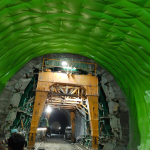
Dr. Millars manufactures PVC geomembranes in India and states that its products are used for canals, reservoirs, water bodies, dams, concrete structures, foundations, basements, tunnels, roofs and other waterproofing applications.
The company states that its PVC geomembranes are normally available in 1.5 mm and 2.00 mm thicknesses and can be developed to tailor-made specifications for large infrastructure projects.
Dr. Millars also provides Geotextile solutions and turnkey supply and installation services for PVC geomembrane systems.
Frequently Asked Questions
What is Geomembrane for Canal Lining?
Geomembrane for Canal Lining is a low-permeability membrane system used to help control water seepage through canal beds and side slopes. It can be installed as part of a complete engineered canal lining system.
Can PVC geomembrane be used for irrigation canals?
Yes, PVC geomembrane can be used in suitable irrigation canal applications where its material properties and installation method meet the project requirements.
Why is Geotextile used with canal geomembrane?
A Geotextile can provide separation and protection between the geomembrane and the canal substrate or protective layer. Its use depends on site conditions and the engineering design.
What thickness of geomembrane is suitable for canal lining?
There is no universal thickness. Selection depends on the canal's soil, slope, water depth, protection system, construction conditions and project specification.
Can geomembrane be installed beneath concrete canal lining?
Yes, in suitable engineered systems, a geomembrane may be installed beneath a concrete lining to provide an additional low-permeability barrier. The complete arrangement should be designed by the project engineer.
Contact Dr. Millars
For Geomembrane for Canal Lining, PVC geomembrane, Waterproofing geomembrane, Geotextile, reservoir lining and other water-infrastructure solutions, contact D L MILLAR AND COMPANY LIMITED (Dr. Millars).
D L MILLAR AND COMPANY LIMITED
Flat No. 303, 3rd Floor, Elite House-36, Community Center, Zamroodpur, New Delhi-110048, India
Phone: +91 8700518400
Email: dlmillars@gmail.com
Website: https://drmillars.co.in/geomembrane.php
Dr. Millars can assist with product information, project-specific specifications, technical requirements and turnkey supply and installation support.
Conclusion
Geomembrane for Canal Lining can provide an effective low-permeability barrier for suitable irrigation and water-distribution projects. By reducing uncontrolled seepage, a properly designed membrane system can help improve water-retention performance and protect the surrounding soil from excessive moisture movement.
The success of a canal geomembrane system depends on appropriate material selection, careful subgrade preparation, Geotextile protection where required, reliable seam welding, secure anchoring and proper detailing around structures.
For large canal and irrigation projects, working with experienced geomembrane manufacturers India can provide access to suitable technical specifications, product documentation and installation support.