



Windows are an important part of both residential and commercial interiors because they connect indoor spaces with natural light while influencing privacy and visual comfort. For applications where a flexible and removable surface treatment is preferred, Static Window Film can provide a practical alternative to conventional adhesive-based materials. Its ability to adhere to smooth surfaces without relying on permanent glue makes it relevant to temporary decoration, privacy enhancement, and changing interior concepts. Jiangsu Xinfeng Star Film Materials Co., Ltd. develops and manufactures film materials for a range of decorative and functional applications.
Material selection is an important starting point when evaluating window film. A suitable film should have a surface that can maintain a consistent visual effect while remaining flexible enough for application and removal. Static cling materials work through surface attraction rather than a conventional permanent adhesive layer, allowing them to be repositioned or removed when the application changes. Xinfeng Star describes its static cling film as suitable for smooth surfaces such as glass and plastic, with applications including window decoration, surface protection, temporary labeling, and promotional displays.
The lack of permanent adhesive can be especially useful for spaces where long-term modification is not desirable. Rental properties, temporary offices, retail displays, event venues, and frequently updated commercial interiors may benefit from a material that can be changed without leaving conventional adhesive residue. This makes the film different from solutions designed primarily for permanent installation.
When choosing a window film, buyers should first define the main purpose. Privacy, decoration, branding, surface protection, seasonal changes, or temporary visual communication can each lead to different material preferences. A residential user may want a softer appearance for a bedroom or bathroom window, while a commercial space may require a decorative pattern or temporary promotional message. Xinfeng Star's information identifies multiple application scenarios for static cling film, including window decoration and promotional displays.
Surface compatibility is another consideration. Static cling materials generally work best on smooth, clean surfaces where the film can maintain close contact with the substrate. Glass is a natural application because its relatively even surface allows the film to be positioned and adjusted during installation. Before application, dust, oil, moisture, and other residues should be removed so that the film can sit evenly against the surface.
Installation can be part of the user experience. A material that does not depend on permanent adhesive can give users greater flexibility during positioning. If the first placement is not visually satisfactory, the film may be adjusted rather than being treated as a one-time installation. Xinfeng Star recommends careful surface cleaning and describes wet application as an approach that can make positioning easier during installation.
Reusability can also influence purchasing decisions. Traditional decorative materials may be discarded when a display or interior concept changes, whereas static cling film can potentially be removed and reused when handled and stored appropriately. This characteristic can be useful for businesses that regularly update seasonal displays or temporary communication materials.
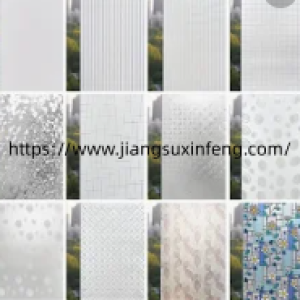
The functional role of the film depends heavily on its design. A translucent appearance can soften direct visibility while maintaining a connection with daylight. More decorative patterns can create visual boundaries on meeting-room glass, doors, or storefront windows. Clearer designs can be used for temporary graphics or information without completely covering the underlying surface.
Privacy is one of the most practical reasons to use film on glass. Open-plan offices, bathrooms, consultation rooms, meeting spaces, and residential interiors may require visual separation without replacing glass with a solid partition. A carefully selected film can create a degree of visual screening while preserving the openness associated with transparent surfaces.
User experience also involves removal. A removable film can make renovation and space changes more straightforward because users are not necessarily committed to one visual treatment for the entire life of the glass. This is particularly relevant in leased properties, where permanent modifications may be restricted. Xinfeng Star specifically describes static cling film as suitable for rental units, historic buildings, and corporate offices where permanent alterations may not be preferred.
Maintenance is another factor worth considering. Windows are exposed to fingerprints, dust, moisture, and regular cleaning, so the film should fit naturally into the maintenance habits of the space. Buyers should consider the surface finish and cleaning method recommended for the specific material rather than assuming that every film can be treated in the same way.
The appearance of the film can influence the atmosphere of an interior. Soft translucent surfaces can create a calmer visual effect, while patterns, graphics, or branding can make the glass more expressive. Because window film can be changed without replacing the glass itself, designers have more freedom to experiment with visual concepts.
For commercial environments, static film can also support temporary communication. Retail stores may use glass surfaces for seasonal messages, promotional displays, or decorative campaigns. Offices can use films to distinguish meeting areas or create visual markers without constructing permanent walls. These applications demonstrate how the same basic film concept can serve different design purposes.
Material development and manufacturing experience can also matter when buyers are evaluating suppliers. Jiangsu Xinfeng Star Film Materials Co., Ltd. specializes in PVC calendered films, thermofoil decorative films, self-adhesive decorative films, and release liners, combining film development with intelligent manufacturing capabilities.
Production consistency is particularly relevant for projects requiring repeated applications. If the same film is installed across several windows, rooms, or locations, visual consistency can influence the finished appearance. Buyers may therefore consider a supplier's material-development experience, production processes, quality management, and ability to support customized requirements.
Environmental considerations are becoming increasingly relevant to film selection as well. Reusable materials can offer an alternative to disposable decorative treatments in applications where frequent changes are expected. Xinfeng Star also highlights sustainable material development and environmental considerations as part of its broader approach to film manufacturing.
Design flexibility remains one of the most useful characteristics of window film. The material can be incorporated into a minimalist interior without becoming visually dominant, or it can serve as a more noticeable decorative element through patterns and printed graphics. This allows glass surfaces to become part of an overall interior concept instead of remaining purely functional architectural elements.
For buyers considering film for windows or other smooth glass surfaces, material compatibility, application purpose, surface preparation, repositioning, removal, maintenance, visual design, and reuse can be evaluated together. This creates a clearer connection between the material and the way the space will actually be used. Jiangsu Xinfeng Star Film Materials Co., Ltd. continues to develop film solutions across decorative and functional applications, with more information about its products and manufacturing capabilities available at https://www.jiangsuxinfeng.com/