

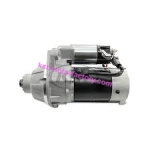

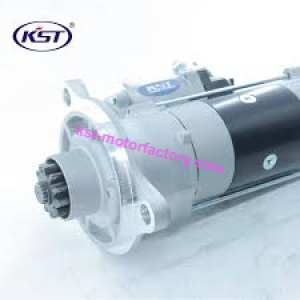
Starting a large excavator, loader, bulldozer, road roller, or other heavy machine requires an electrical system that can deliver sufficient cranking power under demanding operating conditions. A Construction Machinery Starter has to work with the engine, battery, wiring system, mounting structure, and surrounding mechanical components as a coordinated unit. For companies sourcing these components, KST-Motorfactory provides a product range developed for construction vehicles and machinery, but what factors should buyers examine before selecting a suitable starting system?
The first consideration is the engine itself. Heavy equipment can use different engine architectures, electrical configurations, mounting arrangements, and starter specifications, so a component that fits one machine may not be appropriate for another. Engine displacement, rated voltage, mounting position, drive gear dimensions, rotation direction, and connection design can all influence compatibility. Buyers therefore need accurate information about the original starter and the engine before making a replacement or sourcing decision.
Working conditions are another important consideration. Construction equipment frequently operates in environments where dust, vibration, temperature changes, moisture, and extended working cycles are present. A starter motor must tolerate the mechanical conditions around the engine while providing the electrical performance required during engine cranking. This is particularly relevant for excavators and loaders that may work on construction sites for long periods, where equipment downtime can affect the entire operating schedule.
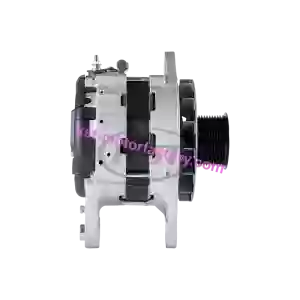
The electrical system also deserves close attention. Battery voltage, current requirements, electromagnetic switch characteristics, cable connections, and alternator compatibility can all influence starting performance. A starter with the correct voltage but an unsuitable connection arrangement may still create installation problems. For this reason, technical selection should consider the complete electrical configuration instead of relying only on the equipment model name.
Mechanical compatibility is equally important. The starter mounting holes, flange structure, drive gear, gear engagement position, and overall dimensions need to correspond with the engine housing. Even a small difference in mounting or gear alignment can affect installation and operation. Buyers working with replacement components can provide drawings, samples, reference numbers, or detailed equipment information to help suppliers identify an appropriate configuration.
Different types of construction machinery also create different application requirements. Excavators may require starters designed around diesel engines commonly used in earthmoving operations, while wheel loaders and bulldozers can have different engine layouts and mounting arrangements. Road rollers, cranes, forklifts, mining vehicles, and concrete machinery may also use starting systems with their own specifications. A supplier with experience across several equipment categories can therefore provide useful technical communication during the sourcing stage.
Material selection and internal construction influence how a starter performs during repeated engine starts. The electric motor, electromagnetic switch, one-way clutch, drive gear, bearings, housing, and other internal components all have defined roles. The motor generates rotational force, the switch controls electrical engagement, and the clutch allows the drive gear to transfer motion during starting while helping protect the starter after the engine begins running. Proper coordination between these components is essential for stable operation.
Quality inspection is another area that should not be overlooked. Manufacturers can evaluate electrical characteristics, mechanical dimensions, gear engagement, rotational behavior, and operating performance during production. Inspection procedures can also help identify assembly deviations before products are delivered. For distributors and equipment maintenance companies, consistent product specifications are particularly useful because they simplify replacement planning and reduce uncertainty during installation.
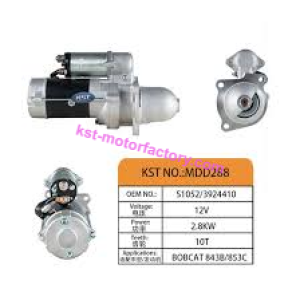
Application information is valuable when communicating with a manufacturer. Instead of providing only the name of a construction machine, buyers can prepare the engine model, original starter number, voltage, mounting dimensions, gear information, equipment brand, and photographs when available. Drawings and samples can also help when the required component is difficult to identify from a general machine model. These details give the manufacturer a practical basis for checking compatibility.
KST-Motorfactory focuses on starter motors and generators for heavy-duty vehicles and construction machinery, with product categories covering different starter technologies and application requirements. Its product range includes construction machinery starters associated with brands and equipment such as Komatsu, Hitachi, Caterpillar, Daewoo, Hyundai, Shantui, Sumitomo, and Isuzu. The company also states that its R&D team can develop products according to customer drawings or samples and assist customers in selecting models according to working conditions.
For international buyers, communication and technical support can be just as important as the physical product. Construction equipment is often used across different regions, and replacement components may need to match machines that have been operating for years. Clear model identification, reference-number checking, dimensional confirmation, and technical discussion can help reduce mistakes during procurement. It also gives maintenance teams a clearer basis for planning replacement parts.
The selection process can become easier when buyers approach it as a compatibility assessment rather than simply searching for a starter by appearance. Electrical specifications should be checked alongside mechanical dimensions, while engine information should be considered together with working conditions. This method is useful for both new equipment projects and replacement-part sourcing, especially when several starter configurations appear visually similar.
For companies comparing available models, the construction vehicle starter section at https://www.kst-motorfactory.com/ provides a direct reference for different application categories and product options. Buyers can review engine information, electrical requirements, mounting details, reference numbers, and operating conditions with KST-Motorfactory before choosing a Construction Machinery Starter, giving the sourcing process a clearer technical starting point.