

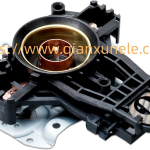

Strix Thermostat Switch is a mechanical control component commonly associated with electric kettles and similar water heating appliances. Its basic operating principle uses steam generated during boiling to activate an internal bimetal mechanism. As water approaches boiling, steam travels through a dedicated passage and reaches the sensing area. Heat causes the bimetal element to change shape, producing a snap movement that changes the electrical contact state and interrupts power to the heating element. This principle is described in both manufacturer information and technical documentation concerning kettle control systems.
Steam Provides The Trigger
The main difference between this type of control and a simple surface temperature device is the way the boiling event is detected.
When water is heated, steam begins to form above the water surface. The appliance directs part of this steam toward the internal sensing mechanism.
As the steam reaches the sensing area, heat is transferred to the bimetal element.
Once the element reaches its designed operating condition, it changes shape and activates the mechanical movement.
This means the control responds to the actual boiling process rather than relying only on the temperature of the outer housing.
The Bimetal Element Creates Movement
The bimetal component consists of materials with different thermal expansion characteristics.
When exposed to heat, the two layers expand at different rates.
Because they are joined together, this difference creates physical movement.
The movement is used to operate an internal contact mechanism.
This approach does not require a microprocessor or separate electronic temperature sensor to perform the basic cut off action.
The mechanical structure converts thermal energy into movement, then uses that movement to change the electrical state of the appliance.
Bimetal based control is also widely used in other heating appliances because the same basic physical principle can respond to changes in temperature.
Snap Action Changes The Electrical State
The internal movement is designed to happen quickly once the activation condition is reached.
Rather than gradually moving the electrical contacts apart, the mechanism uses snap action to create a distinct transition.
This is important because the heating element needs a clear interruption of electrical power when the boiling condition has been reached.
The rapid movement also helps reduce the period during which contacts remain partially engaged.
The result is a straightforward sequence:
Steam reaches the sensing area.
The bimetal element heats.
The element changes shape.
The mechanical mechanism moves.
The electrical circuit opens.
The heating element stops receiving power.
The Steam Channel Has An Important Role
The control component cannot work independently from the appliance body.
A kettle needs a suitable path for steam to travel from the water chamber toward the sensing mechanism.
The position, shape, and opening of this path can influence how quickly the thermal element receives heat.
If the path is poorly matched with the internal appliance structure, steam delivery may become inconsistent.
Condensation and airflow can also affect how heat reaches the sensing area.
For appliance manufacturers, this means the internal steam path should be evaluated together with the control component during product development. Technical descriptions of kettle control systems specifically identify steam routing as part of the operating mechanism.
Automatic Heating Interruption
Once boiling has occurred, the internal mechanism moves the electrical contacts into the off position.
The heating element then stops receiving power.
This allows the appliance to finish its normal heating cycle without requiring the user to manually monitor the water.
The automatic response is one reason mechanical kettle controls remain relevant in household appliance design.
The component effectively connects three stages of operation:
Water heating.
Steam generation.
Electrical interruption.
Each stage depends on the correct relationship between the kettle body, heating element, steam passage, sensing mechanism, and electrical circuit.
Dry Heating Protection Can Work Alongside It
Automatic boiling control and protection against operation without sufficient water are related but different functions.
A kettle may use an additional thermal mechanism positioned closer to the heating element.
If the element becomes unusually hot because there is insufficient water, that additional mechanism can respond to the temperature rise.
Some integrated kettle control systems combine boiling cut off with separate protection against dry operation and additional thermal protection.
For manufacturers, separating these functions can make the appliance safety architecture easier to evaluate.
Each protective layer can address a different operating condition.
Reset Behavior Depends On The Design
After the appliance cools, some mechanical configurations can return toward their original position.
The reset behavior depends on the specific control design and appliance structure.
For a kettle, automatic reset can allow the internal mechanism to return to a ready state after cooling.
However, the user interface and appliance circuit determine whether heating can begin again immediately or whether another manual action is required.
Manufacturers should therefore evaluate reset characteristics together with the complete control arrangement.
Electrical Contacts Need Careful Design
The mechanical movement ultimately affects an electrical circuit.
The contacts must carry the intended current during normal operation and separate when the appliance reaches its designed cut off condition.
Contact material, spring force, terminal structure, insulation, and mechanical alignment can all influence the switching process.
For production applications, these details need to be considered alongside the electrical requirements of the finished appliance.
A component that fits mechanically but does not match the circuit requirements is not an appropriate choice.
Mounting Position Affects Performance
The location of the component inside a kettle can influence its thermal response.
A sensing area positioned close to the steam outlet may receive heat quickly.
A different mounting position may change the amount of time required for the same thermal condition to reach the bimetal element.
The surrounding plastic structure, metal parts, seals, and mounting pressure can also affect heat transfer.
For OEM development, manufacturers can therefore evaluate the component after installation rather than relying only on an isolated component test.
This gives engineers a clearer picture of how the thermal mechanism behaves inside the finished appliance.
Applications Beyond Electric Kettles
Although electric kettles are a familiar application, steam based thermal controls can also be considered for other water heating products.
Coffee makers, hot water appliances, and related household equipment may require automatic interruption after a defined heating event.
The appropriate mechanism depends on the appliance architecture.
Products that generate steam may be suitable for steam activated control, while other appliances may require direct temperature sensing or another control approach.
Application matching is therefore important when selecting a component for a new appliance project.
What Manufacturers Should Evaluate
Before selecting a mechanical control component, appliance manufacturers can review several factors.
The first consideration is the intended operating condition.
Next comes the steam path and mounting position.
The electrical load should then be matched with the contact configuration.
Mechanical dimensions should correspond with the available installation space.
Manufacturers can also review reset behavior, material construction, testing requirements, and production consistency.
These factors provide a practical framework for evaluating components before moving into larger scale production.
How Qianxunele Supports Appliance Projects
Qianxunele provides control components for manufacturers working with electric kettles and related heating appliances.
Product selection can be discussed according to application conditions, mounting structure, electrical requirements, thermal response, and appliance design.
For OEM projects, reviewing the component together with the complete appliance structure can help engineers establish a suitable configuration before production.
This approach also gives purchasing teams a clearer basis for comparing components according to actual product requirements rather than appearance alone.
Building A Coordinated Appliance Control System
A household heating appliance depends on several connected functions.
The heating element supplies thermal energy.
Water absorbs that energy.
Steam develops during boiling.
The steam travels through a designed path.
The sensing mechanism responds to the thermal condition.
Mechanical movement changes the electrical contacts.
Power to the heating element is then interrupted.
This sequence shows why a small internal component can have an important role in appliance operation.
Its performance depends not only on the internal mechanism but also on steam routing, mounting, electrical integration, materials, and product testing.
For manufacturers evaluating kettle control components and related appliance solutions, Qianxunele provides products and technical information for different application requirements. The company and product range can be reviewed at https://www.qianxunele.com/