

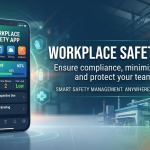


A Workplace Safety App can give employees, supervisors and safety teams a practical way to manage workplace safety activities from a mobile device. Safety information is often collected while people are working on production floors, construction sites, warehouses, offices and other locations. When employees have to wait until they return to a desk before reporting a hazard or incident, important details can be missed.
A workplace safety app can bring reporting, inspections, risk management and safety records into one digital environment. You can use it to report hazards, document incidents, complete inspections, assign corrective actions and review safety information. The goal is not simply to replace paper forms. A well planned app can make routine safety processes easier to follow and help organisations maintain more consistent records.
What Is a Workplace Safety App
A workplace safety app is a mobile or mobile friendly application designed to support workplace safety activities.
Depending on the organisation, a safety management app may include
- Hazard reporting
- Incident reporting
- Risk assessments
- Safety inspections
- Corrective action tracking
- Safety checklists
- Compliance records
- Safety observations
- Employee reporting
- Safety management reports
Different workplaces have different risks, so the features required by a construction company may not be the same as those required by a retail business or manufacturing facility.
The most useful system is one that fits the organisation's existing safety procedures rather than forcing employees to follow unnecessarily complicated workflows.
Why Mobile Safety Management Matters
Safety activities often happen away from a computer.
An employee may notice a damaged electrical cable while walking through a facility. A supervisor may identify an unsafe working condition during a routine inspection. A worker may witness a near miss during a busy shift.
In each situation, information is more useful when it can be recorded close to the time and place where it occurred.
A safety management app can allow an employee to
- Open the application
- Select the relevant report
- Describe the issue
- Add a photograph if appropriate
- Submit the information
This can reduce the dependence on handwritten notes and later data entry.
Workplace Safety Management Through One System
Workplace safety management involves many connected activities.
A company may need to identify hazards, assess risks, investigate incidents, conduct inspections and track corrective actions.
When these processes are managed separately, safety teams may spend considerable time collecting information from different sources.
A workplace safety app can connect several activities within one system.
For example, an inspection may identify a hazard. The finding can then be assigned to a responsible person. If the risk requires further review, a risk assessment can be created. Once the corrective action is completed, the safety team can verify it.
This creates a more complete record of what happened and what was done afterward.
Hazard Reporting Through a Workplace Safety App
Hazard reporting is one of the practical uses of a workplace safety app.
Employees are often the people closest to daily workplace conditions. They may notice hazards that are not immediately visible to supervisors or safety professionals.
A digital hazard report can include
- Hazard description
- Location
- Date and time
- Category
- Photograph
- People potentially affected
- Immediate action
- Recommended follow up
For example, an employee may notice an obstructed emergency exit.
Instead of writing the issue on paper and waiting for a supervisor to collect the form, the employee can report it through the application.
The responsible person can then review the report and decide what action is required.
Incident Reporting App
An incident reporting app can help employees and supervisors document workplace incidents and near misses.
A report may contain
- Incident date
- Time
- Location
- People involved
- Incident description
- Witness details
- Immediate response
- Photographs
- Investigation information
- Corrective actions
Consistent reporting can help organisations maintain better records.
Near misses can also be valuable because they may reveal conditions that could contribute to a more serious event.
The purpose of recording a near miss is not simply to increase the number of reports. The information should be reviewed to determine whether a hazard or control requires attention.
Risk Management App for Workplace Hazards
A risk management app can help safety teams document workplace risks and the controls associated with them.
A typical risk assessment may consider
| Risk Area | Information |
|---|---|
| Hazard | What could cause harm |
| Location | Where the hazard exists |
| Exposure | Who may be affected |
| Likelihood | How likely the event may be |
| Severity | Potential consequence |
| Existing controls | Current precautions |
| Additional controls | Further measures required |
| Responsible person | Person assigned to the action |
| Review date | Date for reassessment |
The organisation should use a risk assessment method that matches its own policies and applicable requirements.
Digital records can make it easier to review previous assessments when work processes, equipment or workplace conditions change.
Safety Inspection Software
Safety inspection software can allow inspectors to complete checklists using a mobile device.
Instead of carrying paper forms, an inspector can open the relevant checklist and record findings during the inspection.
Inspection categories may include
- Workplace conditions
- Machinery
- Emergency equipment
- Personal protective equipment
- Storage areas
- Fire safety
- Electrical conditions
- Housekeeping
If the inspector finds an issue, it can be recorded immediately.
The system may then create a corrective action and assign it to the appropriate employee.
Corrective Action Tracking
Finding a safety problem is only the first step.
The organisation also needs to make sure that the problem is addressed.
A workplace safety app can help track corrective actions through different stages.
| Status | Purpose |
|---|---|
| Open | The issue has been identified |
| Assigned | Responsibility has been given |
| In progress | Work has started |
| Completed | The action has been completed |
| Verified | The result has been checked |
This can help safety managers identify overdue actions.
It also creates a record showing what happened after an inspection, incident or hazard report.
Workplace Safety Software and Compliance
Workplace safety software can help organisations organise information related to safety compliance.
Compliance activities may include
- Safety inspections
- Internal audits
- Risk assessments
- Employee training
- Incident records
- Corrective actions
- Safety documentation
- Scheduled reviews
A safety compliance software platform can provide a central location for these records.
However, software does not automatically make an organisation compliant. Businesses still need to understand the requirements that apply to their industry and location.
The application should support those processes rather than replace professional judgement.
Safety Management System Integration
A safety management system provides the broader framework for managing workplace safety.
A mobile app can act as one part of that framework.
For example, an organisation may have established procedures for incident investigation and risk assessment. The app can provide the digital tools employees use to submit information and safety teams use to manage follow up activities.
This approach keeps technology connected to existing safety procedures.
It also helps ensure that employees understand what should happen after they submit a report.
Benefits of a Workplace Safety App
A workplace safety app can provide several practical benefits when it is implemented properly.
Faster Reporting
Employees can submit information from the workplace rather than waiting until they reach a computer.
Better Record Consistency
Digital forms can provide standard fields for different types of reports.
Easier Follow Up
Managers can assign corrective actions and monitor their status.
Centralised Information
Safety teams can keep reports, inspections and risk information within one system.
Mobile Access
Employees can use mobile devices during workplace activities.
Better Visibility
Managers can review open actions, incident records and inspection findings more easily.
These benefits depend on employee participation and appropriate system configuration.
How Employees Can Use a Safety App
The application should be simple enough for employees with different levels of technical experience.
A typical reporting process could be
Step One
The employee opens the workplace safety app.
Step Two
They select the appropriate activity such as hazard reporting or incident reporting.
Step Three
They enter the relevant details.
Step Four
They add supporting information such as a photograph when appropriate.
Step Five
They submit the report.
Step Six
The responsible supervisor or safety professional reviews the information.
This type of workflow can make reporting part of everyday workplace activity rather than an additional administrative burden.
Data From Workplace Safety Activities
A workplace safety app can collect information from daily safety activities.
Over time, the organisation may have records covering
- Incident frequency
- Hazard categories
- Near misses
- Inspection findings
- Open corrective actions
- Risk assessments
- Department level observations
Safety teams can review this information to identify recurring issues.
For example, if similar hazards are repeatedly reported in one location, managers may need to examine whether existing controls are suitable.
Data should support investigation and decision making rather than simply create large volumes of reports.
Challenges With Safety Management Apps
A mobile safety application is not automatically effective just because it is digital.
One challenge is employee adoption.
If workers find the application difficult to use, they may avoid reporting minor hazards or near misses.
Another issue is poor quality information.
A report containing very little detail may not give the safety team enough information to decide what action is necessary.
Training can help employees understand what should be reported and how to provide useful information.
Organisations should also review the application periodically to make sure its forms, workflows and permissions remain appropriate.
How to Choose a Workplace Safety App
Before selecting a workplace safety app, organisations should assess their actual needs.
Review Existing Safety Processes
Understand how your organisation currently manages incidents, hazards and inspections.
Identify Mobile Activities
Determine which safety activities take place away from a computer.
Check Reporting Features
Make sure employees can easily report hazards, incidents and near misses.
Review Risk Management
Check whether the system supports your organisation's risk assessment process.
Examine Corrective Actions
Make sure managers can assign and monitor actions.
Check User Permissions
Different employees may need different levels of access.
Review Reporting
Determine whether the application provides the information safety managers actually need.
Consider Integration
If the organisation already uses other workplace systems, check whether the app can work with the existing technology where appropriate.
Final Thoughts on Workplace Safety App
A Workplace Safety App can provide a practical digital approach to workplace safety management. It can help employees report hazards and incidents, while giving supervisors and safety professionals tools for inspections, risk assessments and corrective actions.
A risk management app can connect workplace observations with risk records, while an incident reporting app can provide a consistent process for documenting events and near misses. At the same time, workplace safety software can help organisations maintain broader compliance and safety records.
The technology works best when it supports clear safety procedures. Employees need to know what to report, supervisors need to understand their responsibilities and safety teams need a reliable process for reviewing information and closing actions.
For you and your organisation, the right workplace safety app should therefore be simple enough for everyday use while providing the reporting, risk management, inspection and compliance functions required by your workplace. When mobile reporting becomes part of normal safety practice, organisations can maintain more timely records and give safety teams better information for managing workplace risks.