

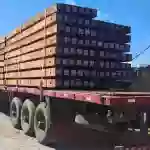

Freight can become a surprisingly large part of a construction project's ground protection budget. Timber mats are heavy, and moving a large quantity from a manufacturing facility to a remote job site requires careful planning. Contractors may focus heavily on the price per mat and overlook transportation costs until the freight invoice arrives.
The good news is that freight costs are not entirely fixed. The number of mats ordered, delivery distance, truck utilization, unloading requirements, delivery timing, and the way the shipment is planned can all affect the final transportation expense.
For contractors purchasing Eucalyptus Timber Mats for infrastructure, utilities, renewable energy, bridge work, or other large construction projects, freight planning should begin at the same time as product selection. A few decisions made before the order is placed can reduce unnecessary transportation costs without compromising the quality of ground protection.
Start With the Quantity You Actually Need
Avoid Under-Ordering
Ordering too few mats can create a second freight expense later.
For example, a contractor may initially order enough mats for the main access road but discover during installation that additional coverage is needed around turning areas, staging zones, or soft sections of the site. A second shipment then has to be arranged, potentially for a relatively small quantity.
That means paying for another delivery when the original shipment could have accommodated the additional mats.
Before placing an order, estimate the full project requirement. Include temporary roads, equipment working areas, loading zones, turning points, and locations where ground conditions are likely to be weaker.
Don't Over-Order Without a Plan
Ordering more mats than the project needs can create a different problem.
Extra inventory takes up storage space and ties up capital. If the mats are unlikely to be used again soon, the additional freight may not provide any immediate value.
The objective is to order enough material to complete the project efficiently while considering whether the additional mats are likely to be reused on future jobs.
Make Better Use of Each Truckload
Freight Efficiency Starts With Shipment Planning
Because timber mats are heavy and bulky, transportation efficiency matters.
Ask the supplier how the mats will be loaded and how many can be transported safely on each shipment. The goal is to make effective use of available truck capacity while meeting applicable transportation requirements.
Sending a partially utilized truck when additional mats could have been included can increase the effective freight cost per mat.
Consolidate Deliveries When Possible
Multiple small deliveries are often more expensive than fewer, better-planned shipments.
If the project schedule allows it, consolidating mats into fewer loads can reduce repeated delivery charges, unloading coordination, and administrative work.
This works particularly well for larger projects with predictable installation schedules. Instead of ordering a small quantity every few days, coordinate deliveries around major phases of construction.
Consider the Delivery Location
Remote Sites Can Change the Freight Calculation
The distance from a supplier to the project is only one part of the transportation equation.
Remote projects can involve long stretches of highway travel, limited road access, restricted delivery hours, or difficult final-mile conditions. Renewable energy, utility, and infrastructure projects often extend into areas where standard commercial delivery assumptions do not apply.
When requesting a freight quote, provide the supplier with the actual job-site location and any access limitations.
A delivery point that looks straightforward on a map may require additional planning once a loaded truck reaches the final section of the route.
Use a Practical Delivery Point
Sometimes the most economical solution is not delivering every load directly to the final work location.
For remote or difficult-to-access projects, contractors may be able to receive materials at a nearby staging yard or accessible location and then move them to the job site using project equipment.
Whether this approach saves money depends on the distance, handling requirements, local storage costs, and available equipment. The comparison should include the full cost of the additional handling rather than assuming either option is automatically cheaper.
Plan Deliveries Around the Construction Schedule
Avoid Urgent Freight
Last-minute shipments are rarely the most economical.
When mats are needed immediately, contractors may have fewer carrier options and less flexibility to consolidate loads. Expedited transportation can also create additional charges.
Ordering well ahead of the installation date gives the supplier and carrier more time to coordinate efficient transportation.
For large projects, establish a delivery schedule before the first mats are required rather than treating freight as an afterthought.
Match Deliveries to Installation Capacity
It may seem efficient to send the entire order at once, but that isn't always practical.
If the job site cannot unload and position a large quantity of mats quickly, trucks may spend additional time waiting. Depending on the carrier arrangement, this can create detention or waiting charges.
The delivery schedule should match the crew's ability to receive and deploy the mats.
Choose a Supplier With Strong Freight Planning
Ask How Freight Is Calculated
Don't simply ask for the price of the mats.
Ask for the delivered cost and clarify what it includes. Transportation, unloading requirements, fuel-related charges, access restrictions, and other delivery conditions can affect the final amount.
A supplier familiar with construction logistics can help identify options that may reduce the effective freight cost.
Compare Delivered Cost, Not Unit Price
Two suppliers may offer similar mat prices but very different delivered totals.
For example, one supplier might be closer to the job site, while another may have more efficient freight arrangements or better shipment consolidation.
When comparing quotes, evaluate the complete landed cost. This provides a much clearer basis for procurement decisions than comparing the price per mat alone.
Consider the Value of Durable Mats
Freight Is More Important When Mats Are Used Repeatedly
Transportation is an expense every time mats move, so durability can indirectly improve the economics of ground protection.
Quality Eucalyptus Timber Mats are designed for repeated heavy-duty use. If a contractor can reuse the same inventory across several projects, the original transportation and purchase investment continues generating value over a longer period.
That doesn't eliminate freight costs, but it means the cost of moving the mats is spread across more projects and more years of use.
Reduce Unnecessary Replacements
Low-quality mats may create additional freight expenses when damaged units need to be replaced during a project.
A replacement shipment can be particularly expensive when the required quantity is small or the job site is remote.
Investing in durable hardwood mats and maintaining them properly can reduce the frequency of these unexpected transportation requirements.
Use Project Planning to Lower Freight Costs
Map the Matting Before Ordering
One of the most practical ways to reduce freight waste is to create a matting plan before purchasing.
Identify the length and width of temporary access roads, equipment platforms, loading areas, turning zones, and other protected sections. Then estimate the number of mats required for each area.
This makes it easier to build a complete order rather than reacting to shortages after installation begins.
Account for Changes in Ground Conditions
Your original matting plan may need to adapt to weather or changing site conditions.
A project that receives significant rainfall may require additional coverage in areas that were originally expected to remain stable. Discuss these possibilities with your supplier before the initial order so you can determine whether carrying some additional inventory is more economical than arranging emergency freight later.
The best freight strategy balances preparedness with unnecessary over-ordering.
Consider Storage and Reuse From Day One
Freight planning doesn't end when the mats arrive.
After a project is complete, contractors need to decide where the mats will go next. Moving a full inventory to another project can be more economical when future demand is known and the transportation can be incorporated into the next project's schedule.
Proper storage also protects the mats while they wait for reuse. Keeping quality Eucalyptus Timber Mats on firm, well-drained ground and inspecting them before redeployment helps reduce the chance of needing replacement shipments.
Work With Your Supplier Early
Freight savings often come from coordination rather than one specific transportation trick.
Provide the supplier with the project location, estimated quantity, equipment requirements, access limitations, required delivery dates, and expected duration. That information gives them a much better opportunity to recommend an efficient shipping plan.
World Forest Group works with contractors that need Eucalyptus Timber Mats for large construction and infrastructure applications, where product requirements and transportation logistics must be considered together.
Reducing freight costs starts before the truck is booked. Accurate quantity planning, consolidated shipments, realistic delivery schedules, accessible receiving locations, and attention to future reuse can all lower the effective cost of moving timber mats to and from a project. Contractors who treat freight as part of the initial procurement strategy—not as a separate expense at the end—are better positioned to control project costs while still getting the ground protection their equipment requires.
Frequently Asked Questions
What is the best way to reduce freight costs when ordering timber mats?
Start by calculating the full project requirement, consolidating deliveries where possible, and coordinating shipment timing with the supplier and installation crew. Avoiding small emergency shipments can also reduce costs.
Does ordering more timber mats lower freight costs?
It can, when the additional mats allow better truck utilization and are likely to be used on the project or future jobs. Over-ordering without a reuse plan can create unnecessary storage and capital costs.
How can remote construction sites reduce timber mat delivery costs?
Provide the exact job-site location and access details early. In some cases, delivering to a nearby accessible staging location and moving mats to the site may be worth comparing with direct delivery.
Do Eucalyptus Timber Mats help reduce long-term freight expenses?
Their durability and reusability can help reduce the need for replacement shipments and allow contractors to spread the original transportation investment across multiple projects.