

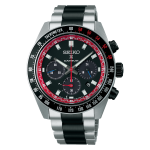
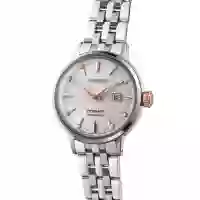
In the world of horology, few names command as much universal respect as Seiko. Whether you are a seasoned collector with high-end Swiss mechanical pieces in your safe or a beginner looking for your very first reliable daily wearer, Seiko holds a unique and legendary status.
The story of this Japanese giant is not just one of manufacturing timepieces; it is a story of relentless innovation, unparalleled vertical integration, and a commitment to democratic watchmaking that changed the global landscape of timekeeping forever.
From Ginza to the World: The Humble Beginnings
The story of Seiko began in 1881 in Tokyo, Japan. A visionary 21-year-old entrepreneur named Kintaro Hattori opened a small shop selling and repairing clocks and pocket watches in the central district of Ginza. Determined to not just sell but also manufacture, Hattori established the Seikosha factory in 1892. In Japanese, Seiko translates to "exquisite," "precision," or "success," while sha means "house"—a prophetic name for what would become a house of absolute manufacturing excellence.
By 1913, Seikosha achieved a historic milestone by producing the Laurel—Japan’s very first wristwatch. When the devastating Great Kanto Earthquake of 1923 burned down the Seikosha factory, Hattori did not back down. He rebuilt, and in December 1924, released the very first timepiece to proudly display the name "Seiko" on its dial.
Shaking the Foundations: The Quartz Revolution
While Seiko was steadily building a reputation for durable mechanical watches throughout the mid-20th century, it was on Christmas Day in 1969 that the brand shook the horological world to its core.
Seiko released the Quartz Astron, the world's first commercial quartz wristwatch.
The Astron Effect: By using a battery-powered quartz crystal vibrating at a stable 8,192 Hz, the Astron kept time to within an astonishing 5 seconds per month—making it roughly 100 times more accurate than the finest mechanical movements of its era.
This single breakthrough triggered what the Swiss watch industry called the "Quartz Crisis" (and what the rest of the world called the "Quartz Revolution"). Rather than keeping this high-accuracy technology exclusive, Seiko chose to democratize quartz movements. They shared their patents globally, dramatically lowering production costs and making highly accurate timekeeping accessible to everyone on the planet.
The Art of Vertical Integration
What truly separates Seiko from almost every other watchmaker is its radical, end-to-end independence. Alongside Swiss legends like Rolex, Seiko is one of the only fully vertically integrated watch manufacturers in existence.
They do not merely assemble outsource components; they manufacture every single part of their watches in-house:
-
Hairsprings and Mainsprings: Crafted from proprietary metal alloys like Spron.
-
Dials and Hands: Pressed, polished, and hand-applied in-house.
-
Quartz Crystals: Grown in massive, sterile autoclaves developed within Seiko's own laboratories.
-
Lubricating Oils: Specifically formulated by Seiko chemists to ensure mechanical longevity.
This vertical integration spans across their entire lineup—from entry-level automatics to their high-luxury counterparts, Grand Seiko.
Chronology of Innovation
Seiko's history is defined by a timeline of legendary horological milestones:
Iconic Collections and the Magic of Spring Drive
Today, Seiko’s diverse catalogue is organized into distinct families, each designed to meet a specific lifestyle and functional demand:
1. Seiko 5 Sports
Introduced in the 1960s, the "5" represents five key attributes that became the gold standard for budget-friendly mechanical watches: an automatic movement, a day-date display, adequate water resistance, a recessed crown at 4 o'clock, and a highly durable case. It remains the absolute gateway for mechanical watch enthusiasts worldwide.
2. Prospex (Professional Specifications)
Built for professional adventurers, this line includes some of the most famous dive watches in history, such as the "Tuna," the "Turtle," and the "Samurai". Built with Seiko's proprietary Diashock shock-absorption systems and exceptional water resistance, they are legendary tool watches.
3. Presage
Focusing on Japanese artistic heritage, the Presage line showcases exquisite craftsmanship, particularly its "Cocktail Time" series and watches featuring enamel, Urushi lacquer, or Shippo enamel dials.
The Spring Drive Breakthrough
In 1999, Seiko changed watchmaking yet again with the Spring Drive. This movement uses a mechanical mainspring for power but replaces the traditional escapement with a Tri-synchro Regulator. The regulator converts a fraction of the mechanical energy into electricity to power a quartz crystal oscillator. The result? A glide wheel that rotates in only one direction, allowing the seconds hand to sweep in a continuous, perfectly fluid motion with an accuracy of $\pm 1$ second per day.
A Legacy of Excellence
From a small clock repair shop in late 19th-century Tokyo to a global manufacturing power, Seiko has successfully bridged the gap between luxury, technology, and pure mechanical romance. By consistently staying "one step ahead of the rest"—as Kintaro Hattori famously put it—Seiko has earned its rightful place as an absolute icon of horology.