


For a growing small business, international expansion is the ultimate milestone. Reaching overseas markets opens doors to millions of new customers, diversifies revenue streams, and elevates a local brand into a global competitor. Yet, the physical reality of moving commercial goods across oceans and borders can quickly dampen that initial excitement.
Historically, global logistics was a game heavily rigged in favor of massive conglomerates. Giant corporations possessed the capital to command dedicated shipping lanes, absorb sudden supply chain shocks, and maintain internal compliance teams to navigate complex border regulations. Small and medium-sized enterprises (SMEs), on the other hand, often found themselves stranded in a sea of confusing paperwork, unpredictable shipping rates, and opaque tracking systems.
The rise of smart logistics has leveled the playing field. By blending advanced technology with traditional shipping practices, modern logistical infrastructure allows smaller enterprises to operate with the agility and muscle of a global giant. Leveraging these modern frameworks is no longer just a way to move cargo from point A to point B; it is a core strategy for sustainable growth.
The Landscape of International Trade for Small Businesses
Entering the global market has never been more attractive, or more necessary. Digital e-commerce platforms and global payment networks make it possible for a business based in any small town to secure orders from Tokyo, London, or Sydney overnight. According to ongoing research highlighting small business statistics on Forbes, financial mismanagement and an inability to navigate market complexities represent two of the primary reasons young companies fail within their first five years. In the realm of international trade, these financial risks are magnified by volatile shipping costs, customs delays, and inventory mismanagement.
SMEs face an uphill battle when dealing with traditional shipping methods. Traditional supply chains rely heavily on manual intervention: scattered spreadsheets, endless email threads, and reactive problem-solving. When a shipment gets stuck at a port due to a missing document or an unexpected labor strike, a small business often lacks the visibility to pinpoint the issue or the leverage to bypass the bottleneck.
Furthermore, recent economic shifts have transformed global trade. Industry analyses reveal that the true barrier to entry is no longer just the cost of freight, but navigating what experts call the "cost of permission." This includes securing strict compliance clearances, obtaining cross-border financing, and managing real-time regulatory shifts. Without sophisticated systems, smaller enterprises can easily find their margins erased by compliance penalties and storage fees.
What Makes Freight Forwarding "Smart"?
To understand how the system has changed, it helps to look at the baseline definition of the industry itself. As defined on Wikipedia, freight forwarding involves the coordination and shipment of goods from one place to another via a variety of carriers, including air, ocean, road, and rail. Historically, a forwarder acted purely as an intermediary broker, booking space on ships and filling out standard customs forms.
Smart freight forwarding takes this foundational concept and injects it with modern digital technology. It converts an industry known for heavy paperwork and manual tracking into a data-driven, highly connected ecosystem.
[Traditional Logistics: Fragmented Emails & Manual Spreadsheets]
                          │
                          ▼
[Smart Freight Forwarding: Cloud Platforms, Real-Time Data & Predictive AI]
The core differences between legacy systems and smart forwarding solutions rest on three technological pillars:
-
Centralized Digital Platforms: Instead of dealing with separate entities for trucking, customs clearance, and ocean freight, businesses use a single digital dashboard. Quotes are generated instantly, documentation is uploaded to the cloud, and communication is streamlined.
-
Predictive AI and Machine Learning: Modern systems do not just track where a vessel is; they analyze historical weather data, port congestion trends, and seasonal capacity shortages to predict delays before they happen, allowing forwarders to reroute shipments proactively.
-
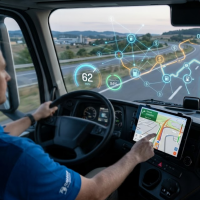
Internet of Things (IoT) Tracking: Small sensors placed on containers give businesses continuous insight into their cargo. Shippers receive live updates on exact GPS locations, temperature stability, and even shock or tilt detection for fragile items.
Key Benefits of Smart Freight Forwarding for SMEs
Adopting a tech-driven approach to logistics transforms how a small business handles its daily operations. By removing the guesswork from shipping, smart forwarding provides several distinct operational advantages.
1. Cost Efficiency and Dynamic Pricing
Traditional shipping often forces small businesses to pay premium, ad-hoc rates because they lack the volume to negotiate long-term contracts. Smart digital platforms aggregate shipping data across thousands of smaller businesses. This digital consolidation allows forwarders to secure competitive volume rates from major ocean and air carriers, passing those savings directly to the SME.
Additionally, automated rate management tools provide immediate transparency. Business owners can view dynamic quotes that compare different modes of transport, travel times, and total landed costs, which includes all customs fees and duties. This transparency prevents the dreaded hidden fees that frequently plague legacy shipping invoices.
2. Real-Time Visibility and Proactive Risk Management
Losing track of inventory is a major source of anxiety for growing brands. If a retail client or a foreign distributor asks when an order will arrive, saying "somewhere in the Atlantic" is no longer acceptable.
Smart tracking systems provide precise, end-to-end milestone updates. If an ocean liner encounters a storm or a specific port experiences a sudden bottleneck, the system flags the disruption immediately. This real-time alert gives small businesses a vital head start. They can notify their customers ahead of time, adjust local warehouse schedules, or work with their forwarder to pivot to alternative trucking routes.
3. Automated Compliance and Smoother Customs Clearance
Customs clearance is arguably the most intimidating aspect of international trade. A single incorrect tariff code or an unsigned declaration form can cause customs officials to impound a container, resulting in expensive demurrage fees, which are penalties charged for keeping cargo inside a port past its allotted time.
Digital platforms dramatically simplify this process through automated data verification. When an invoice or packing list is uploaded, smart software checks the documentation against global trade databases to ensure accuracy. Many digital systems utilize Electronic Bills of Lading (eBL), which eliminate the risk of physical paperwork getting lost in transit. By automating document processing, clearance times that used to take days can often be completed in a matter of minutes.
How Smart Forwarding Fuels International Scaling
Surviving in the international market is one thing; actively scaling a business is another. To grow sustainably, an enterprise must be able to replicate its operational success across multiple countries without experiencing a exponential increase in overhead costs. Smart logistics acts as an external growth engine in several specific ways.
Flexible Supply Chains
Market demands can shift rapidly. A product that is trending in western Europe might suddenly experience a surge in demand across Southeast Asia. Small businesses must remain agile enough to reallocate their inventory without rebuilding their logistical framework from scratch.
Because smart forwarders operate via decentralized digital networks, adding a new trade lane or switching from ocean freight to air cargo can be managed through a few clicks on a dashboard. This flexibility allows businesses to test new international markets with low-volume shipments before committing to major capital investments.
Optimized Inventory Management
Carrying excess inventory is highly expensive, yet running out of stock can destroy a brand's reputation in a new market. Smart logistics platforms integrate directly with an enterprise's e-commerce or ERP software. By pairing current sales velocity with real-time transit data, businesses can implement "just-in-time" inventory models. They can precisely time their manufacturing runs so that new stock arrives at regional distribution centers right as the previous batch sells out, keeping warehouse costs to a minimum.
Enhanced Customer Experience
In a modern marketplace, the post-purchase experience is just as important as the quality of the product itself. International B2B buyers and consumers expect the same level of transparency they get from local deliveries. Smart logistics solutions enable small businesses to provide their global clients with automated tracking links, precise delivery windows, and seamless return options, building trust and encouraging repeat business.
Choosing the Right Smart Freight Forwarding Partner
The market features many providers claiming to offer advanced technological solutions. For a small business owner, cutting through the marketing noise to find a true partner requires looking for specific operational traits.
| Criteria | What to Look For | Why It Matters for SMEs |
| Platform Integration | Direct API connections with major e-commerce systems, ERPs, and warehouse software. | Eliminates manual data entry and reduces human error. |
| Customer Support | A dedicated human account manager backed by automated digital tools. | Technology handles the routine, but humans solve complex anomalies. |
| Global Network | Established relationships with local customs brokers and regional carriers worldwide. | Ensures smooth transitions during multi-modal transit. |
| Comprehensive Logistics | A full suite of modern freight forwarding services that cover documentation, warehousing, and cargo insurance. | Simplifies vendor management by housing everything under one roof. |
When evaluating potential partners, avoid providers that offer rigid, one-size-fits-all packages. The ideal digital forwarder should offer scalable solutions that adjust to your shifting shipment volumes, providing small-scale options during your quiet quarters and expanded capacity during your peak holiday seasons.
Step-by-Step: Preparing Your Business for Smart Shipping
Transitioning from local operations to a digitized global supply chain requires structured preparation. Following a clear implementation sequence prevents common onboarding mistakes.
Conclusion: The Future of Global Expansion
The days when international trade was reserved exclusively for corporate giants are officially over. The digitization of supply chains has democratized global commerce, giving small businesses unprecedented access to the world stage.
Smart logistics removes the historical barriers of complexity, lack of transparency, and high costs that used to hold smaller enterprises back. By leveraging automated customs processes, real-time tracking, and optimized shipping routes, small businesses can minimize financial risk and focus on what they do best: building exceptional products and connecting with global audiences. International expansion is no longer a logistical nightmare; it is an achievable, scalable reality for any ambitious business ready to make the leap.