


Most horror games have a shelf life.
They release, attract attention for a few months, and eventually fade into gaming history. A few classics survive because of nostalgia, but very few continue frightening players years after launch.
Fnaf is one of those rare exceptions.
More than a decade after the first game arrived, players still debate theories, watch gameplay videos, and challenge themselves to survive one more night. As someone who recently revisited the series, I expected the scares to feel predictable. Instead, I found myself experiencing the same tension that made the franchise famous in the first place.
That says a lot about what Fnaf does differently.
Why Does Fnaf Rely on Tension Instead of Constant Action?
Fnaf remains scary because it understands that anticipation is often more powerful than danger itself. The franchise focuses on what might happen rather than what is happening.
That distinction matters.
The Waiting Is Often the Worst Part
One of the most memorable aspects of Fnaf is how much time players spend waiting.
You monitor cameras.
You listen for sounds.
You watch the clock.
Nothing appears to be happening.
Yet your heart rate continues to rise.
The game transforms inactivity into suspense, which is surprisingly difficult for other horror games to achieve.
Every Decision Carries Risk
The gameplay appears simple at first glance.
However, every action comes with consequences.
Checking one camera means ignoring another. Conserving power means accepting additional risk. Focusing on one animatronic may allow another to move unnoticed.
This constant trade-off keeps players engaged.
You Feel Responsible for Failure
When a jump scare occurs, players usually know where things went wrong.
They reacted too late.
They overlooked an important detail.
They became distracted.
Because mistakes feel personal, the fear feels more meaningful.
How Do the Animatronics Continue to Be Effective?
The animatronics remain iconic because they are built around a simple but powerful idea. They look safe, yet they behave like threats.
That contradiction never stops being unsettling.
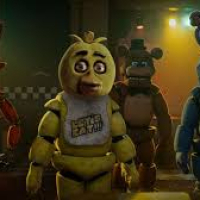
Freddy Fazbear Is Both Familiar and Frightening
Freddy Fazbear represents everything that makes Fnaf unique.
He resembles a character that belongs at a birthday party.
At the same time, he has become one of gaming's most recognizable horror figures.
The contrast between those identities creates lasting discomfort.
Animatronics Create Psychological Horror
The series rarely relies on graphic imagery.
Instead, the animatronics create psychological tension.
Players spend much of their time wondering where they are, where they are going, and whether they are already too close.
The fear comes from uncertainty.
Their Presence Is Constant
Even when animatronics are not visible, they feel present.
Players know they are moving somewhere.
That awareness influences every decision.
The threat never fully disappears.
Why Is the Lore Still So Popular?
Many franchises survive because of gameplay.
Fnaf survives because of gameplay and mystery.
The lore has become one of its strongest attractions.
Scott Cawthon Created Questions Instead of Answers
Scott Cawthon understood the value of curiosity.
Rather than explaining everything directly, he encouraged players to investigate.
Clues appeared in hidden locations and unexpected places.
Fans became detectives searching for meaning.
Every Game Adds New Mysteries
One reason discussions continue is that each entry introduces new information.
At the same time, new questions emerge.
The story constantly evolves, giving players fresh topics to explore.
This keeps the franchise feeling alive.
Community Discussion Never Stops
The Fnaf community remains one of gaming's most active fan communities.
Popular discussion topics include:
- Character origins
- Hidden lore details
- Timeline theories
- Secret endings
- Connections between games
- Future story predictions
The conversation rarely slows down.
What Impact Did Security Breach Have on Fnaf?
Security Breach proved that Fnaf could evolve beyond its original formula. The game introduced new ideas while preserving the franchise's identity.
That balance was important.
The Franchise Became More Ambitious
Earlier games focused on limited environments.
Security Breach introduced a massive entertainment complex filled with locations to explore.
The larger scale made the world feel more believable.
Exploration Created New Types of Fear
Watching threats through cameras is frightening.
Encountering them directly is different.
Security Breach shifted part of the horror experience toward exploration and pursuit.
This gave players new ways to experience tension.
New Players Entered the Franchise
The broader gameplay attracted audiences unfamiliar with older entries.
For many players, Security Breach served as their first introduction to Fnaf.
That helped expand the community and keep the franchise relevant.
Why Does Fnaf Continue to Work in 2026?
At its heart, Fnaf is built on timeless principles.
Technology evolves.
Human fear does not.
The Core Strengths of Fnaf
| Element | Why It Matters |
|---|---|
| Suspense | Creates lasting tension |
| Animatronics | Provide memorable villains |
| Sound Design | Builds atmosphere |
| Lore | Encourages discussion |
| Accessibility | Easy to understand |
Many horror games focus on what players can see.
Fnaf often focuses on what players cannot see.
That difference changes everything.
A dark hallway becomes threatening.
An empty camera feed becomes suspicious.
A distant sound becomes alarming.
The player's imagination does much of the work.
That is why the franchise continues to succeed after so many years. Fnaf understands that effective horror is not about overwhelming players with monsters or violence. It is about creating uncertainty and allowing fear to grow naturally.
Even in 2026, that formula remains remarkably effective.
Whether you are a longtime fan or a newcomer experiencing the series for the first time, Fnaf still delivers something many horror games struggle to achieve: genuine tension that lasts long after the screen goes dark.
FAQ
Why is Fnaf still scary in 2026?
Fnaf remains scary because it relies on suspense, uncertainty, sound design, and player responsibility rather than graphics alone.
Is Security Breach important to modern Fnaf?
Yes. Security Breach expanded the franchise's world, introduced new gameplay ideas, and attracted many new players.
Who created Fnaf?
Fnaf was created by Scott Cawthon, whose approach to mystery and horror helped turn the franchise into a lasting gaming phenomenon.