

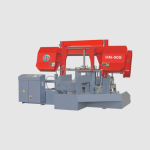


A vertical metal band sawing machine and band sawing machine are widely used in precision manufacturing environments where dimensional accuracy and surface quality directly affect product performance. Many workshops encounter challenges such as rough cutting edges, inconsistent tolerances, and blade drift when processing steel, aluminum, or alloy materials. These issues become more critical when producing parts for machinery, automotive systems, or structural assemblies.
Precision metal cutting depends on maintaining stable interaction between blade, material, and machine structure. Even small variations in blade tension or feed rate may result in measurable deviations in final dimensions. In many machining workflows, tolerance requirements can range from ±0.1 mm to ±0.3 mm, requiring carefully controlled equipment settings.
A band sawing machine operates through continuous blade movement, which distributes cutting force more evenly compared with intermittent cutting methods. This reduces localized stress on the material and supports smoother edge formation. The result is improved consistency across multiple production cycles.
Vertical systems offer additional flexibility for handling irregular or customized workpieces. A vertical metal band sawing machine allows operators to guide material manually along the cutting blade, which is particularly useful for contour cutting or non-standard shapes used in mold making and prototype development.
Blade tension stability is essential for maintaining accuracy. If tension is too low, blade deflection may occur, leading to curved or uneven cutting lines. If tension is too high, blade fatigue increases and may shorten operational lifespan. Many machines use hydraulic or mechanical tensioning systems to maintain consistent pressure during operation.
Cutting speed selection also influences surface quality. Higher speeds may increase production efficiency but can also generate excess heat, affecting edge smoothness. Lower speeds improve control but may reduce output efficiency. Operators typically adjust speed based on material hardness and thickness.
Cooling systems help maintain stable cutting conditions. Cutting fluid reduces friction between blade and material, helping prevent thermal deformation. Stable cooling flow contributes to smoother surface finishes and reduces the likelihood of discoloration on cut edges.
Material composition plays a significant role in cutting results. Stainless steel, carbon steel, and aluminum alloys each respond differently to blade interaction. Stainless steel often requires slower feed rates due to higher resistance, while aluminum allows faster cutting speeds with reduced wear.
Vibration control is another factor affecting surface quality. Excessive vibration may cause irregular blade movement, resulting in rough or uneven edges. Machine base rigidity and proper installation help minimize vibration during operation.
A band sawing machine often includes guide systems that support blade stability during cutting. These guides reduce lateral movement and help maintain straight cutting paths, especially when processing longer workpieces.
Tool wear monitoring is increasingly important in precision environments. Blade wear gradually affects cutting quality, leading to rough edges or dimensional drift. Regular inspection and replacement schedules help maintain consistent performance.
Automation systems in modern machines allow presetting of cutting parameters. This reduces operator variability and ensures more stable production output across different shifts or batches. Digital monitoring systems also help track performance trends over time.
Surface finish requirements vary by application. Components used in visible assemblies may require smoother edges, while internal structural parts may allow slightly rougher finishes. Manufacturing processes are often adjusted accordingly.
Energy efficiency considerations also influence machine usage. Compared with grinding or thermal cutting systems, band sawing generally consumes less energy while maintaining acceptable precision levels for many industrial applications.
Workholding systems are important for stability. Secure clamping prevents material movement during cutting, which helps maintain dimensional accuracy and surface quality. Hydraulic clamps are often used in industrial environments for consistent pressure control.
A vertical metal band sawing machine is particularly suitable for flexible production environments where different shapes and sizes are processed frequently. Its adjustable cutting orientation supports customized manufacturing tasks.
Industrial demand for precision parts continues to grow in sectors such as automotive engineering, machinery production, and metal fabrication. Stable cutting processes are increasingly important for maintaining quality standards.
A band sawing machine remains a core tool in precision metalworking due to its balance of accuracy, efficiency, and operational flexibility. With proper setup and controlled operation, it supports consistent surface quality and dimensional stability across a wide range of industrial applications.