

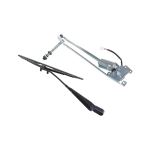


Modern buses operate for long hours, often in challenging conditions, including rain, snow, and strong temperature variations. A well-designed Bus Wiper Motor must maintain stable performance under continuous use, while a Modular Wiper Motor introduces additional flexibility that changes how maintenance teams manage vehicle downtime and repair cycles.
One important aspect of wiper motor efficiency is operational consistency. When buses are running on fixed schedules, even a short interruption caused by windshield visibility issues can affect route timing. For example, a single unexpected motor failure during peak hours may delay multiple routes, especially in urban transit systems where buses operate in tight intervals. To reduce this risk, manufacturers focus on improving internal gearing precision and motor torque stability. A stable torque output helps maintain consistent wiper movement even when the windshield resistance increases due to heavy rain or accumulated debris.
Passenger experience is also directly connected to how smoothly the wiper system operates. Irregular wiping patterns or sudden speed fluctuations can create discomfort, especially for passengers seated near the front of the bus. In long-distance travel, this becomes more noticeable as passengers spend extended periods observing road conditions through the windshield. A well-calibrated motor system reduces vibration transfer to the windshield frame, resulting in a more stable visual environment for passengers.
The modular structure of modern systems introduces a different maintenance logic compared to traditional designs. Instead of diagnosing and replacing an entire unit, technicians can isolate specific functional modules. For example, if a control module fails while the motor unit remains functional, replacement can be completed without disturbing the entire assembly. This approach reduces average repair time, often by 30–50% depending on fleet structure and part availability.
Another advantage of modularity is inventory optimization. Fleet operators managing hundreds of buses often face challenges in stocking complete motor assemblies for every possible failure scenario. Modular systems reduce this pressure by standardizing components across multiple vehicle types. A single motor module may be compatible with different bus models, which simplifies warehouse management and reduces redundant stock levels.
Energy efficiency continues to be an important design direction. Wiper motors, although not the largest energy consumers in a bus, still contribute to overall electrical load. Improvements in brushless motor technology and optimized gear ratios have helped reduce unnecessary energy loss. In practical use, energy savings per vehicle may appear small, but across a fleet operating thousands of hours per month, the cumulative reduction becomes meaningful.
Weather responsiveness is another area where modern systems show development. Instead of fixed-speed operation, many Bus Wiper Motor systems now integrate variable speed logic. This allows the motor to adjust wiping frequency based on rainfall intensity. For instance, light drizzle may trigger intermittent wiping, while heavy rain activates continuous high-frequency movement. This adaptive behavior reduces mechanical strain and extends component lifespan.
The Modular Wiper Motor structure also supports easier technological upgrades. As transportation systems move toward smarter vehicle integration, wiper systems are increasingly connected to onboard sensors and central control units. Instead of replacing the entire motor system to adopt new features, operators can upgrade only the relevant module. This flexibility allows fleets to gradually adopt new technologies without major system overhauls.
Durability remains a core requirement, especially for buses operating in regions with extreme climates. Exposure to road salt, dust, humidity, and temperature fluctuations can accelerate wear. To address this, motor housings are often designed with multi-layer sealing structures. These seals help prevent moisture intrusion and protect internal electrical components. In addition, improved lubrication systems inside the gearbox help maintain smoother operation over extended cycles.
From a production perspective, modular design also changes how manufacturers approach assembly lines. Instead of building fully integrated systems at once, production is divided into sub-assembly stages. This method improves quality control, as each module can be tested independently before final integration. It also reduces defect rates by isolating potential issues earlier in the manufacturing process.
Passenger safety remains indirectly influenced by all these improvements. Clear visibility during sudden weather changes, stable wiping motion, and reduced mechanical failure rates all contribute to safer driving conditions. In public transportation, where passenger numbers are high and routes are fixed, even small improvements in system reliability can have a noticeable operational impact over time.
Fleet operators increasingly evaluate wiper motor systems not only based on purchase cost but also on lifecycle performance. Factors such as repair frequency, energy consumption, and compatibility with future upgrades are becoming more important in procurement decisions. A system that requires fewer full replacements and allows component-level servicing tends to align better with long-term operational planning.
Maintenance teams also benefit from simplified diagnostic processes. Modular systems often include standardized connectors and diagnostic interfaces, making it easier to identify faults using onboard testing tools. This reduces reliance on manual inspection and helps technicians complete repairs with higher accuracy.
As transportation networks continue to expand and urban mobility demands increase, the role of wiper motor systems becomes more interconnected with overall vehicle efficiency. Improvements in mechanical design, electronic integration, and modular engineering continue to shape how buses operate across different environments and service conditions.