


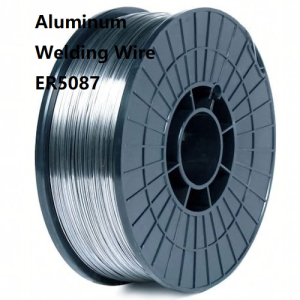
When examining Aluminum Welding Wire ER5356, welders and fabricators often compare it to ER5556 to determine which filler material fits their project requirements. Both belong to the 5xxx series of aluminum-magnesium alloys and serve similar purposes in welding non-heat-treatable base metals like 5083, 5086, 5454, and certain 6xxx series alloys. The differences arise mainly from variations in chemical composition, mechanical properties in the weld deposit, and application-specific performance.
The primary distinction lies in the alloying elements. ER5356 contains magnesium in the range of 4.5 to 5.5 percent, along with smaller additions of manganese, chromium, and titanium. ER5556 includes a similar magnesium level, typically 4.7 to 5.5 percent, but features a higher manganese content, around 0.50 to 1.0 percent, plus slightly elevated levels of other elements like zinc in some specifications. This increased manganese in ER5556 contributes to adjustments in weld metal behavior, particularly in terms of strength and ductility.
In terms of mechanical properties, ER5556 generally produces welds with marginally higher tensile strength and improved shear values compared to ER5356 under comparable conditions. The additional manganese enhances grain refinement and solid solution strengthening in the deposit, leading to welds that handle higher loads in structural applications. For fillet welds, which often dominate in aluminum fabrication, ER5556 can provide a slight edge in load-bearing capacity without significant changes in welding parameters.
Both fillers offer strong corrosion resistance, especially in marine and chemical environments where 5xxx series base metals see frequent use. The performance remains close, with no major gap in resistance to saltwater exposure or general atmospheric conditions. Weld appearance and color match after anodizing also stay similar, as both avoid the issues seen with silicon-based fillers like blackening or mismatched tones.
Weldability characteristics show some overlap. ER5356 provides good arc stability, smooth puddle control, and reliable feedability in MIG processes, with a reputation for consistent deposition across various joint types. ER5556 behaves in a comparable manner but may exhibit slightly different puddle fluidity due to the manganese influence, sometimes resulting in better resistance to hot cracking in highly restrained joints or thicker sections. Both maintain low sensitivity to solidification cracking when matched to appropriate base alloys and proper techniques.
Service temperature considerations apply equally to both. Neither suits prolonged exposure above approximately 150 degrees Fahrenheit, as higher magnesium levels can contribute to stress corrosion cracking risks in elevated heat environments. For applications requiring sustained temperatures in that range, other fillers like certain 4xxx series options become more suitable.
Selection between the two often depends on project specifications. ER5356 serves as a versatile, widely available choice for general structural welding, marine components, automotive frames, and transportation equipment where balanced strength and ease of use matter. ER5556 finds preference in scenarios demanding slightly higher weld metal strength, such as heavy-duty shipbuilding, pressure vessels, or large structural assemblies where fillet weld integrity under shear receives emphasis.
Fabricators benefit from understanding these nuances to match the filler to base metal chemistry, joint design, and service conditions. Both wires support efficient welding with standard equipment and shielding gases like argon or argon-helium mixes, allowing consistent results across MIG and TIG methods.
By reviewing the specific attributes of each, users can select the filler that aligns with their welding goals, whether prioritizing availability, mechanical performance, or crack resistance in demanding applications.To discover our offerings of Aluminum Welding Wire ER5356 and related aluminum filler materials, please visit https://www.kunliwelding.com/