



Childhood anxiety can affect how children think, feel, behave, and interact with the world around them. Some children struggle to explain their worries, while others express anxiety through emotional outbursts, withdrawal, sleep difficulties, or changes in behavior.
For many children, talking directly about their feelings can feel uncomfortable or overwhelming. This is where play therapy can make a difference.
Play therapy provides children with a supportive environment where they can explore emotions, communicate experiences, and develop healthier ways to cope. Through creative activities, storytelling, drawing, and imaginative play, therapists can help children understand their feelings at a developmentally appropriate pace.
Understanding effective play therapy for anxiety can help parents, caregivers, and mental health professionals support children's emotional well-being.
What Is Play Therapy for Anxiety?
Play therapy is a therapeutic approach that uses play as a natural way for children to communicate and process emotional experiences.
Because children may not have the vocabulary to describe complicated feelings, play gives them another way to express what they are experiencing.
During play therapy sessions, children may use toys, art materials, puppets, games, sand trays, and storytelling to explore emotions and experiences.
For children experiencing anxiety, play therapy can help them:
-
Recognize and express anxious feelings.
-
Develop emotional awareness.
-
Practice problem-solving skills.
-
Build confidence and self-esteem.
-
Learn healthy coping strategies.
-
Feel more comfortable expressing difficult experiences.
The therapist creates a safe, supportive environment and selects an appropriate therapeutic approach based on the child's developmental needs.
7 Effective Activities for Play Therapy to Help Children Manage Anxiety
Activities for play therapy can encourage emotional expression, relaxation, and confidence. The following ideas can be adapted to different developmental stages and therapeutic settings.
1. Feelings Identification Through Emotion Cards
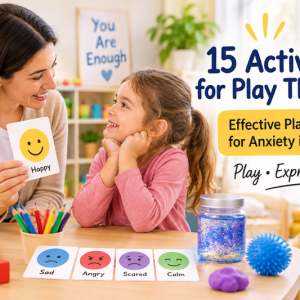
Children sometimes struggle to identify what they are feeling. Emotion cards featuring different facial expressions can help make emotional conversations easier.
Ask children to select a card that represents how they feel today. Encourage them to describe situations that might bring out those emotions.
Therapeutic benefits:
-
Builds emotional vocabulary.
-
Encourages self-awareness.
-
Helps children recognize anxiety triggers.
2. Worry Monster Activity
The worry monster activity gives children a creative way to express their worries.
Provide paper, crayons, and craft materials. Invite children to create a monster that represents their worries. They can give it a name, describe what makes it grow, and discuss what helps make it smaller.
Therapeutic benefits:
-
Makes abstract worries easier to discuss.
-
Encourages emotional expression.
-
Introduces coping strategies.
3. Drawing a Safe Place
Ask children to draw a place where they feel comfortable, peaceful, and protected. It could be a real location or an imaginary setting.
Once the drawing is complete, invite them to explain what makes the place feel safe.
Therapeutic benefits:
-
Encourages relaxation.
-
Supports emotional exploration.
-
Helps identify sources of comfort.
4. Storytelling and Puppet Play
Puppets and storytelling can help children explore challenging emotions indirectly.
Create a simple story about a character who feels nervous about starting school, making friends, or trying something new. Ask the child what the character might be thinking and how the character could feel better.
Therapeutic benefits:
-
Encourages communication.
-
Develops problem-solving skills.
-
Allows children to explore difficult situations through imagination.
5. Bubble Breathing
Bubble breathing introduces children to simple relaxation techniques.
Give children a bubble wand and ask them to take a gentle breath before slowly blowing bubbles. Encourage slow, comfortable breathing rather than forcing deep breaths.
Therapeutic benefits:
-
Introduces mindful breathing.
-
Encourages relaxation.
-
Provides a simple coping strategy for stressful moments.
6. Sand Tray Play
Sand tray activities allow children to create scenes using miniature figures, objects, and sand.
Children can build imaginary worlds or represent situations that reflect their thoughts and experiences. The therapist observes and uses developmentally appropriate questions to support exploration.
Therapeutic benefits:
-
Supports nonverbal expression.
-
Encourages imaginative exploration.
-
Provides opportunities to explore emotions and experiences.
7. Coping Skills Toolbox
Help children create a personalized toolbox using a small box or decorated container.
They can fill it with drawings, positive reminders, sensory objects, or written ideas about activities that help them feel calm.
Examples include listening to music, asking a trusted adult for support, drawing, or taking a comfortable break.
Therapeutic benefits:
-
Encourages independence.
-
Reinforces positive coping strategies.
-
Helps children identify supportive resources.
Common Play Therapy Techniques Used by Mental Health Professionals
Different play therapy techniques can help therapists address childhood anxiety based on a child's age, personality, developmental level, and therapeutic needs.
Some commonly used approaches include:
Child-Centered Play Therapy (CCPT): This approach emphasizes a supportive therapeutic relationship in which children can express themselves through play at their own pace.
Directive Play Therapy: The therapist introduces structured activities with specific therapeutic goals, such as emotional identification or coping skills.
Cognitive Behavioral Play Therapy: Play-based activities are incorporated into cognitive behavioral strategies to help children recognize connections between thoughts, feelings, and behaviors.
Sand Tray Therapy: Children use miniature objects and sand to create scenes that may support emotional expression and exploration.
Expressive Arts Activities: Drawing, painting, music, and creative storytelling provide additional ways for children to communicate feelings.
The choice of approach should be guided by the child's individual needs and the therapist's professional training.
How Parents Can Support Children Experiencing Anxiety
Parents and caregivers play an important role in supporting children's emotional development.
Here are some practical ways to help:
-
Listen without immediately trying to solve every problem.
-
Validate feelings instead of dismissing worries.
-
Maintain predictable daily routines.
-
Encourage creative activities and imaginative play.
-
Avoid pressuring children to discuss uncomfortable experiences.
-
Recognize small steps toward confidence.
-
Seek professional support when anxiety affects everyday life.
Persistent anxiety, significant distress, or difficulties with school, relationships, and daily activities may require an evaluation by a qualified mental health professional.
Why Play Therapy Training Matters for Mental Health Professionals
Working with children requires an understanding of childhood development, emotional regulation, therapeutic relationships, and age-appropriate communication.
Play therapy training helps mental health professionals expand their knowledge of how children communicate through play and how different therapeutic approaches can support emotional well-being.
Professional development opportunities in play therapy can help therapists strengthen their clinical skills, explore evidence-informed interventions, and develop greater confidence when working with children.
For professionals interested in expanding their expertise, continuing education for mental health professionals can also support ongoing learning and clinical development.
Core Wellness offers educational opportunities and professional training for mental health professionals interested in strengthening their knowledge and therapeutic skills.
Final Thoughts
Childhood anxiety can be challenging for children and their families, but supportive therapeutic approaches can help children develop healthier ways to understand and manage their emotions.
Play therapy for anxiety creates opportunities for children to communicate through activities that feel natural and engaging. From emotion cards and storytelling to sand tray play and breathing exercises, these techniques can support emotional awareness, confidence, and coping skills.
For therapists, understanding different play therapy techniques and continuing to develop clinical knowledge can make a meaningful difference in providing developmentally appropriate support.
Frequently Asked Questions (FAQs)
1. What is the best type of play therapy for anxiety?
The most appropriate approach depends on the child's individual needs. Child-Centered Play Therapy, Cognitive Behavioral Play Therapy, and expressive play approaches may be considered by qualified professionals.
2. How does play therapy help children with anxiety?
Play therapy provides children with opportunities to express emotions, explore worries, develop coping strategies, and practice responding to challenging situations in a supportive environment.
3. At what age can children benefit from play therapy?
Play therapy is commonly used with younger children, often between ages 3 and 12. However, its suitability depends on the child's developmental level, needs, and therapeutic goals.
4. What are some simple play therapy activities for anxiety?
Emotion cards, worry monster activities, drawing a safe place, puppet storytelling, bubble breathing, and sand tray play are examples of activities that can support emotional expression.
5. How long does play therapy take to work?
There is no fixed timeline. Progress depends on the child's needs, the nature of their anxiety, therapeutic goals, and consistency of treatment.
6. Can play therapy help children with separation anxiety?
Play therapy may help children explore feelings associated with separation, develop coping strategies, and build confidence. A qualified therapist can determine an appropriate treatment approach.
7. What is Child-Centered Play Therapy?
Child-Centered Play Therapy is an approach that emphasizes acceptance, empathy, and a supportive therapeutic relationship, allowing children to express themselves through play.
8. Can parents use play therapy activities at home?
Parents can use simple activities such as drawing, storytelling, and emotion identification to encourage communication. However, these activities are not a substitute for professional therapy when a child needs clinical support.
9. What qualifications do therapists need to practice play therapy?
Requirements depend on the therapist's professional license, location, training, and the specific therapeutic approach. Specialized play therapy education can help professionals develop relevant knowledge and skills.
10. Why is play therapy training important for therapists?
Play therapy training helps mental health professionals understand children's emotional development, therapeutic play techniques, and developmentally appropriate ways to support children experiencing