

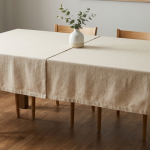

A dining table with a removable leaf insert gives you flexibility when your seating needs change. You can keep the table compact for everyday meals and add the insert when you need more space. While this design is convenient, it can make choosing a tablecloth slightly more complicated.
The covering needs to fit the tabletop whether the insert is in place or removed. It should also hang evenly without creating excess fabric around the chairs. By considering the table's dimensions, fabric construction, and how often you use the insert, you can find a tablecloth that suits both arrangements.
1. Measure the Table With and Without the Insert
Begin by measuring the table in its two main configurations. Record the length and width when the leaf is removed, then measure again with the insert installed.
The difference between these measurements will help you decide whether one covering can work for both arrangements.
If you regularly use the extended setting, consider selecting a tablecloth that fits the larger dimensions. If the insert is used only for occasional gatherings, having separate coverings may be more convenient.
For example, a table measuring 54 inches long without its leaf and 72 inches with the leaf needs a different amount of coverage in each arrangement. Remember to include your preferred drop when calculating the finished tablecloth size.
2. Decide How Much Coverage You Need
The tablecloth drop is the distance between the tabletop edge and the fabric's finished edge. A shorter drop can be easier to manage during everyday meals, while a longer one may create a more formal appearance.
A practical Tablecloth should provide enough coverage without interfering with chairs or people sitting around the table.
For a table that changes size, check the drop in both configurations. A covering that looks balanced when extended may hang too low when the leaf is removed. If the difference is substantial, two tablecloth sizes may be the more practical choice.
3. Match the Covering to the Table Shape
Most dining tables with leaf inserts are rectangular, but some have rounded ends or other distinctive outlines. Measure the tabletop carefully instead of assuming its shape from the furniture's overall appearance.
A rectangle table cloth is often suitable for a standard rectangular table. Make sure its length accommodates the table when the insert is installed.
If your table has rounded ends, check how the fabric falls around those areas. The corners should hang naturally without excessive bunching or uneven folds.
For a circular table with a compatible extension system, round table cloths may suit the original shape. However, if the inserted leaf changes the tabletop into an oval, a separate covering may be needed for that arrangement.
4. Choose a Fabric That Suits Frequent Use
The material should be comfortable to handle and appropriate for how often you use the table. Cotton is a popular option because it has a natural texture and works with many dining styles.
A cotton table cloth can be a useful choice for regular meals and family gatherings. Its weight and weave influence how it hangs, while its care requirements depend on the fabric's construction and finish.
If you plan to remove and replace the covering frequently, consider how easy it is to wash, dry, and press. Check the care label before purchasing so the material fits your maintenance routine.
5. Keep the Insert Seam From Affecting the Fabric
When a leaf insert is installed, a seam may be visible where the table sections meet. A tablecloth can cover this joint, but the fabric should not become caught or stretched when the table is adjusted.
Before placing the covering, make sure the insert is properly secured and the tabletop is level. Smooth the fabric across the center so it does not gather along the joint.
Avoid pulling the tablecloth tightly across the surface. Allowing it to rest naturally can help prevent uneven tension and make it easier to adjust when the table changes configuration.
6. Choose a Pattern That Works in Both Arrangements
A tablecloth should look balanced whether the table is compact or extended. Large central motifs may appear differently when the leaf is inserted, while small repeating patterns can create a more consistent appearance across the surface.
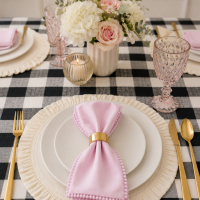
A checked design can bring a relaxed feel to a family dining area. Square table cloths may also suit a square table with an insert system, provided the dimensions match the tabletop.
For a simpler setting, a solid shade can work across both arrangements. A black table cloth can create contrast with light dinnerware and wooden furniture, while neutral colors offer flexibility when you change the table's seating arrangement.
7. Store Separate Tablecloths Carefully
If you decide to use different coverings for the compact and extended arrangements, keep them stored where you can easily identify their sizes.
Wash each tablecloth according to its care instructions and allow it to dry completely before storing. Fold it neatly and avoid placing heavy items on top, as this can create deep creases.
It can be helpful to label each storage space with the corresponding table configuration. This makes preparing for meals and gatherings simpler, especially when you need to change the setup quickly.
8. Test the Fit Before Hosting Guests
Before using the tablecloth for a gathering, place it on the fully extended table and check the drop on every side. Pull out the chairs and make sure the fabric does not catch against their backs or arms.
If you also use the table in its compact arrangement, test the covering again after removing the insert. Check whether the excess fabric hangs too close to the seats or creates folds that are difficult to manage.
A few minutes of checking can help you avoid adjustments once guests are seated.
Conclusion
A dining table with a removable leaf insert needs a tablecloth that works with its changing dimensions. Measure both configurations, choose an appropriate drop, and consider whether one covering or two will be easier to maintain. Pay attention to fabric weight, pattern placement, and how the material sits across the center joint. All Cotton and Linen offers tablecloth styles in different materials and shapes to help create a coordinated dining space for everyday meals and larger gatherings.