


The dashboard looks healthy. Impressions are up, clicks are steady and the cost per click is reasonable. But when you open the store, the sales are missing. It is one of the most frustrating situations in paid advertising, because it feels like everything is working except the only number that matters.
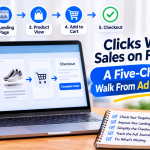
Clicks without sales almost never have a single obvious cause. A reliable way to find the problem is to walk the journey from the ad to the checkout, one checkpoint at a time. Here are five checkpoints, in the order that usually saves the most time.
Checkpoint One: Is Meta Actually Seeing Your Sales?
Before assuming that sales are missing, make sure they are being counted. A surprising number of accounts are making sales that never show up in Ads Manager, because tracking is broken, delayed or incomplete.
Compare the purchases Ads Manager reports with your store or payment records. They will never match perfectly, because of attribution settings and tracking limits, but a huge gap is a warning sign. Many advertisers improve their data by sending events from both the browser and the server, with duplicates removed, though the right setup depends on your platform.
If this feels technical, a Facebook ads expert can verify your tracking quickly, since broken measurement is one of the most common and costly hidden problems.
Checkpoint Two: Is the Campaign Optimizing for the Right Thing?
The objective tells Meta what kind of person to look for. A campaign set to maximize clicks or traffic will find people who click, and many of them may never buy. If your goal is sales, the campaign should generally optimize for purchases.
Some advertisers switch to a softer goal, such as traffic or engagement, when purchases are rare. That can make sense in limited situations, but it often produces cheap clicks and weak buyers, so compare cost per actual purchase and not just cost per click.
Checkpoint Three: Who Is Clicking?
Not all clicks are equal. Some placements and audiences generate very cheap clicks from people with little interest in buying. Check how results differ across placements, and look at whether certain placements deliver traffic that rarely converts.
Look at the Message
Ads that promise something exciting but vague tend to attract curious clicks. Ads that describe a specific problem and offer attract people who actually want it. If your ad is entertaining but unclear about what you sell, you may be paying for attention that never turns into purchases.
Check the Voice of the Ad
Creator videos can attract strong interest, but a creator who drifts away from the offer, or promises something the page does not deliver, creates a gap between the click and the sale. Careful UGC scriptwriting keeps the main idea and the offer clear, so the people who click are the people who want what you sell.
Checkpoint Four: What Happens After the Click?
Many of the biggest leaks sit on the website. A customer who clicks must still load the page, understand the offer, trust the brand and complete checkout.
Speed on Mobile
Most clicks come from phones. A slow page loses people before they read a word. Test your page on a phone using a normal mobile connection.
Message Match
The page should continue the story the ad started. If the ad talks about one product or problem and the page opens with something else, visitors feel confused and leave.
Clarity of the Next Step
Make the price, benefits and the path to buy obvious. Visitors who have to hunt for the button rarely do.
Checkout Friction
Forced account creation, surprise shipping costs and too many form fields can all lose a sale at the last step. Place an order yourself and notice where you hesitate.
Checkpoint Five: Is the Offer Strong Enough?
If tracking, targeting and the page are all healthy, the remaining suspect is the offer itself. Does a cold visitor have a clear reason to buy now, at this price, from this brand? Trust signals such as reviews, guarantees and clear return policies often matter more than another round of ad edits.
Price and perceived value also matter. Traffic can expose a weak offer very quickly, because it sends real people to evaluate it.
A Note on Data Volume
Sometimes the issue is that Meta simply has too few results to learn from. Very small budgets, rare conversion events and too many campaigns can leave delivery unstable and performance unpredictable. Simplify the structure, give the campaign a realistic budget and avoid constant edits so the system has a chance to settle.
A Simple Order for Diagnosis
Work through the checkpoints in order. First, confirm that sales are being measured. Second, check the objective. Third, look at who is clicking. Fourth, walk through the page and checkout as a customer. Fifth, question the offer.
Resist the urge to change everything at once. Make one deliberate change, record it and give it time. Otherwise you will never know what helped.
When the Ad Really Is the Problem
Occasionally the creative is the cause, especially when it attracts the wrong people or fails to make the offer clear. In that case, test new angles that speak more directly to your real buyers. Looking at the whole picture is the kind of thinking a creative strategist brings to an account, connecting what the ad says, who it attracts and what happens afterward.
Frequently Asked Questions
Why do I get clicks but no sales on Facebook?
Common causes include broken tracking, the wrong campaign objective, low-intent traffic, a weak or slow landing page and an unconvincing offer. Walk through each checkpoint in order.
Is a high click-through rate a good sign?
Not by itself. A high click rate with no sales may mean the ad attracts curiosity instead of buyers. Always read it alongside conversion results.
Should I change my ad or my page first?
Check tracking first, then the page after the click. If those are healthy, look at who the ad attracts and the strength of the offer.
How long should I wait before judging results?
Long enough for delivery to settle and for a meaningful pattern to appear, which usually means days or weeks rather than hours.
Final Thoughts
Clicks without sales are a symptom, not a verdict. Check that sales are being measured, confirm the campaign is optimizing for the right outcome, look at who is clicking, walk through the page and checkout like a customer and question the offer. Fix the biggest leak first, change one thing at a time and let the results guide your next step.