



AI Overview: Personalization in Music Streaming Apps
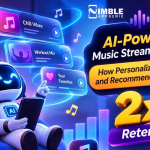
Open any music app in the US and the same question decides whether you stay: does it know what I want to hear? AI personalization answers it with tailored playlists, smarter recommendations, and conversational discovery. Here is how these features lift retention, what leading apps are doing in 2026, and how founders can add them to a new or existing app.How Does AI Personalization Keep Listeners Coming Back?
AI reads signals from every session: plays, repeats, likes, playlist adds, and skips. A string of skips tells the system a playlist is off target, so later suggestions change.
Nimble AppGenie Music Streaming App Development companies app engineering with AI services, so founders can build recommendation features into a new app or add them to a live one.
The retention benefits:
- Less searching, more listening
- A fresh reason to return every day
- A library that feels personal and is hard to leave
What Does the Data Say About AI Recommendations and Retention?
One streaming platform reported 40% higher retention among users who engaged with recommendations, and trial users converted to paid at more than twice the rate. The 2x figure applies to paid conversion, not retention. Engaged listeners may also be more likely to use recommendations, so treat these numbers as strong signals, not guarantees.
Which AI Features Are Music Apps Using in 2026?
Modern Music Streaming App Development now treats AI as a core product layer. Three features stand out.
1. Algorithmic PlaylistsWeekly personalized playlists, like Spotify’s Discover Weekly, are built from each user’s listening history, saves, and likes.
2. Prompted PlaylistsSpotify began rolling out Prompted Playlists in beta to Premium users in the US and Canada in January 2026. Listeners describe a mood or moment in plain language, and a generative model builds the playlist from their history.spotify
3. AI DJ
Spotify’s DJ pairs personalization with generative AI and a synthetic voice. It turns passive listening into a guided experience.
How Can You Add AI Personalization to a New or Existing Music App?
Whether you are building from scratch or upgrading a live product, a phased approach keeps risk low and results measurable.
- Audit your data: confirm you track plays, skips, likes, and saves.
- Start simple: launch “similar artists” and genre-based suggestions.
- Add machine learning: build personalized playlists as listening data grows.
- Layer generative features: introduce prompt-based playlists or a voice DJ.
- Test and refine: run A/B tests on every release.
For existing apps, a Music Streaming App Development Company can often integrate these features through APIs without rebuilding from scratch.
Strong Music app development services bring data pipelines, model integration, and testing together in one engagement.Which Metrics Show Whether Personalization Is Working?
Tracking the right numbers tells you whether recommendations are improving listener habits or simply adding features that nobody really uses.
- 30-day retention
- Average session length
- Skip rate
- Playlist saves
- Trial-to-paid conversion
Good Music App Development treats these metrics as the feedback loop for every AI release.What Mistakes Should US Founders Avoid?
- Ignoring the cold start: new users have no history, so ask for favorite genres at signup.
- Removing user control: Spotify added Release Radar controls in July 2026 so listeners can steer recommendations toward genres or new artists.
- Overlooking privacy: follow US state laws, such as California’s CCPA.
- Launching everything at once: release AI features in phases.
A Music App Development Company with AI experience can help you avoid these pitfalls before launch.
ConclusionPersonalization is a major reason listeners stay with a music app. Start with strong recommendation basics, layer in generative features like prompted playlists, and measure results against retention. Nimble AppGenie helps US founders build AI-powered music apps from scratch or upgrade live products. Talk to Nimble AppGenie about your roadmap and get expert guidance on the right AI features for your audience.
FAQs1. What is AI personalization in a music streaming app?
Answer: It uses listening data, such as plays, skips, and saves, to tailor playlists and recommendations to each user.
2. Do personalized recommendations improve retention?
Answer: They can. One platform saw 40% higher retention among users who engaged with recommendations. Results vary by app and audience.
3. What is a prompted playlist?
Answer: It is a playlist a listener creates by describing a mood or moment in plain language. Spotify launched it for US Premium subscribers in January 2026.
4. How do you solve the cold start problem?
Answer: Ask new users for favorite genres or artists at signup, then refine suggestions as their listening data builds.
5. Can I add AI features to an existing music app?
Answer: Yes. Most apps can add AI through integration, depending on data quality. AI-driven recommendations typically start at $50,000+.
menu
menu
Menu