




Introduction
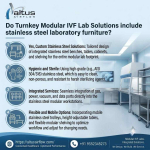
Altus Airflow provides modular infrastructure solutions for fertility clinics and reproductive healthcare facilities. Turnkey Modular IVF Lab Solutions can include stainless steel laboratory furniture as part of a coordinated project package, depending on the clinic's requirements, laboratory layout, and agreed scope of work. Such furniture supports organized workflows, convenient cleaning, and the placement of specialized equipment. Its selection involves evaluating material quality, dimensions, storage needs, surface finishes, and compatibility with laboratory activities to create a functional and maintainable IVF environment.
Stainless steel furniture is widely considered for IVF laboratories because it offers durability, corrosion resistance, and smooth surfaces. However, the exact furniture supplied in a turnkey project depends on the design specifications and the responsibilities defined in the project agreement.
1. Are Stainless Steel Laboratory Furniture Items Included in Turnkey IVF Projects?
Yes, stainless steel laboratory furniture can be included in turnkey IVF laboratory projects. However, it is not automatically part of every package. The inclusion depends on the project scope, selected furniture specifications, budget, and operational requirements of the fertility clinic.
A turnkey project generally coordinates several elements, such as modular interiors, HVAC systems, electrical services, laboratory utilities, and equipment integration. Furniture can be included to ensure that workstations and storage facilities align with the overall laboratory layout.
Common furniture items may include:
-
Stainless steel workbenches.
-
Laboratory tables.
-
Equipment support stands.
-
Storage cabinets.
-
Utility trolleys.
-
Shelving systems.
-
Custom-designed workstations.
Before project approval, clinics should request a detailed furniture schedule specifying the quantity, dimensions, material grade, finish, and installation responsibilities.
2. Why Is Stainless Steel Preferred for IVF Laboratory Furniture?
Material selection is important because IVF laboratories require controlled and carefully maintained working environments. Stainless steel is commonly considered for laboratory furniture because of its durability, corrosion resistance, and ease of cleaning when an appropriate grade and finish are selected.
Some important advantages include:
Corrosion resistance: Suitable stainless steel grades can resist corrosion under normal laboratory conditions when maintained properly.
Durability: Stainless steel furniture can withstand regular use and routine cleaning without requiring frequent replacement when correctly manufactured and maintained.
Smooth surfaces: Properly finished surfaces are easier to clean and inspect than damaged, porous, or uneven surfaces.
Low maintenance: Stainless steel generally requires straightforward cleaning and maintenance when compatible cleaning products are used.
Professional appearance: Its clean, consistent finish can contribute to an organized laboratory environment.
The selected material should be appropriate for the intended application. Clinics should also confirm the grade, surface finish, fabrication quality, and compatibility with their cleaning protocols.
3. Types of Stainless Steel Furniture Used in IVF Laboratories
Different laboratory activities require different furniture configurations. Furniture should be selected according to the workflow, equipment dimensions, staff requirements, and available space.
Stainless Steel Workbenches
Workbenches provide designated surfaces for laboratory activities and equipment placement. They should have suitable dimensions, stable construction, and finishes appropriate for the intended work.
Equipment Tables
Specialized instruments may require dedicated support tables. Their dimensions and load-bearing capacity should match the equipment manufacturer's specifications.
Storage Cabinets
Storage cabinets help organize approved laboratory supplies, accessories, and materials. Depending on the application, cabinets may feature drawers, shelves, lockable doors, or customized internal arrangements.
Utility Trolleys
Trolleys can support the movement of approved supplies and equipment within designated areas. Their design should allow convenient cleaning and safe movement.
Wall-Mounted Shelving
Shelving can help use available space efficiently. Its location should not obstruct ventilation outlets, cleaning access, or equipment operation.
A coordinated furniture schedule helps ensure that each item serves a defined purpose without creating unnecessary congestion.
4. Furniture Planning According to IVF Laboratory Zones
An IVF laboratory may contain different functional areas, each with specific furniture requirements. Furniture selection should follow the planned workflow rather than using the same configuration throughout the facility.
Embryology laboratory: Workstations and equipment-support furniture should accommodate the instruments used for embryo-related procedures. Their placement must be coordinated with environmental requirements and equipment specifications.
Andrology laboratory: Workbenches and storage arrangements should support semen analysis, sample preparation, and related laboratory activities.
Media preparation area: Furniture should provide suitable working surfaces and storage for approved supplies and preparation equipment.
Cryopreservation area: Storage and equipment-support arrangements should be planned around the cryogenic equipment, access requirements, and safety procedures.
Laboratory support areas: Additional cabinets, utility tables, and storage units may be required for routine supplies and maintenance activities.
Furniture specifications should be reviewed with laboratory professionals before fabrication and installation.
5. How Stainless Steel Furniture Supports Hygiene and Cleaning
Cleanability is an important consideration in IVF laboratory design. Furniture should have surfaces and construction details that allow staff to follow established cleaning and disinfection procedures.
Stainless steel can support these requirements when it is properly selected, fabricated, installed, and maintained.
Important design features include:
-
Smooth and appropriately finished surfaces.
-
Minimal unnecessary joints and crevices.
-
Properly finished edges and corners.
-
Suitable weld quality.
-
Accessible areas beneath and around furniture.
-
Compatibility with approved cleaning agents.
Furniture should not be assumed to make a laboratory sterile by itself. Effective hygiene depends on the complete environmental design, cleaning procedures, staff practices, equipment maintenance, and quality-management protocols.
Clinics should confirm that the selected furniture materials are compatible with the disinfectants and cleaning methods used in their facility.
6. Stainless Steel Grades and Surface Finishes
Not all stainless steel furniture is identical. Different grades and surface finishes offer different characteristics, so selection should be based on the intended laboratory application.
Commonly specified stainless steel grades include:
-
SS 304: Often used for general-purpose laboratory furniture because of its corrosion resistance in many indoor environments.
-
SS 316: Contains molybdenum and generally offers improved resistance to certain corrosive environments.
The appropriate grade depends on exposure conditions, cleaning chemicals, and the intended use of the furniture.
Surface finish is equally important. Smooth finishes can simplify routine cleaning, while poor fabrication, rough welds, or damaged surfaces may create areas that are difficult to maintain.
Clinics should request material specifications and fabrication details before approving furniture. The supplier should also clarify whether the quoted grade applies to the entire item or only selected components.
7. Customization of Laboratory Furniture
Standard furniture may not suit every IVF laboratory. Room dimensions, equipment sizes, staff movement, and workflow requirements often make customized furniture a practical option.
Custom stainless steel furniture can be designed with:
-
Specific workbench lengths and heights.
-
Equipment openings and support arrangements.
-
Integrated storage drawers.
-
Lockable cabinets.
-
Adjustable shelving.
-
Cable management provisions.
-
Customized trolley dimensions.
Customization should be completed using approved drawings and equipment specifications. This reduces the possibility of furniture obstructing doors, service panels, ventilation outlets, or maintenance access.
A detailed review with embryologists, laboratory managers, architects, and equipment suppliers helps ensure that the final furniture arrangement supports actual working practices.
8. Integration with Modular Wall and Ceiling Systems
Laboratory furniture must work with the modular interiors rather than being planned separately. Workbench positions, cabinet dimensions, wall panels, ceiling systems, electrical outlets, and service connections should be coordinated during the design stage.
For example, a workbench may require nearby electrical outlets, while an equipment table may need a specific clearance for ventilation or servicing.
A coordinated design can help prevent:
-
Furniture blocking electrical outlets.
-
Cabinets interfering with modular wall panels.
-
Workbenches restricting access to service points.
-
Equipment tables obstructing air distribution.
-
Insufficient space for staff movement.
-
Difficulties in cleaning around installed furniture.
The furniture layout should be reviewed alongside the architectural and engineering drawings before fabrication begins.
9. Furniture Installation and Quality Checks
Furniture installation should follow the approved layout and manufacturer specifications. Before installation, the project team should verify room dimensions, access routes, floor conditions, and the readiness of relevant utility connections.
The installation process generally includes:
-
Reviewing approved furniture drawings and specifications.
-
Checking material grade and fabrication quality.
-
Verifying dimensions and equipment clearances.
-
Positioning furniture according to the laboratory layout.
-
Levelling and securing items where required.
-
Checking joints, edges, and surface finishes.
-
Confirming access for cleaning and maintenance.
-
Completing a final inspection with the facility team.
Workbenches and equipment-support tables should be stable and suitable for their intended loads. Any furniture with integrated utility connections should be checked by the relevant technical specialists.
The clinic should receive relevant product details, warranty information, and maintenance instructions during handover.
10. What Should Clinics Check Before Approving Furniture?
Before accepting a furniture package, clinics should review more than the overall appearance and price. Technical specifications help determine whether the furniture is appropriate for the intended laboratory activities.
Consider the following factors:
| Selection factor | What to verify |
|---|---|
| Material grade | Confirm the specified stainless steel grade |
| Surface finish | Check smoothness and cleaning compatibility |
| Dimensions | Match furniture with approved room drawings |
| Load capacity | Confirm suitability for installed equipment |
| Fabrication | Inspect welds, edges, joints, and finishing |
| Storage | Check drawers, shelves, and cabinet arrangements |
| Installation | Confirm positioning and securing requirements |
| Documentation | Request specifications and warranty details |
Clinics should also confirm which furniture items are included in the turnkey quotation and which must be purchased separately. This prevents confusion during procurement and project handover.
11. Furniture Maintenance After Installation
Even durable stainless steel furniture requires regular care. Appropriate maintenance helps preserve surface quality and supports laboratory hygiene practices.
Routine maintenance may include:
-
Cleaning surfaces according to approved laboratory procedures.
-
Using compatible cleaning agents.
-
Avoiding abrasive materials that can damage finishes.
-
Removing chemical residues after cleaning.
-
Inspecting joints, welds, and fasteners.
-
Checking furniture stability and load-bearing components.
-
Reporting scratches, corrosion, or other damage.
The facility should follow the furniture manufacturer's maintenance instructions and its own infection-control procedures.
Furniture should also be inspected periodically, especially in areas where equipment is frequently moved or where cleaning chemicals are used regularly.
12. Do Turnkey Packages Offer Furniture Along with Other Laboratory Services?
A comprehensive turnkey project can coordinate furniture with modular interiors, HVAC systems, electrical infrastructure, plumbing, lighting, and equipment installation. This approach allows the different components to be planned as part of a single project.
However, the scope varies between providers. Some packages include furniture supply and installation, while others cover only infrastructure and utility coordination.
Clinics should clarify the following before signing an agreement:
-
Whether stainless steel furniture is included.
-
Which furniture items are covered.
-
The specified material grade and finish.
-
Whether custom fabrication is included.
-
Who is responsible for installation.
-
Whether equipment integration is covered.
-
What inspection and handover documents will be provided.
Turnkey Modular IVF Lab Solutions can provide a coordinated approach to laboratory development when furniture, interiors, utilities, and equipment requirements are defined together. A clear scope of work helps ensure that the final facility meets the clinic's expectations.
Conclusion
Stainless steel laboratory furniture can be an important component of an IVF laboratory, offering durable work surfaces, organized storage, and convenient cleaning when correctly specified. Its inclusion in a turnkey project depends on the agreed scope, material specifications, and facility requirements.
Clinics should evaluate furniture alongside modular interiors, utilities, equipment placement, and maintenance needs. By coordinating these elements during the planning stage, Altus Airflow supports the development of functional fertility laboratory environments. Working with Altus Airflow can help healthcare facilities coordinate furniture and infrastructure requirements through a clearly defined project approach.
Frequently Asked Questions (FAQs)
1. Do Turnkey Modular IVF Lab Solutions include stainless steel laboratory furniture?
Turnkey Modular IVF Lab Solutions can include stainless steel workbenches, cabinets, equipment tables, trolleys, and storage units, depending on the approved project scope.
2. Why is stainless steel used in IVF laboratories?
It offers durability, corrosion resistance, and smooth surfaces that can support routine cleaning and maintenance.
3. Which stainless steel grade is suitable for IVF laboratory furniture?
SS 304 and SS 316 may be considered depending on the application, environmental conditions, and cleaning requirements.
4. Can IVF laboratory furniture be customized?
Yes. Workbenches, cabinets, shelves, and equipment tables can be customized according to room dimensions and laboratory workflow.
5. Is stainless steel furniture easy to maintain?
Generally, yes. It can be maintained through suitable cleaning procedures and compatible cleaning products.
Read Our Previous Blog ---------------> How do Modular IVF Labs Manufacturers help laboratories achieve accreditation?