







Accurate cancer diagnosis is the foundation of effective oncology care. Detecting cancer early and precisely determines treatment options, survival outcomes, and long-term prognosis. Modern medicine relies on a sophisticated combination of imaging technologies, laboratory investigations, and biopsy procedures to identify malignant cells, determine cancer stage, and guide treatment planning.
A systematic diagnostic process minimizes errors, improves patient outcomes, and helps distinguish between benign conditions and life-threatening malignancies. When errors occur, patients may pursue cancer misdiagnosis claims due to delayed treatment, unnecessary procedures, or worsened medical outcomes.
This comprehensive guide explores how imaging techniques, biopsy procedures, and laboratory tests work together to deliver accurate cancer detection and diagnosis.
Understanding Cancer Diagnosis in Modern Medicine
Cancer diagnosis involves identifying abnormal cellular growth that forms malignant tumors capable of spreading to surrounding tissues or distant organs. Physicians rely on a structured diagnostic pathway that combines clinical evaluation with advanced testing technologies.
The diagnostic process typically begins when a patient presents symptoms such as persistent pain, unexplained weight loss, abnormal bleeding, or unusual lumps. In other cases, cancer is discovered during routine screening examinations.
A complete diagnostic approach includes:
- Clinical history and physical examination
- Imaging scans to detect abnormalities
- Laboratory blood tests and biomarkers
- Tissue biopsy to confirm malignancy
- Molecular and genetic analysis for precision medicine
Each step adds critical information that helps clinicians confirm the presence of cancer and determine its type, location, and stage.
Imaging Technologies Used in Cancer Detection
Imaging plays a central role in cancer diagnosis, allowing physicians to visualize internal structures without invasive procedures. Advanced scanning technologies can identify tumors, determine their size, and detect whether cancer has spread.
CT Scans (Computed Tomography)
Computed tomography uses X-rays combined with computer processing to create detailed cross-sectional images of the body. CT scans are widely used to detect tumors in organs such as the lungs, liver, pancreas, and kidneys.
Benefits of CT scans include:
- Rapid detection of internal masses
- Detailed imaging of internal organs
- Accurate measurement of tumor size
- Monitoring cancer progression during treatment
CT imaging is often the first step when physicians suspect internal cancers.
MRI Scans (Magnetic Resonance Imaging)
MRI technology uses powerful magnetic fields and radio waves to produce highly detailed images of soft tissues. This imaging method is particularly valuable in diagnosing cancers of the brain, spinal cord, prostate, and reproductive organs.
Advantages of MRI include:
- Superior soft-tissue visualization
- No exposure to ionizing radiation
- Detailed mapping of tumor boundaries
- Enhanced detection of small lesions
MRI scans are frequently used to guide surgical planning and assess tumor spread.
PET Scans (Positron Emission Tomography)
PET scans detect metabolic activity within cells. Cancer cells consume glucose at a higher rate than normal cells, making them visible during PET imaging.
During a PET scan, a small amount of radioactive glucose is injected into the bloodstream. Areas with high metabolic activity appear as bright spots on the scan, indicating possible malignancy.
PET scans help physicians:
- Detect early tumor activity
- Identify metastatic spread
- Evaluate treatment effectiveness
- Distinguish scar tissue from active cancer
PET imaging is often combined with CT scans for enhanced diagnostic precision.
Ultrasound Imaging
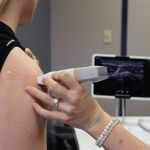
Ultrasound uses high-frequency sound waves to create images of internal organs and tissues. It is commonly used to evaluate lumps, guide biopsy procedures, and detect cancers in organs such as the thyroid, liver, and breasts.
Ultrasound imaging provides:
- Real-time visualization of tissues
- Non-invasive and radiation-free diagnostics
- Guidance for needle biopsies
- Early detection of suspicious masses
Biopsy: The Definitive Method for Cancer Diagnosis
While imaging techniques can detect suspicious abnormalities, a biopsy is the only definitive way to confirm cancer. A biopsy involves removing a small sample of tissue for microscopic examination.
Pathologists analyze biopsy samples to determine whether the cells are benign, precancerous, or malignant.
Types of Biopsy Procedures
Several biopsy methods are used depending on tumor location and suspected cancer type.
Needle Biopsy
Needle biopsy is a minimally invasive procedure where a thin needle extracts tissue from a suspicious mass. It is commonly used for breast, prostate, and thyroid cancers.
Core Needle Biopsy
A core needle biopsy removes a larger tissue sample using a hollow needle. This method provides more detailed cellular information than fine needle aspiration.
Surgical Biopsy
When needle biopsies are insufficient, surgeons may perform an incisional or excisional biopsy to remove part or all of a tumor.
Surgical biopsies are commonly used when:
- Tumors are difficult to reach
- Larger tissue samples are required
- Initial biopsy results are inconclusive
Laboratory Tests That Support Cancer Diagnosis
Laboratory testing complements imaging and biopsy procedures by providing biochemical and genetic insights into cancer development.
Blood Tests and Tumor Markers
Certain cancers release substances known as tumor markers into the bloodstream. Detecting these markers can help physicians identify and monitor cancer.
Common tumor markers include:
- PSA for prostate cancer
- CA-125 for ovarian cancer
- CEA for colorectal cancer
- AFP for liver cancer
Blood tests can also evaluate organ function and detect abnormalities caused by cancer.
Genetic and Molecular Testing
Modern oncology increasingly relies on molecular diagnostics to identify genetic mutations that drive cancer growth.
These tests analyze tumor DNA to determine:
- Mutation patterns
- Treatment responsiveness
- Cancer subtype classification
- Risk of recurrence
Genetic testing enables personalized cancer treatment strategies known as precision medicine.
Cytology and Pathology Analysis
Pathologists examine biopsy samples under a microscope to study cell structure and behavior.
Key factors assessed during pathology analysis include:
- Cellular shape and organization
- Tumor grade and aggressiveness
- Presence of abnormal mitosis
- Evidence of tissue invasion
Pathology reports are essential for confirming a cancer diagnosis and determining treatment pathways.
Staging Cancer After Diagnosis
Once cancer is confirmed, physicians must determine how far the disease has progressed. Cancer staging describes the size of the tumor and whether it has spread to nearby lymph nodes or distant organs.
The TNM staging system evaluates:
- T (Tumor): size and extent of the primary tumor
- N (Nodes): involvement of lymph nodes
- M (Metastasis): spread to distant organs
Accurate staging is essential for selecting appropriate treatments such as surgery, chemotherapy, radiation therapy, or immunotherapy.
The Consequences of Diagnostic Errors
Despite technological advancements, diagnostic errors can still occur. Misinterpretation of imaging, laboratory errors, delayed testing, or incorrect biopsy analysis may lead to misdiagnosis.
Cancer misdiagnosis may involve:
- Failure to detect cancer when it is present
- Incorrectly diagnosing cancer when it is absent
- Delayed diagnosis allowing cancer to progress
- Misidentification of cancer type
These errors can result in severe physical, emotional, and financial consequences for patients.
When negligence contributes to diagnostic errors, individuals may pursue cancer misdiagnosis claims to seek compensation for medical harm.
Legal Considerations in Cancer Misdiagnosis Claims
Cancer misdiagnosis claims arise when healthcare professionals fail to meet accepted medical standards during the diagnostic process. These cases often involve delayed diagnosis, improper testing, or failure to refer patients to specialists.
Key elements evaluated in legal cases include:
- Whether diagnostic protocols were followed
- Whether physicians misinterpreted imaging results
- Whether biopsy samples were mishandled
- Whether patients experienced harm due to delayed treatment
Medical documentation, pathology reports, and expert testimony often play a critical role in establishing liability.
Integrating Diagnostic Methods for Accurate Cancer Detection
Effective cancer diagnosis requires integrating multiple diagnostic tools rather than relying on a single test. Physicians analyze imaging results, pathology reports, and laboratory data collectively to ensure diagnostic accuracy.
This integrated approach reduces uncertainty and provides a comprehensive understanding of the disease.
Improving Diagnostic Accuracy Through Medical Innovation
Advances in artificial intelligence, molecular diagnostics, and precision imaging are transforming cancer detection. AI-assisted radiology tools can identify subtle abnormalities that may be overlooked during traditional image analysis.
Similarly, liquid biopsy technologies are emerging as a minimally invasive method for detecting circulating tumor DNA in blood samples.
These innovations promise to improve diagnostic speed, reduce medical errors, and enhance early cancer detection.
Conclusion
Accurate cancer diagnosis relies on a coordinated system of imaging technologies, biopsy procedures, and laboratory testing. Each diagnostic step provides critical insights that guide treatment decisions and determine patient outcomes.
When diagnostic failures occur, patients may face devastating consequences, sometimes leading to legal action through cancer misdiagnosis claims. Strengthening diagnostic protocols, improving medical training, and adopting advanced technologies remain essential for ensuring that cancer is detected accurately and treated promptly.