

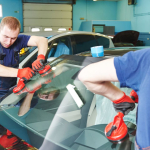






A Windshield That Does More Than Block the Wind
For most of automotive history, a windshield had one job: keep the weather and debris out while giving the driver a clear view of the road. That is still true today, but on a growing number of vehicles, the windshield has taken on an additional role as a mounting point for cameras and sensors tied to Advanced Driver Assistance Systems, commonly known as ADAS.
These systems power features many drivers now rely on daily, including lane departure warnings, automatic emergency braking, adaptive cruise control, and forward collision alerts. Because the camera responsible for many of these features is typically mounted near the top centre of the windshield, any work done on the glass — including repair of significant damage near that area — can potentially affect how accurately the system reads the road ahead.
Why Calibration Becomes Relevant
When a windshield is replaced on a vehicle equipped with ADAS, the camera and its mounting bracket are reinstalled, sometimes on an entirely new piece of glass. Even small differences in glass thickness, curvature, or mounting position can shift the camera's reference point enough to affect how it interprets lane markings or the distance to other vehicles. This is why calibration — a process of recalibrating the camera's alignment and reference data — is often necessary after a windshield replacement on an ADAS-equipped vehicle.
Calibration is generally less of a concern for a straightforward chip repair far from the camera's field of view, but it becomes a relevant consideration whenever glass work occurs near the sensor area, or whenever a full replacement is involved.
Two Types of Calibration
There are generally two approaches used across the industry:
**Static calibration** involves positioning the vehicle in a controlled space with specific targets placed at precise distances, allowing the camera to be recalibrated against known reference points.
**Dynamic calibration** involves driving the vehicle under specific conditions, often at a particular speed range on roads with clear lane markings, allowing the system to recalibrate itself as it processes real-world input.
Some vehicles require one method, some require the other, and some require both, depending on the manufacturer's specifications for that particular make and model.
Why This Matters to Drivers, Not Just Technicians
For most drivers, the technical details of calibration are less important than the practical takeaway: if your vehicle has lane departure warnings, automatic braking, or similar features, and you need significant windshield work done, it is worth asking directly whether calibration applies to your situation. Not every vehicle on the road has these systems, and not every repair requires recalibration, but for the growing share of vehicles that do have ADAS, skipping a necessary calibration step could mean the safety feature does not function as intended afterward.
Signs Your Vehicle May Have ADAS
If you are unsure whether your vehicle has camera-based driver assistance features, a few signs can help:
- A small camera housing visible near the top of the windshield, usually behind the rearview mirror
- Dashboard icons or warnings related to lane departure, collision warning, or adaptive cruise control
- Owner's manual references to "driver assistance," "safety sense," or similarly branded systems
Asking the Right Questions
Because calibration requirements vary by manufacturer and model, the most reliable approach is to raise the topic directly when discussing any significant windshield work. A technician assessing your vehicle for vehicle windshield repair services can advise whether your specific vehicle's camera system would need recalibration following the work being done, rather than leaving it as an afterthought.
Looking Ahead
As more vehicles on Calgary roads come equipped with increasingly sophisticated driver assistance technology, the connection between windshield condition and vehicle safety systems is only going to become more relevant. Understanding this link — even at a basic level — helps drivers ask better questions and make more informed decisions when damage to their windshield occurs.
The Cost of Skipping Calibration
Beyond the immediate safety implications, skipping a required calibration step can also mean that features you are paying for through your vehicle's technology package simply do not work as intended. A lane departure system that misreads lane markings, or an automatic braking system that triggers inconsistently, undermines the value of the technology your vehicle was built with. This is why calibration should be treated as a standard part of significant windshield work on an ADAS-equipped vehicle, not an optional extra.
Manufacturer Variation Is the Norm, Not the Exception
It is worth remembering that there is no single universal standard across all vehicle manufacturers for how these systems are calibrated. Some require static calibration in a dedicated space, others require dynamic calibration through road testing, and some require a combination of both. This variation is exactly why asking specific questions about your make and model, rather than assuming your vehicle follows the same process as a friend's or family member's car, leads to a more accurate outcome.