

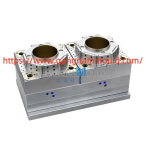

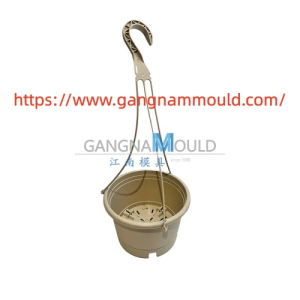
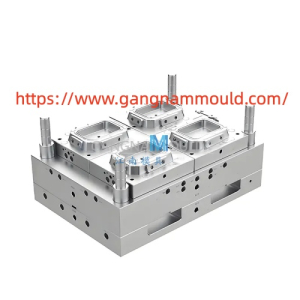
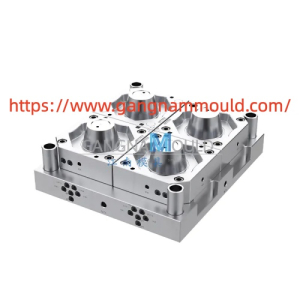
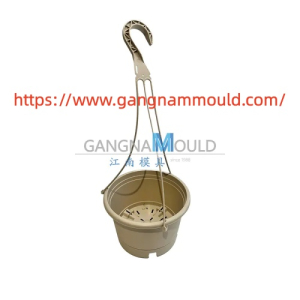
Bucket Injection Mould design influences the structural strength, load capacity, and service life of plastic containers used in household, commercial, and industrial environments. A container may look simple, but its performance depends on how the walls, base, rim, and handle connections work together. For manufacturers and buyers, understanding these relationships helps establish suitable product specifications before tooling development begins. Careful engineering can also help reduce production defects and support consistent results across manufacturing batches.
Wall thickness is an important starting point. When a container has uneven wall sections, different areas may cool and shrink at different rates. This can cause warping, surface depressions, or internal stress that affects the finished product. Increasing thickness everywhere is not necessarily a practical solution because it can increase material consumption and extend cooling time. Engineers should instead evaluate the expected load, resin properties, product dimensions, and intended usage conditions to determine an appropriate structural design.
The bottom structure deserves particular attention because it supports the contents during storage, lifting, and transportation. A container intended for liquids may experience different loading conditions from one used to carry powders or solid materials. Reinforcing ribs can add stiffness to selected areas without requiring thicker walls throughout the entire product. Their location, height, and thickness should be considered alongside material flow and cooling behavior. Poorly proportioned reinforcement may create sink marks or uneven shrinkage, so design changes need to be evaluated before tooling is manufactured.
Handle connections also influence practical strength. When a filled container is lifted, forces concentrate around the attachment points and transfer into the surrounding walls. Insufficient support in these areas may contribute to cracking or deformation during repeated use. Buyers should explain whether the product will use a metal handle, a molded plastic handle, or another carrying arrangement. Engineers can then assess the connection geometry, local reinforcement, and clearance needed for comfortable handling. Physical testing under representative loads can help identify potential weaknesses before commercial production.
Material selection should reflect the working environment. Polypropylene and high density polyethylene are commonly used for many storage and packaging applications, although their properties vary by grade and formulation. Some products require impact resistance during transportation, while others need stiffness or compatibility with particular substances. Buyers should communicate the intended contents, temperature range, handling frequency, and expected service conditions. These details allow the manufacturer to evaluate appropriate material options and determine whether additional performance testing is necessary.
Cooling system design has a direct relationship with dimensional stability. Thick sections generally retain heat longer than thinner areas, which may create uneven shrinkage as the part cools. Carefully arranged cooling channels help manage temperature distribution around critical regions. The base, rim, sidewalls, and handle attachment areas may require particular attention depending on the product geometry. A suitable cooling arrangement can support consistent dimensions and help reduce deformation, while also influencing the production cycle and operating efficiency.
The release mechanism is another detail that affects the finished component. Once the plastic has cooled, the part needs to separate from the mold without excessive force. Appropriate draft angles, rounded corners, and balanced ejection arrangements can help reduce the risk of scratches, distortion, or cracking. Deep sidewalls and textured surfaces may introduce additional challenges. Reviewing these features during the design stage gives engineers an opportunity to address potential difficulties before production equipment is completed.
Manufacturers should also consider how the finished product will be stored and transported. Some containers are designed to stack when empty, while others must remain stable when filled. Rim geometry, base dimensions, sidewall taper, and lid compatibility can influence these functions. If the product will be used with existing storage systems or automated handling equipment, the relevant dimensions should be documented clearly. Appropriate tolerances and inspection procedures help ensure that finished parts remain suitable for their intended applications.
A structured sample evaluation process can reveal issues that are difficult to identify from drawings alone. Buyers should review dimensions, surface finish, handle attachment, stacking behavior, and resistance to expected handling loads. Testing conditions should reflect actual use rather than relying only on visual inspection. If adjustments are required, the manufacturer and buyer can document the findings and agree on revisions before approving full production. This approach provides a clearer basis for quality control and helps reduce misunderstandings during project development.
Maintenance planning is also worth discussing before confirming an order. Cooling passages, moving components, and wear surfaces may require regular inspection or servicing during extended production runs. Buyers should ask about maintenance procedures, replacement components, and technical support arrangements. Understanding these requirements helps businesses plan production schedules and account for ongoing tooling care.
For companies developing custom plastic containers, Gangnammould offers a starting point for discussing design specifications, tooling arrangements, and manufacturing requirements. Buyers can visit https://www.gangnammould.com/product/ to review the available product information and prepare drawings, material preferences, dimensional requirements, and estimated production quantities for a project inquiry. Clear communication at the beginning helps both parties assess suitable design options and plan a manufacturing process around the intended strength, function, and operating conditions.