


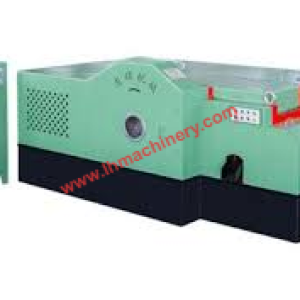
Waste inside a garment accessory workshop rarely arrives as a dramatic incident, because it accumulates quietly as short ends trimmed from crooked chains, as cloth ribbon creased by uneven grip, and as slider rows rejected when a finished bag shows a skewed mouth, so purchasing managers comparing a zipper arranging machine learn to read the quotation behind the quotation: the tonnage swallowed by misfeeding during an ordinary week. lhmachinery walks such ledgers with producers of fastening components every season, and once those hidden numbers surface the conversation shifts away from headline output toward a practical inquiry about which stage of the feeding path deserves inspection before another crate of imperfect goods reaches packing.
Chain displacement explains the root cause, since flexible textile carriers possess almost no column strength and collapse under their own weight whenever guidance stops fail to hold them at constant height. A rigid handling concept supports the fabric strip from below, confines lateral wandering to narrow channels and presents every tooth row to the following operation square rather than tilted, protecting the forming geometry that stitching later depends upon.
Web stress control separates competent alignment from guesswork, as a slack span stores surplus cloth that folds into a wrinkle at the first change of speed, while an overtightened run stretches the carrier and shrinks it again following release, teaching cutters to produce ragged edges. Servo rollers reading a dancer arm keep elongation beneath the elastic limit of the yarn, returning surplus gently and never jerking the strand awake at a seam crossing.
Guidance rails deserve attention next, for a groove worn by months of friction lets the chain drift sideways exactly where the next tool expects a centered arrival. Hardened inserts, swapped with a single wrench, hold the channel dimension stable across long campaigns, while an inspection sheet checking rail wear during weekly servicing catches that drift before rejected stacks accumulate on the floor.
Vision verification turns rejection from human opinion into recorded fact, as cameras trained on tooth straightness, color deviation and slider orientation flag a defect while the strand still moves, letting ejectors lift the offending segment from the flow. Photographs attached to every flagged event give supervisors evidence for supplier conversations, and a stored defect log exposes the culprit station after several shifts, not by leaving blame to memory.
Blade condition finishes the cutting story, since a dull knife crushes fabric rather than parting it, producing frayed terminal fibers that unravel inside the customer's sewing line weeks following delivery. Shear geometry matched to coating hardness, a grinding schedule written into the servicing calendar and a spare-knife crib eliminate midnight improvisation that converts a worn edge into an entire pallet held for claim review.
Static charge belongs to this ledger even though nobody can photograph it, as synthetic ribbons rubbing over metal surfaces collect a field that attracts loose lint into the closing seam and makes thin film backing behave unpredictably near separators. Ionizing bars mounted ahead of the joining zone neutralize that field, keep dust away from adhesive beads and stop lightweight offcuts from leaping onto the wrong conveyor.
Changeover flexibility carries financial weight in markets where clothing houses order short runs across many colorways, because a configuration rebuilt with hand tools and printed setup cards lets a crew switch widths quickly while every guide dimension stays documented. Recipe storage in the control memory recalls roller pressure, camera threshold and stroke timing per product family, protecting the night shift from rediscovering parameters via trial and error.
Feed synchronization between neighboring units deserves equal review, as a take-up pulling against an upstream dancer builds invisible strain that survives the whole line until the tail end curls. Signal-linked drives sharing a single encoder reference hold every roller within the same speed conversation, and a torque limit halts motion at the first resistance, preventing material from grinding into a knot cleared only when the shift ends.
Servicing rhythm decides whether gains survive a busy quarter, because sensors dusted with fiber collect false readings, lubricated bearings quietly seal themselves shut, and polished belts slip whenever humidity swings. A documented route covering air nozzles, stretch springs and coupling alignment turns scattered habits into a repeatable routine, and that same paper gives newly hired technicians a starting point rather than a mystery to decode.
Training completes every mechanical measure, since operators who grasp how a slack span becomes a crease make different adjustments at the panel than crews taught merely to silence alarms. Written sheets listing guide part numbers, camera settings and stretch targets hand the next shift an identical starting condition, while brief notes on each correction build institutional memory that protects output as people rotate.
Recovery accounting deserves an honest paragraph, as discarded goods still return a fraction of original value via recyclers, yet the hours, inspection attention and delivery promises consumed by producing them never come back. A weekly comparison of purchased meters against finished packs turns an uncomfortable audit into a spreadsheet, and that same table strengthens negotiations with cloth suppliers whenever deviation arrives from outside.
LongHui assists fastener plants throughout garment, luggage, outdoor and upholstery sectors with feeding studies, guide layout, tension commissioning, camera calibration and operator workshops so purchased ribbon reaches shipping cartons and not the reject cage, and buyers comparing hardware alongside workflow evidence can read the stability brief at https://www.lhmachinery.com/ before inviting engineers to evaluate a zipper arranging machine against samples already flowing through their own production lines.