

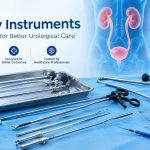

A shipment of surgical instruments can arrive on time, carry an attractive price and still create problems during inspection. Inconsistent finishing, mismatched specifications or incomplete documentation can delay purchasing decisions and damage relationships with hospitals. For B2B buyers, Urology Instruments need more than a competitive quotation; they need consistent specifications, traceable documentation and dependable supply.
The difficult part is that defects are not always obvious in catalogue photographs. Procurement teams must check what arrives against what was ordered, before accepting the batch or committing to repeat purchases.
Specification: Know What You Are Ordering
Urology instruments are used in diagnostic and surgical procedures involving the urinary tract. Product selection depends on the intended procedure, compatible equipment and the clinical requirements specified by the purchasing institution.
Common instrument categories
- Endoscopic instruments: Components used with compatible endoscopic systems for urinary tract examination and procedures.
- Resectoscope accessories: Working elements and related components specified for compatible resectoscope systems.
- Urological forceps: Instruments selected according to their intended function, dimensions and design.
- Dilation instruments: Devices used for specific applications according to clinical requirements.
- Supporting accessories: Components that must match the intended instrument system.
The specification detail buyers often miss
Write down the model, dimensions, material requirements, compatibility, reusable or single-use status, and applicable documentation before requesting quotations. Reusable instruments also need clear instructions for cleaning, disinfection and sterilization where applicable.
India's Medical Devices Rules, 2017, provide a regulatory framework for medical devices. Buyers should verify the applicable classification and regulatory requirements for each product rather than assuming every urology instrument follows the same rules.
Objective: Seven Quality Checks Before Buying
Use these checks to assess Urology Instruments Manufacturers and compare supplier quotations on equal terms.
1. Material and finish
Inspect the specified material, surface finish, joints and working components. Reject unexplained differences between the approved sample and the delivered batch. A supplier who dismisses rough finishing as a cosmetic issue is ignoring a potential inspection failure.
2. Dimensions and compatibility
Confirm measurements, model numbers and compatibility with the intended system. A component that looks similar may still be unsuitable. Ask for written confirmation, not a verbal assurance.
3. Functional inspection
Check opening and closing action, alignment, movement and other functions relevant to the instrument. Define acceptance criteria before dispatch. A vague promise to “replace defective pieces case by case” is not a satisfactory quality policy.
4. Regulatory documentation
Request applicable licences, conformity documents, traceability records and instructions for use. Verify that documents cover the actual product being supplied. An expired certificate or paperwork for a different model should stop the approval process until resolved.
5. Batch consistency
Compare samples and production batches against agreed specifications. Ask how deviations are recorded and corrected. One acceptable sample does not prove every subsequent shipment will meet the same standard.
6. Packaging and traceability
Inspect packaging integrity, product identification, batch or lot details where applicable, and transport protection. Damage discovered after delivery can create disputes over responsibility, so agree on inspection and reporting procedures in advance.
7. After-sales and defect handling
Establish the reporting window, evidence required for claims, replacement terms and response process. Get these conditions in writing. Returns become harder to resolve when the purchase order says nothing about defective or non-conforming goods.
Availability: Finding Urology Instruments Suppliers in India
India's medical-device supply chain includes manufacturers, importers, distributors and specialist dealers. Buyers should identify which role a supplier actually performs before evaluating its quotation.
When comparing Urology Instruments Manufacturers in India, check manufacturing credentials, applicable product licences and documented quality controls. Urology Instruments Suppliers should be able to clarify sourcing, product availability and expected dispatch timelines.
About Sangam Surgicals
At Sangam Surgicals, we work with B2B buyers looking for medical instruments and surgical product supply. Our stated business profile highlights ISO certification and exports to 31 countries.
We understand that procurement depends on more than the quoted unit price. Product specifications, documentation, packaging and clear communication all matter when buyers evaluate a supplier for repeat business.
We encourage buyers to confirm the exact model, applicable documentation and commercial terms before placing an order.
Request a Urology Instruments Quotation
We invite wholesalers, procurement managers and brand owners to contact us with their requirements.
Send us the required instrument names, models or specifications, estimated quantity, delivery location and any documentation requirements. We can then discuss availability, applicable minimum order quantity (MOQ), pricing and the expected quotation turnaround.
Conclusion
Buying Urology Instruments requires careful evaluation of specifications, functionality, documentation and supplier accountability. A low quotation means little if a shipment fails inspection or arrives with compatibility issues. Establish written acceptance criteria before approving an order. The next step is to build a supplier relationship around verified requirements and repeatable quality checks.
Frequently Asked Questions
1. What should buyers check before purchasing urology instruments?
Start with material specifications, dimensions, functional performance, compatibility, documentation and packaging. Also agree on defect reporting and replacement terms before confirming the order.
2. How do I evaluate Urology Instruments Manufacturers in India?
Review applicable licences, quality records, product specifications and batch traceability. A supplier's stated certification alone is not proof that every product meets your requirements.
3. What should I ask Urology Instruments Suppliers?
Request product details, availability, applicable documents, lead time and written warranty or defect-handling terms. Some products may require additional compatibility checks, so a catalogue description alone may not be sufficient.
4. Are Urology Instruments Wholesalers suitable for bulk purchasing?
They can be suitable when quantities, repeat-order availability and commercial terms match your needs. However, bulk pricing does not automatically guarantee consistent batches or favourable replacement terms.
5. How can I compare Urology Instruments Wholesalers in India?
Compare equivalent specifications, order quantities, delivery charges, documentation and defect policies. Freight and replacement costs can change which quotation offers the better overall value.