

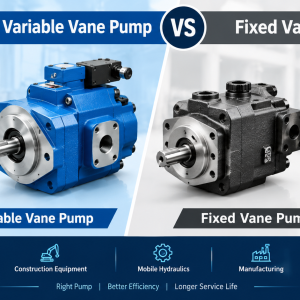
A hydraulic pump selection affects energy consumption, pressure stability, maintenance planning and the cost of operating industrial machinery. When comparing a Hydraulic Variable Vane Pump with a fixed vane pump, buyers should focus on how the machine uses oil flow, not simply on the pump's purchase price. The right choice depends on operating cycles, flow demand, system design and the consequences of running the pump when full flow is unnecessary.
Specification: What Should Buyers Compare?
A Hydraulic Variable Vane Pump adjusts displacement to meet changing flow requirements, depending on its design and control mechanism. A fixed-displacement vane pump delivers a relatively constant volume per revolution, with actual delivery affected by operating speed, pressure and internal leakage.
Key specifications to review
- Flow demand: Identify the machine's required flow during idle, working and return cycles.
- Operating pressure: Confirm the pump's rated pressure and suitability for the hydraulic circuit.
- Displacement and speed: Match the pump to the required output and prime mover.
- Control mechanism: Check how variable displacement is regulated and whether the system requires pressure compensation.
- Fluid compatibility: Verify the recommended hydraulic fluid, viscosity range and cleanliness requirements.
One overlooked detail is the relationship between the pump's control settings and the machine's relief valve. Incorrect settings can increase heat generation or prevent the system from achieving its intended performance.
Objective: Five Supplier-Evaluation Criteria
When sourcing either pump, use these five checks before approving a purchase order.
- Specification matching: Share the required flow, pressure, operating speed and mounting details. A suitable supplier should identify compatibility clearly; vague assurances without a datasheet deserve further scrutiny.
- Application understanding: Explain the machine's duty cycle. A supplier who recommends a variable pump without understanding the load profile may overspecify the system.
- Documentation: Request an applicable technical datasheet, installation instructions and model identification. Confirm that documents match the exact offered configuration.
- Sampling and inspection: Where practical, agree on sample approval or inspection requirements before bulk procurement. A sample that differs from the production-batch model creates avoidable acceptance disputes.
- Commercial clarity: Confirm MOQ, lead time, payment terms, packaging and dispatch responsibilities in writing. Buyers should not accept an estimated delivery date as a firm commitment unless the supplier confirms it.
Benefits: Which Pump Offers Better Value?
The two designs serve different operating needs, so neither is automatically the better investment.
- Potential energy savings: A variable-displacement pump can reduce unnecessary flow in suitable systems. Actual savings depend on the circuit, control settings and duty cycle.
- Simpler flow management: A fixed-displacement pump can suit applications with relatively steady flow demand and straightforward control requirements.
- Improved process matching: Variable displacement can accommodate changing demand without relying entirely on throttling or bypassing excess flow.
- Procurement cost control: Comparing lifecycle cost, rather than purchase price alone, helps buyers assess energy use, maintenance and installation expenses.
- Maintenance planning: Reviewing control components, fluid cleanliness and service requirements before purchase helps establish realistic maintenance expectations.
- Reduced specification disputes: Approved model numbers, documented operating limits and clear purchase-order requirements reduce the risk of receiving an unsuitable pump.
A variable pump may cost more initially and introduce additional control considerations. A fixed pump may be less suitable for a machine with widely fluctuating flow demand, particularly where excess flow creates avoidable losses.
Availability: Sourcing in India
Industrial buyers can evaluate suppliers in Ghaziabad, Delhi-NCR and other manufacturing centres across India. Geographic proximity may simplify technical discussions and reduce some transport costs, but it does not guarantee stock availability or shorter lead times.
Before placing an order, confirm the dispatch schedule, transport mode, protective packaging and delivery location. Pumps should be secured against movement and protected from contamination or damage to ports during transit.
For repeat orders, specify the approved model number and packaging requirements in the purchase order. This reduces confusion when procurement teams reorder components months later.
About Us
At N.T Associates, we list hydraulic variable vane pumps among our hydraulic product offerings. Our business is located at Plot No. 1, Shop No. 1, Bonjha, Patel Marg, Ghaziabad, Uttar Pradesh, India. We encourage industrial buyers to share their application requirements so the relevant product details can be discussed before an order is finalised.
Request Product Information
We invite procurement teams to contact us about their hydraulic pump requirements. Please share the required quantity, operating pressure, flow rate, speed, mounting dimensions, machine application, target market, packaging needs and delivery location. Include sampling or inspection requirements if applicable.
We can then discuss the information needed to evaluate a suitable option. Contact us at +91-76786-03764 or [email protected].
Conclusion
Choosing between a variable vane pump and a fixed vane pump depends on the machine’s flow requirements, operating cycle and long-term running costs. When evaluating Hydraulic Variable Vane Pump Manufacturers, buyers should compare technical specifications, control compatibility, documentation and application suitability rather than focusing on purchase price alone. A clear specification and written supplier commitments can reduce procurement risks and prevent costly mismatches. Making an informed selection today helps support reliable hydraulic system performance over the long term.
FAQs
1. What is the main difference between a Hydraulic Variable Vane Pump and a fixed vane pump?
A variable vane pump can adjust its displacement, while a fixed vane pump has a set displacement per revolution. Actual delivered flow also depends on speed and operating conditions.
2. Which vane pump is more energy-efficient?
A variable pump may consume less energy when flow demand fluctuates. However, savings depend on the hydraulic circuit, control settings, operating hours and load profile.
3. Is a fixed vane pump suitable for industrial machinery?
Yes, it can suit systems with relatively consistent flow requirements. Suitability still depends on pressure, speed, duty cycle and the machine manufacturer's specifications.
4. Can a variable vane pump replace a fixed vane pump?
Not automatically. Buyers must verify mounting, shaft dimensions, port connections, pressure ratings, flow requirements and control compatibility before approving a replacement.
5. What should buyers check before ordering a Hydraulic Variable Vane Pump?
Check the datasheet, displacement range, pressure rating, operating speed, fluid requirements, mounting arrangement and control mechanism. Confirm that the offered model matches the purchase-order specification.